
Steven Biko Biography Quotes 10 Report mistakes
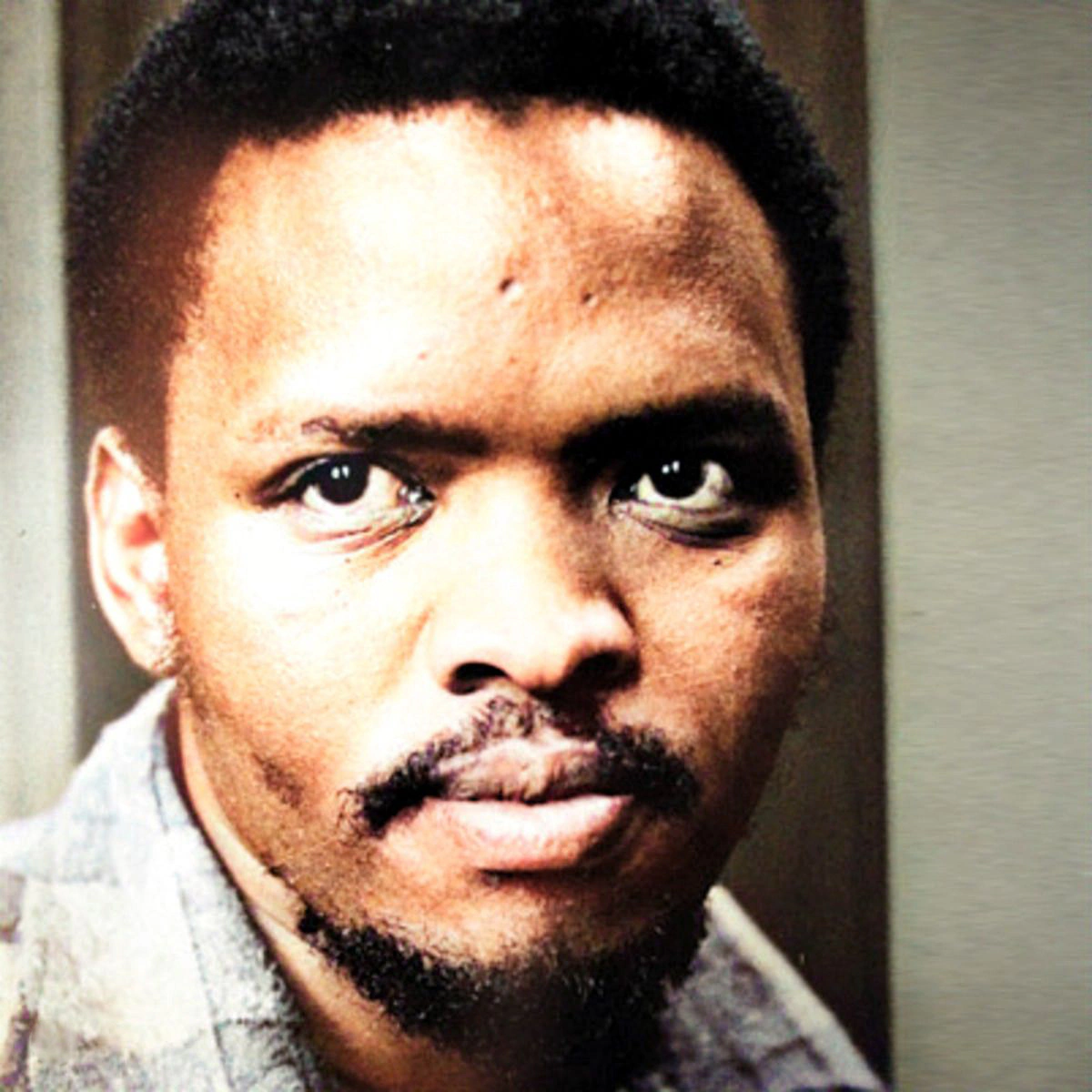
| 10 Quotes | |
| Born as | Bantu Stephen Biko |
| Known as | Steve Biko |
| Occup. | Activist |
| From | South Africa |
| Spouse | Ntsiki Mashalaba |
| Born | December 18, 1946 Tarkastad, Eastern Cape, South Africa |
| Died | September 12, 1977 Pretoria, South Africa |
| Cause | Head injuries sustained while in police custody |
| Aged | 30 years |
| Cite | |
Citation Formats
APA Style (7th ed.)
Steven biko biography, facts and quotes. (2026, February 11). FixQuotes. https://fixquotes.com/authors/steven-biko/
Chicago Style
"Steven Biko biography, facts and quotes." FixQuotes. February 11, 2026. https://fixquotes.com/authors/steven-biko/.
MLA Style (9th ed.)
"Steven Biko biography, facts and quotes." FixQuotes, 11 Feb. 2026, https://fixquotes.com/authors/steven-biko/. Accessed 27 Mar. 2026.
Early Life and Background
Bantu Stephen Biko was born on 18 December 1946 in King William's Town (now Qonce) in South Africa's Eastern Cape, a region whose long Xhosa political tradition collided daily with the tightening machinery of apartheid. His family lived inside the humiliations and calculations that the regime imposed on Black life - pass laws, inferior schooling, and the constant risk that a job, a police encounter, or an official classification could upend a household. From an early age he developed a quick intelligence and a sharp eye for the moral theater of power: who spoke, who kept quiet, who benefited, and who paid.The death of his father while Biko was still young left both grief and responsibility close to the surface. That private loss, combined with the public violence of a racial state, helped form a temperament that was at once disciplined and impatient - disciplined enough to organize, impatient with half-measures. Friends later recalled his dry humor and his ability to make political argument feel like common sense, a social gift that would matter as much as any formal title in the years ahead.
Education and Formative Influences
Biko attended Lovedale College near Alice, but his schooling was disrupted after his brother Khaya was accused of political activity and Biko himself came under suspicion, an early lesson in apartheid's practice of punishing entire families. He completed matric at St Francis College, Mariannhill, a Catholic boarding school whose intellectual seriousness exposed him to broader debates about ethics, authority, and human dignity. In 1966 he entered the University of Natal Medical School in Durban, one of the few places a Black student could pursue medicine; there, amid the ferment of late-1960s global student politics and local repression, he moved from critique to strategy, testing how ideas could become institutions.Career, Major Works, and Turning Points
Within the multiracial but white-dominated National Union of South African Students (NUSAS), Biko argued that liberal opposition often centered white comfort and set the terms of Black participation; the break became decisive in 1969 when he helped found the South African Students' Organisation (SASO), articulating Black Consciousness as both psychological liberation and practical self-organization. In 1972 he was central to launching the Black People's Convention and became a key figure in community programs under the Black Community Programmes, including clinics and skills projects that treated self-reliance as political education. The state responded with banning orders in 1973 that restricted him to King William's Town and limited his speech and movement, yet his influence traveled through networks of students, clergy, and civic organizers. After the 1976 Soweto uprising, security police intensified their pursuit; on 18 August 1977 he was detained under the Terrorism Act, brutally assaulted during interrogation, transported hundreds of miles to Pretoria, and died in custody on 12 September 1977. The attempt to erase him instead made his name a global indictment.Philosophy, Style, and Themes
Biko's central wager was that apartheid survived not only by guns and laws but by colonizing imagination. “The most potent weapon of the oppressor is the mind of the oppressed”. This was not metaphor for him but a diagnostic tool: if people were trained to doubt their worth, to seek permission to exist, then even resistance could be choreographed by the oppressor. His insistence that liberation began with naming - with refusing the shame built into official categories - turned identity into a political resource rather than a stigma. “Being black is not a matter of pigmentation - being black is a reflection of a mental attitude”. In that formulation, Blackness became solidarity among the dominated - African, Coloured, and Indian - against a system that profited from division and hierarchy.His writing and speeches, many later collected in I Write What I Like, are marked by clipped logic, moral urgency, and a conversational force that refused ornamental theory. He distrusted savior politics and demanded responsibility from those most wounded by the system: “Merely by describing yourself as black you have started on a road towards emancipation, you have committed yourself to fight against all forces that seek to use your blackness as a stamp that marks you out as a subservient being”. Psychologically, this is the voice of someone battling despair by turning it into obligation: pride as a discipline, not a mood. He could be uncompromising, yet his end goal was not inversion of supremacy but a recovered human mutuality, a South Africa in which both arrogance and internalized inferiority were broken as habits of mind.
Legacy and Influence
Biko's death exposed the brutality behind apartheid's bureaucratic facade and helped galvanize international pressure, from church networks to student movements and cultural boycotts, while inside South Africa his ideas continued to circulate even when organizations were banned. Black Consciousness shaped the tone and confidence of a generation that carried the struggle through the late 1970s and 1980s, influencing community organizing, political theology, and later debates about dignity, race, and psychological repair in the post-apartheid era. He endures because his argument still bites: that political freedom without inner liberation can reproduce the old world in new accents, and that recovering dignity is itself a form of power.Our collection contains 10 quotes written by Steven, under the main topics: Freedom - Equality - Human Rights - Pride.
Source / external links