
Steven Spielberg Biography Quotes 26 Report mistakes
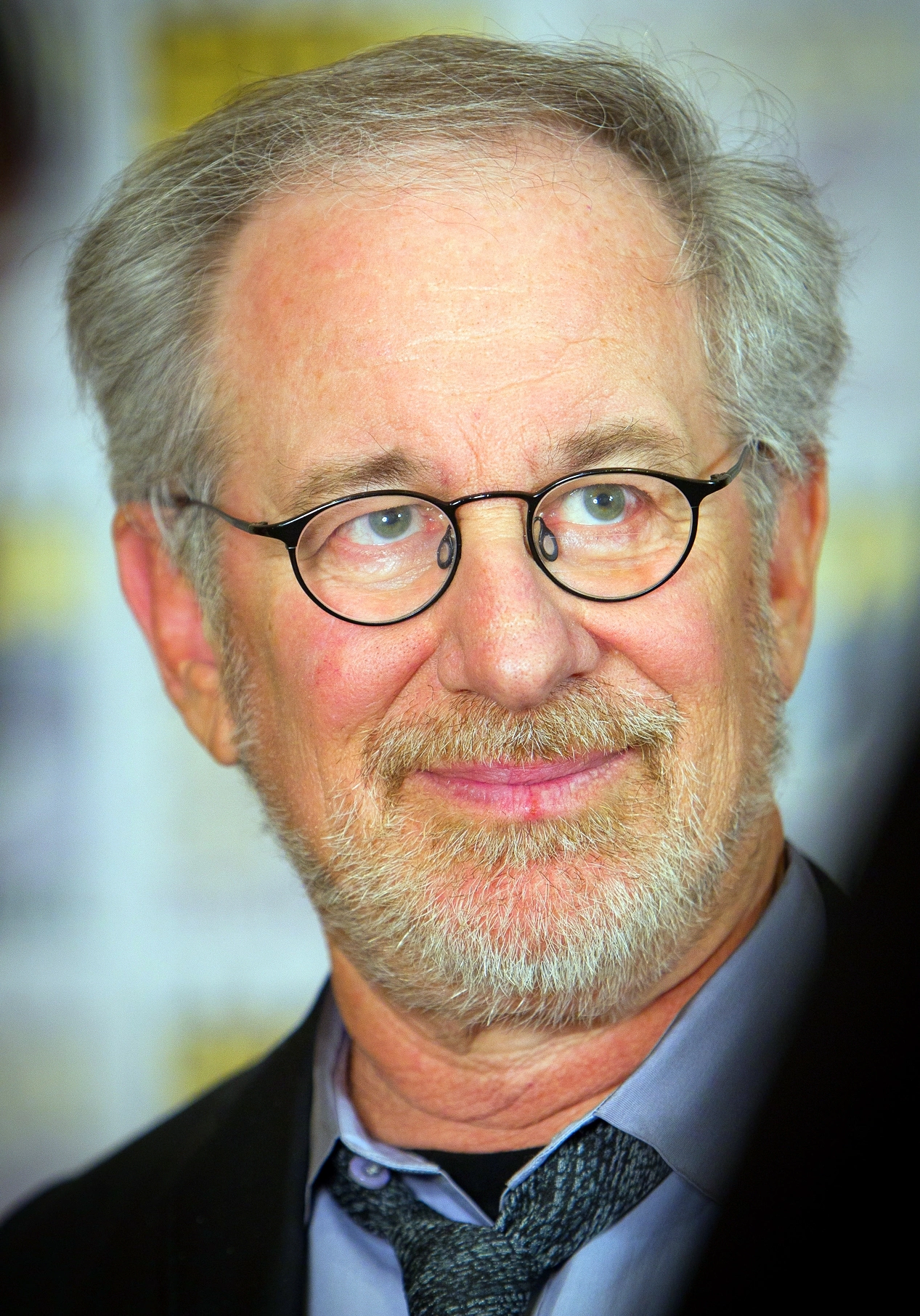
| 26 Quotes | |
| Born as | Steven Allan Spielberg |
| Occup. | Director |
| From | USA |
| Born | December 18, 1947 Cincinnati, Ohio, U.S. |
| Age | 78 years |
| Cite | |
Citation Formats
APA Style (7th ed.)
Steven spielberg biography, facts and quotes. (2026, February 11). FixQuotes. https://fixquotes.com/authors/steven-spielberg/
Chicago Style
"Steven Spielberg biography, facts and quotes." FixQuotes. February 11, 2026. https://fixquotes.com/authors/steven-spielberg/.
MLA Style (9th ed.)
"Steven Spielberg biography, facts and quotes." FixQuotes, 11 Feb. 2026, https://fixquotes.com/authors/steven-spielberg/. Accessed 26 Mar. 2026.
Early Life and Background
Steven Allan Spielberg was born on December 18, 1947, in Cincinnati, Ohio, into a postwar America intoxicated by technology, suburbia, and television. His father, Arnold Spielberg, was an electrical engineer involved in early computing; his mother, Leah Adler Spielberg, was a concert pianist with a performer's instinct for timing and emotional release. That mix - circuitry and showmanship - became the private engine of Spielberg's later cinema, where wonder is engineered and feeling is staged with musical precision.He grew up largely in Arizona (notably Phoenix and Scottsdale) and later in California, moving with his family as his father's work shifted. Spielberg's Jewish identity, and the casual antisemitism he encountered in school, sharpened an outsider's sensitivity that would recur in his stories of vulnerable protagonists and besieged communities. His parents' divorce in the late 1960s was another formative fracture: again and again his films circle broken homes, absent fathers, and children forced to decode adult danger before they are ready.
Education and Formative Influences
Spielberg taught himself filmmaking as a teenager, shooting 8mm shorts and staging elaborate war spectacles with neighborhood friends, then cutting them to create the illusion of scale and consequence. He attended California State University, Long Beach (without graduating at the time) and absorbed the New Hollywood moment as it formed around him - when studio authority weakened, auteur ambition surged, and blockbuster mechanics were still being invented. A crucial early break came when he talked his way onto Universal Studios lots, eventually directing the television film Duel (1971), a lean thriller whose economy and suspense announced both his technical command and his fascination with ordinary lives suddenly pressed under impersonal threat.Career, Major Works, and Turning Points
After The Sugarland Express (1974), Spielberg reshaped modern cinema with Jaws (1975), turning distribution, marketing, and audience behavior into a new paradigm for the summer blockbuster; Close Encounters of the Third Kind (1977) expanded his signature of awe and yearning; Raiders of the Lost Ark (1981) fused classical adventure with modern pacing; and E.T. the Extra-Terrestrial (1982) distilled his child-centered mythmaking into a global phenomenon. He then oscillated between crowd-pleasing spectacle and moral-historical confrontation: The Color Purple (1985) tested his range, Schindler's List (1993) became a defining Holocaust film and a personal reckoning, and Saving Private Ryan (1998) reset expectations for combat realism. In 1994 he co-founded DreamWorks SKG, gaining leverage to alternate between entertainment and civic-minded drama, from Jurassic Park (1993) and Minority Report (2002) to Munich (2005), Lincoln (2012), Bridge of Spies (2015), The Post (2017), and the semi-autobiographical The Fabelmans (2022), which openly revisited the origins he had long disguised as fantasy.Philosophy, Style, and Themes
Spielberg's style is simultaneously classical and kinetic: lucid geography, expressive camera movement, and a talent for building set pieces that feel inevitable rather than merely loud. His most recognizable device - the "Spielberg face" of stunned uplift - is not just a reaction shot but a worldview, insisting that modern life still contains portals to revelation. “Every time I go to a movie, it's magic, no matter what the movie's about”. That faith in cinema as a secular miracle underwrites both his sentimentality and his craft discipline: he composes emotion as carefully as action, often using John Williams' music, backlight, and patient suspense to make feeling physical.Psychologically, Spielberg returns to the small figure dwarfed by the immense: children, civilians, or reluctant professionals thrust into the machinery of sharks, aliens, war, bureaucracy, or history itself. “I've discovered I've got this preoccupation with ordinary people pursued by large forces”. Even when the extraordinary arrives, it usually crashes into the domestic - a kitchen, a suburban street, a family argument - suggesting that his deepest subject is vulnerability: the terror of not being believed, the ache of separation, and the hope that empathy can interrupt catastrophe. His moral imagination is also preoccupied with boundaries - what images should show, what stories should do to an audience, and when restraint becomes complicity. “There is a fine line between censorship and good taste and moral responsibility”. That tension helps explain the dual Spielberg: the entertainer who manufactures wonder, and the witness who stages history with an almost anxious care for consequences.
Legacy and Influence
Spielberg is among the most commercially successful and culturally formative directors in American film history, yet his deeper impact lies in how he fused mass appeal with emotional intelligibility, making spectacle a vehicle for intimacy. He professionalized the modern blockbuster while keeping it legible; he helped legitimize popular genre filmmaking as auteur craft; and through works like Schindler's List and his Shoah Foundation, he tied cinema to public memory and testimony. Generations of filmmakers borrow his grammar of suspense, awe, and moral urgency, but his singular achievement is psychological: he made the mainstream admit it had a child inside it, still frightened, still hopeful, still searching the sky for meaning.Our collection contains 26 quotes written by Steven, under the main topics: Witty One-Liners - Ethics & Morality - Justice - Puns & Wordplay - War.
Other people related to Steven: Drew Barrymore (Actress), Ralph Fiennes (Actor), Oskar Schindler (Businessman), Alejandro Amenabar (Director), Daniel Craig (Actor), Vin Diesel (Actor), Thomas Keneally (Novelist), Teri Garr (Actress), Peter Benchley (Author), Joe Dante (Director)
Source / external links