
Stokely Carmichael Biography Quotes 29 Report mistakes
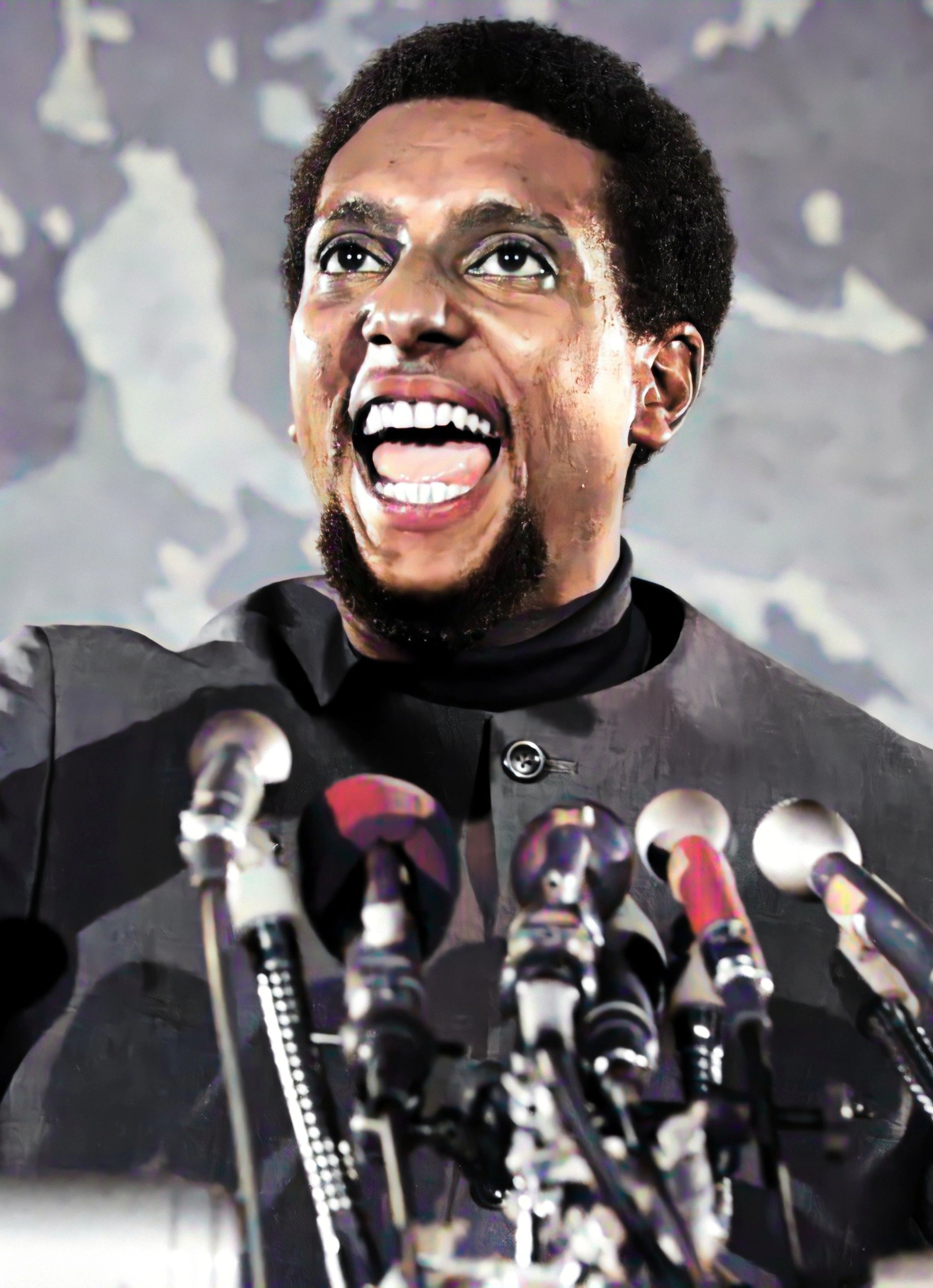
| 29 Quotes | |
| Born as | Stokely Standiford Churchill Carmichael |
| Known as | Kwame Ture |
| Occup. | Activist |
| From | USA |
| Spouses | Miriam Makeba (1968-1973) Marlyatou Barry (divorced) |
| Born | June 29, 1941 Port of Spain, British Trinidad and Tobago |
| Died | November 15, 1998 Conakry, Guinea |
| Aged | 57 years |
| Cite | |
Citation Formats
APA Style (7th ed.)
Stokely carmichael biography, facts and quotes. (2026, February 11). FixQuotes. https://fixquotes.com/authors/stokely-carmichael/
Chicago Style
"Stokely Carmichael biography, facts and quotes." FixQuotes. February 11, 2026. https://fixquotes.com/authors/stokely-carmichael/.
MLA Style (9th ed.)
"Stokely Carmichael biography, facts and quotes." FixQuotes, 11 Feb. 2026, https://fixquotes.com/authors/stokely-carmichael/. Accessed 26 Mar. 2026.
Early Life and Background
Stokely Standiford Churchill Carmichael was born on June 29, 1941, in Port of Spain, Trinidad, to Mabel R. Carmichael, a stewardess, and Adolphus Carmichael, a carpenter. Like many West Indian families pulled by postwar opportunity and pushed by colonial limits, his parents left for New York City while he remained with relatives, absorbing the cadences of Caribbean speech and the habits of communal survival. That early split - affection stretched across borders, authority mediated through absence - would later sharpen his sensitivity to power: who names it, who enforces it, and who lives under it.In 1952, at age 11, Carmichael joined his parents in the Bronx, entering a United States still structured by Jim Crow in the South and de facto segregation in the North. He watched housing lines, school zoning, and police discretion produce racial order without formal signs. The immigrant child learned quickly that citizenship did not guarantee belonging, and that Northern liberalism could coexist with hard-edged exclusion. Those years planted a double awareness: the tactical patience of the newcomer and the impatience of the young man who could see the rules as designed, not natural.
Education and Formative Influences
Carmichael attended the elite Bronx High School of Science, where academic merit sat uneasily beside the citys racial geography, and then enrolled at Howard University in Washington, D.C., a crucible for Black intellectual life. At Howard he joined the Nonviolent Action Group (NAG), read widely in political theory and anticolonial writing, and tested ideas in direct action rather than seminars alone. Washingtons proximity to power made hypocrisy visible: monuments to freedom stood blocks from segregated neighborhoods, and that contrast pushed him from student debate into movement discipline.Career, Major Works, and Turning Points
He entered the national struggle through the Student Nonviolent Coordinating Committee (SNCC), becoming a Freedom Rider in 1961 and repeatedly risking beatings and jail in Mississippi. His organizing in Lowndes County, Alabama, helped build the Lowndes County Freedom Organization - the Black Panther symbol - and his election as SNCC chairman in 1966 marked a strategic turn from integrationist appeals toward independent political power. That same year, during the Meredith March Against Fear in Mississippi, he popularized the rallying cry "Black Power", a phrase that electrified young activists and unsettled liberal allies. Later he collaborated with Charles V. Hamilton on Black Power: The Politics of Liberation (1967), framing racism as structural rather than merely personal prejudice. In 1968 he briefly served as "prime minister" of the Black Panther Party, then moved toward Pan-Africanism, aligning with Guinea and Ghana and working alongside Kwame Ture and Sekou Toure; he formally adopted the name Kwame Ture to honor Kwame Nkrumah and Ahmed Sekou Toure. His later years were devoted to international anti-imperial work, public speaking, and defending radical memory against domestication.Philosophy, Style, and Themes
Carmichaels thought began in nonviolent practice but grew into a critique of institutions, language, and state power. He argued that racism was not an accident of attitudes but a design principle of governance and economy, a claim he stated bluntly: “Seems to me that the institutions that function in this country are clearly racist, and that they're built upon racism”. Psychologically, this was less cynicism than a refusal to be soothed - an insistence that personal decency could not substitute for structural change. The demand for "Black Power" was, at base, a demand for the capacity to define reality, not merely petition it, because he believed “The first need of a free people is to define their own terms”. Naming, for him, was a form of self-government.His style fused street-level comedy with relentless moral pressure, using laughter to puncture fear and turn it outward at the oppressor. Yet his bravado was not naive: he repeatedly acknowledged that struggle carried mortal risk, that movements needed discipline, and that people needed an inner technology for living under threat. The engine of his courage was a practiced psychological posture - “The secret of life is to have no fear; it's the only way to function”. That line reveals how he managed the constant possibility of violence and surveillance: by treating fear as an enemy tactic rather than a private weakness. Across his speeches and writing, the recurring themes are collective self-determination, solidarity before "open society" promises, and an international frame that linked Black Americans to decolonizing Africa and the wider Third World.
Legacy and Influence
Carmichael died on November 15, 1998, in Conakry, Guinea, after years of illness, leaving behind a legacy both contested and indispensable. He helped move U.S. civil rights discourse from access to power - lunch counters, ballots, offices - toward analysis of how power reproduces itself through institutions. His rhetoric shaped generations of organizers, from community control campaigns to Pan-African networks, and his insistence on structural racism anticipated later scholarship and activism that treats inequality as systemic rather than episodic. Even critics who rejected "Black Power" inherited his questions: Who sets the terms, who benefits from the rules, and what kind of courage is required when reform becomes a corridor back to the same house.Our collection contains 29 quotes written by Stokely, under the main topics: Ethics & Morality - Justice - Mortality - Freedom - Meaning of Life.
Other people related to Stokely: Miriam Makeba (Musician), James H. Meredith (American)
Source / external links