
Stuart Pearce Biography Quotes 16 Report mistakes
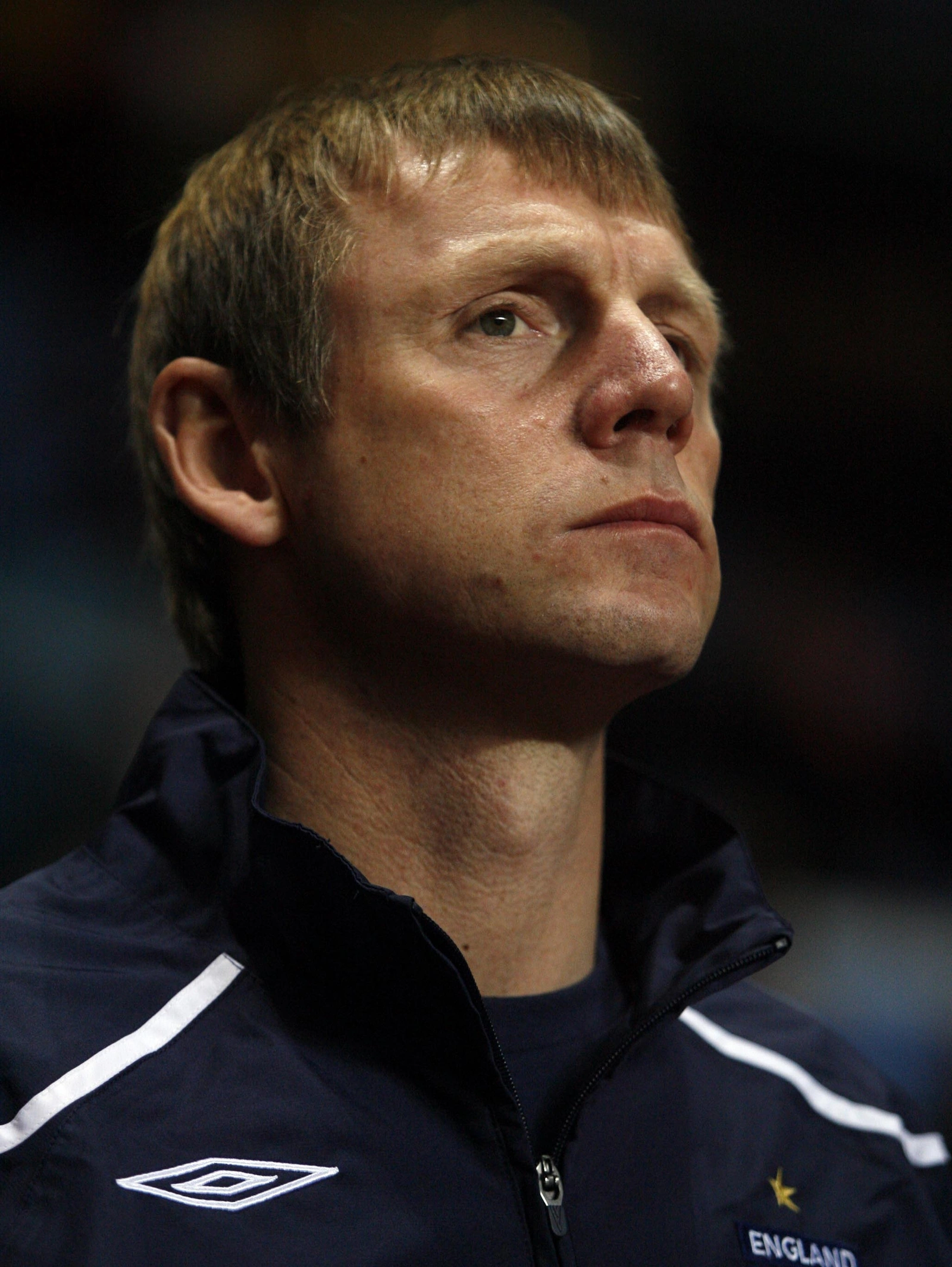
| 16 Quotes | |
| Occup. | Coach |
| From | England |
| Born | April 24, 1962 Hammersmith, England |
| Age | 63 years |
| Cite | |
Citation Formats
APA Style (7th ed.)
Stuart pearce biography, facts and quotes. (2026, February 11). FixQuotes. https://fixquotes.com/authors/stuart-pearce/
Chicago Style
"Stuart Pearce biography, facts and quotes." FixQuotes. February 11, 2026. https://fixquotes.com/authors/stuart-pearce/.
MLA Style (9th ed.)
"Stuart Pearce biography, facts and quotes." FixQuotes, 11 Feb. 2026, https://fixquotes.com/authors/stuart-pearce/. Accessed 5 Mar. 2026.
Early Life and Beginnings
Stuart Pearce was born in 1962 in west London and grew up far from the elite academy pathway that would later become standard for English footballers. He trained and worked as an electrician while playing non-league football for Wealdstone, where his relentless commitment and rugged tackling first stood out. He became known for advertising his electrical services in matchday programs, a sign of how grounded he remained even as bigger opportunities beckoned. His move into the professional game came with Coventry City in the early 1980s, a step that proved the springboard for a distinguished career built on attitude, leadership, and an explosive left foot from full-back.Nottingham Forest and the Making of "Psycho"
Pearce's defining association began when he joined Nottingham Forest in 1985, where the influence of the charismatic manager Brian Clough was decisive. Under Clough, Pearce evolved from a combative defender into a leader, eventually captaining the side. Forest won back-to-back League Cups in 1989 and 1990, an era anchored by a blend of steel and style that suited Pearce perfectly. He became a crowd hero, earning the enduring nickname "Psycho" for his fierce challenges, uncompromising competitive streak, and thunderous free kicks. He played alongside figures such as Des Walker and Nigel Clough in the late 1980s and early 1990s, and later with Roy Keane as a young midfielder breaking through under the same demanding standards. The 1991 FA Cup final defeat to Tottenham was a near-miss on the domestic stage, but his stature as one of the country's leading left-backs was by then beyond doubt.England Career and Iconic Moments
Pearce made his England debut in the late 1980s and accumulated more than 70 caps across a decade in the national side. He featured under managers Bobby Robson, Graham Taylor, and Terry Venables, and his international story is remembered for two indelible scenes. At the 1990 World Cup he was part of a resilient team spearheaded by Gary Lineker and Paul Gascoigne; England reached the semi-finals, where he missed in the penalty shootout against West Germany. Six years later at Euro 96, with David Seaman in goal and Alan Shearer leading the line, he delivered one of the tournament's most memorable moments. In the quarter-final against Spain he converted his kick in the shootout, unleashing a cathartic celebration that symbolized the resilience of both player and team. He later scored again in the semi-final shootout against Germany, underlining the personal redemption arc that made him a fan favorite and an emblem of mental steel.Later Club Career
After more than a decade at Nottingham Forest, Pearce moved on in 1997, spending time with Newcastle United before joining West Ham United, and later Manchester City. At West Ham he suffered a broken leg in 2001 but returned remarkably quickly, a comeback that reinforced his reputation for toughness and professionalism. The final chapter of his playing days came at Manchester City, where he brought experience and guidance to a squad transitioning into a new era, and he retired in 2002, having extended his career well into his late thirties.First Steps in Management
Pearce's leadership instincts naturally fed into coaching. He briefly served as player-manager of Nottingham Forest in the 1996, 97 season, a caretaker spell that showed his ability to organize and motivate a dressing room he knew intimately. He later joined the coaching staff at Manchester City and, in 2005, succeeded to the managerial role. Over two seasons he oversaw a squad featuring the likes of Richard Dunne and Joey Barton, navigating the challenges of club rebuilding while integrating emerging talents like Shaun Wright-Phillips before his high-profile departure from the club as a player. His tenure ended in 2007, but it established him as a manager comfortable with pressure and direct accountability.England Under-21s, Caretaker Duty, and Team GB
In 2007 Pearce took charge of England's Under-21s, a role that became central to his coaching identity. He guided a generation that included Joe Hart, James Milner, Micah Richards, and Theo Walcott, emphasizing standards, discipline, and trust in young players' ability to handle responsibility. His side reached the 2009 UEFA European Under-21 Championship final, underscoring his capacity to shape cohesive tournament teams. In early 2012, following Fabio Capello's resignation, Pearce served as caretaker manager of the senior national team for one match, a short but significant moment that illustrated the trust the Football Association placed in him during a delicate transition before Roy Hodgson's appointment.That same year he coached the Great Britain men's team at the London Olympics, managing a unique squad that included senior figures such as Ryan Giggs and Craig Bellamy alongside promising talents. The team reached the quarter-finals, going out on penalties, a familiar English drama in which Pearce's presence on the sideline offered a poignant echo of his own playing career.
Return to Nottingham Forest and Club Staff Roles
Pearce returned to Nottingham Forest as manager in 2014, an emotional homecoming that began brightly but ultimately ended the following season amid the volatility that often accompanies high expectations and ownership changes, including the tenure of Fawaz Al-Hasawi. He later became a key assistant to David Moyes at West Ham United, first in 2017, 2018 and again from 2020, contributing to a staff group that steadied the club and helped it reassert itself domestically and in European competition. His coaching reputation by this point rested on clear communication, insistence on work-rate, and the transfer of leadership habits he had embodied as a player.Personality, Interests, and Legacy
Pearce's persona blended intimidating intensity with a grounded, self-deprecating humor. The "Psycho" image spoke to his fearless tackling and refusal to yield, but those who worked with him often emphasized his fairness, reliability, and professional standards. His background as a working electrician shaped a practical, unpretentious style that resonated in dressing rooms across eras. Away from the pitch, he cultivated a lifelong passion for punk music, a detail that fit his uncompromising spirit and outsider's path to the top.In English football's collective memory, Stuart Pearce endures as a symbol of leadership under stress and as a player whose free kicks and celebrations became cultural shorthand for commitment. His relationships with influential figures such as Brian Clough, Bobby Robson, Terry Venables, Fabio Capello, Roy Hodgson, and David Moyes, and his mentorship of younger players who went on to long international careers, widened his impact beyond his own achievements. Whether in a red Forest shirt, an England kit under Wembley's arch, or in the technical area directing the next generation, he consistently represented the virtues of accountability, resilience, and pride in the shirt.
Our collection contains 16 quotes written by Stuart, under the main topics: Motivational - Ethics & Morality - Leadership - Victory - Work Ethic.
Other people related to Stuart: Robbie Fowler (Athlete), Paul Parker (Athlete)
Source / external links