
Sugar Ray Robinson Biography Quotes 4 Report mistakes
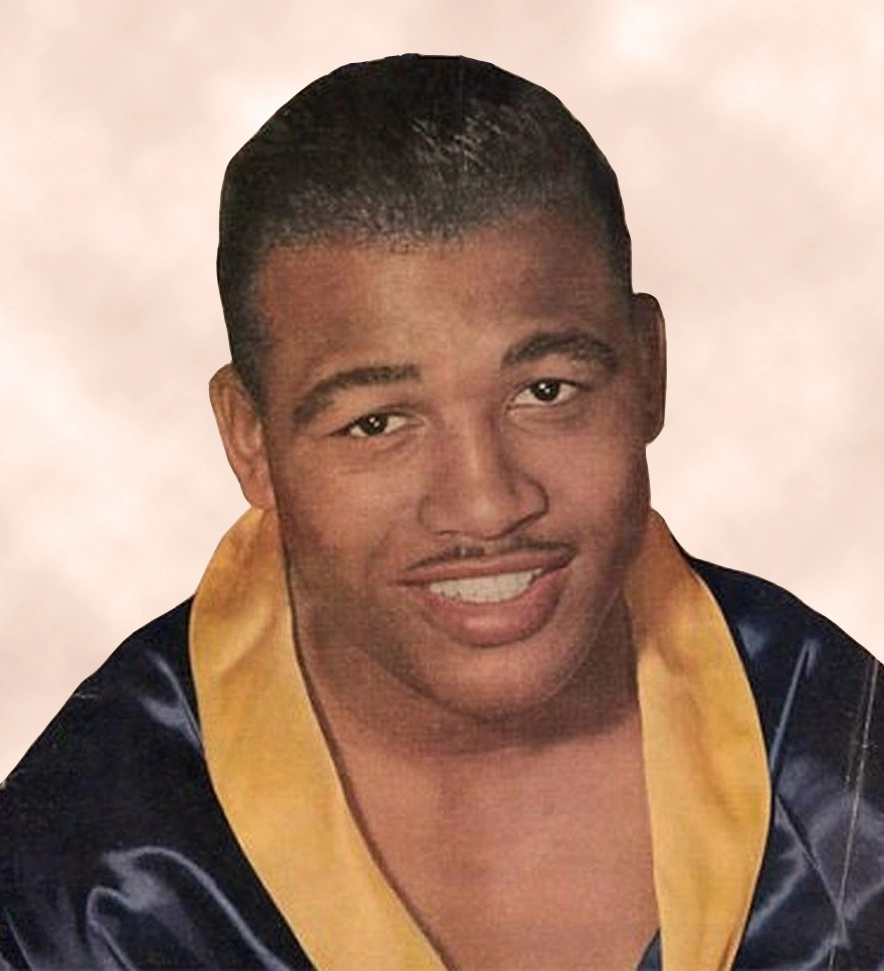
| 4 Quotes | |
| Born as | Walker Smith Jr. |
| Occup. | Athlete |
| From | USA |
| Spouse | Millie Durham |
| Born | May 3, 1921 Ailey, Georgia |
| Died | April 12, 1989 Culver City, California |
| Cause | Alzheimer's Disease |
| Aged | 67 years |
| Cite | |
Citation Formats
APA Style (7th ed.)
Sugar ray robinson biography, facts and quotes. (2026, February 11). FixQuotes. https://fixquotes.com/authors/sugar-ray-robinson/
Chicago Style
"Sugar Ray Robinson biography, facts and quotes." FixQuotes. February 11, 2026. https://fixquotes.com/authors/sugar-ray-robinson/.
MLA Style (9th ed.)
"Sugar Ray Robinson biography, facts and quotes." FixQuotes, 11 Feb. 2026, https://fixquotes.com/authors/sugar-ray-robinson/. Accessed 12 Feb. 2026.
Early Life and Background
Walker Smith Jr. was born on May 3, 1921, in Ailey, Georgia, the youngest of three children in a poor sharecropping family. The rural South he entered was shaped by Jim Crow law and limited economic horizons; physical labor, church life, and the constant arithmetic of making do formed the background hum of his earliest years. His father drifted out of the household, and the instability that followed sharpened the boy's sensitivity to money, pride, and respect - needs that would later fuel both his ambition and his restlessness.In 1932 his mother, Leila, moved the family to Harlem, New York City, part of the Great Migration that remade Black American life between the wars. Harlem offered brighter lights and harsher temptations: hustling, numbers runners, dance halls, and crowded tenements. Smith gravitated toward street culture and music, but also to a neighborhood code in which reputation could be won or lost quickly. Boxing gyms became a controlled alternative to the street - a place where danger had rules and discipline could become a kind of protection.
Education and Formative Influences
Formal schooling ended early, yet he learned fast in the informal universities of Harlem: the gym, the ring, and the theater district. At the Salem-Crescent gym he discovered that defense could be art, not merely survival, and he absorbed the craft from trainers who valued timing over brute force. His nickname, "Sugar Ray Robinson", came from borrowing an Amateur Athletic Union card from a friend named Ray Robinson; the "Sugar" was added later by a ringside writer struck by the sweetness of his style. As an amateur he compiled a remarkable record and won Golden Gloves titles, developing the calm, performative confidence that let him command a room before he ever commanded a world title.Career, Major Works, and Turning Points
Robinson turned professional in 1940 and quickly became a phenomenon, marrying speed and accuracy with a showman's instinct for drama. After wartime service duties that disrupted many careers, he dominated the welterweight division and won the world title in 1946 by defeating Tommy Bell, then defended it in a demanding circuit that included a classic rivalry with Kid Gavilan. A leap to middleweight made him even more famous: he won the title from Jake LaMotta in 1951 after their brutal series, then waged a long, perilous second act marked by the 1952 knockout loss to Joey Maxim in the stifling heat of Yankee Stadium, brief retirement, and repeated comebacks. He regained the middleweight crown multiple times in the mid-1950s, outlasting younger challengers through craft and will, before finally stepping away for good in the 1960s. Outside the ring he spent lavishly - on cars, clothes, and a Harlem nightclub - and the pressure to pay debts helped pull him back into fights long after his reflexes began to dull.Philosophy, Style, and Themes
Robinson's public persona blended elegance and menace: he could dance in a tailored suit at night and dissect opponents the next day with a left hook that seemed to appear from nowhere. Yet he never romanticized brutality. "I ain't never liked violence". That tension - a man who sought beauty and acclaim through a violent craft - became central to his inner life. He performed confidence because the marketplace demanded it, but he also used it as armor against the fear every fighter carries: that the next punch might erase everything earned.His technique expressed a philosophy of self-authorship. He believed a champion must create certainty before the world grants it: "To be a champ you have to believe in yourself when no one else will". In the ring that belief appeared as improvisation under pressure - feints, sudden angle changes, and combinations thrown with jazz-like rhythm. Aging, however, taught him a darker lesson about desire and denial, the inability to stop when applause and obligation blur together: "You always say 'I'll quit when I start to slide', and then one morning you wake up and realize you've done slid". The late comebacks, the financial leaks, and the stubborn pride all orbit that sentence.
Legacy and Influence
Robinson died on April 12, 1989, in Los Angeles, widely reported to have struggled with diabetes and Alzheimer disease in his final years, a poignant contrast to the precision that once defined him. His influence remains foundational: modern pound-for-pound rankings often place him at or near the top, and generations of fighters - from welterweights to middleweights - study his footwork, counters, and the way he made defense look like attack. Beyond technique, he stands as a figure of Black modernity in mid-century America: a migrant who turned urban hardship into style, turned style into power, and proved that athletic greatness can be both a public spectacle and a private cost.Our collection contains 4 quotes written by Sugar, under the main topics: Peace - Self-Discipline - Confidence - Business.
Other people related to Sugar: Sugar Ray Leonard (Athlete), Red Smith (Journalist), Carl Olson (Athlete)
Source / external links