
Sulak Sivaraksa Biography Quotes 6 Report mistakes
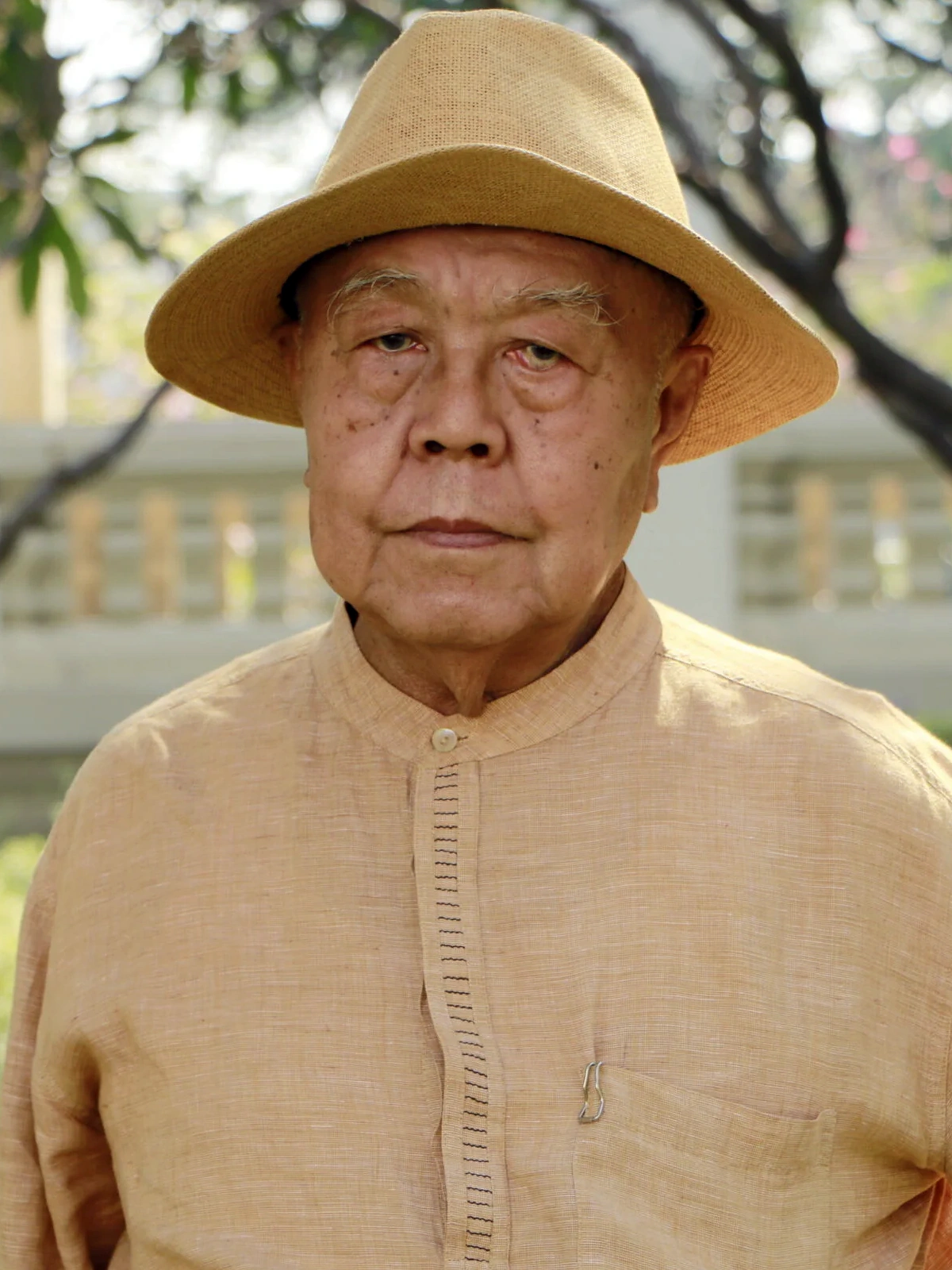
| 6 Quotes | |
| Native name | สุลักษณ์ ศิวรักษ์ |
| Occup. | Activist |
| From | Thailand |
| Born | March 27, 1933 Bangkok, Thailand |
| Age | 93 years |
| Cite | |
Citation Formats
APA Style (7th ed.)
Sulak sivaraksa biography, facts and quotes. (2026, March 9). FixQuotes. https://fixquotes.com/authors/sulak-sivaraksa/
Chicago Style
"Sulak Sivaraksa biography, facts and quotes." FixQuotes. March 9, 2026. https://fixquotes.com/authors/sulak-sivaraksa/.
MLA Style (9th ed.)
"Sulak Sivaraksa biography, facts and quotes." FixQuotes, 9 Mar. 2026, https://fixquotes.com/authors/sulak-sivaraksa/. Accessed 29 Mar. 2026.
Early Life and Background
Sulak Sivaraksa was born on 27 March 1933 in Siam, later Thailand, into a well-off Sino-Thai merchant family during the last years of absolute monarchy's aftermath and the rise of military nationalism. His childhood unfolded in Bangkok as the country moved through war, Japanese occupation, and the authoritarian modernizing projects that shaped mid-20th-century Thai life. That setting mattered: Sulak grew up close enough to privilege to understand elite confidence from the inside, yet near enough to political upheaval to see how power justified itself in the language of order, religion, and nation. The social world that formed him was deeply hierarchical, but also porous - a place where court culture, Buddhist ritual, Chinese commercial discipline, and imported Western models collided.From early on he developed the habits that would define him: intellectual restlessness, moral contrarianism, and impatience with polite falsehoods. He was never simply a dissident by temperament; he was a conservative in the older sense of wanting to preserve what industrial greed and state violence were destroying - community, ethical religion, village reciprocity, and the capacity for self-limitation. Yet he also saw that Thai traditions could be manipulated to sanctify obedience. This double awareness - reverence for civilizational depth combined with suspicion of official piety - became the central tension of his life. He would spend decades challenging generals, consumer capitalism, and complacent monks while insisting that true reform had to begin in the conscience.
Education and Formative Influences
Sulak was educated in Thailand and then in Britain, studying at the University of Wales in the 1950s, where exposure to Western liberal thought, Christian social criticism, anti-colonial currents, and comparative religion widened his frame without turning him into a simple imitator of Europe. Time abroad sharpened his understanding of Thailand by distance: he saw both the strengths of Western institutions and the spiritual emptiness of technocratic modernity. Returning home, he drew on Buddhist ethics, Gandhian nonviolence, and the example of socially engaged intellectuals to build a public voice that was learned but deliberately unsettling. He became part scholar, part editor, part public moralist - a rare combination in a country where criticism of monarchy, military, and established religion carried immense risk.Career, Major Works, and Turning Points
In the 1960s he founded the journal Social Science Review, which became a crucial forum for independent Thai intellectual life and helped introduce new political and cultural criticism to a generation before and after the 1973 student uprising. Over subsequent decades he wrote and lectured prolifically in Thai and English on Buddhism, development, education, consumerism, and Thai history, producing works such as Siam in Crisis and Seeds of Peace while helping found networks including the International Network of Engaged Buddhists. His career was marked less by institutional ascent than by recurrent confrontation: exile after the right-wing reaction following the 1976 massacre, repeated accusations under lese-majeste and defamation laws, and continual surveillance by the state. These ordeals made him internationally known, but they also clarified his role. He became one of Southeast Asia's most visible advocates of "engaged Buddhism" - not monastic withdrawal from society, but disciplined ethical intervention in economics, ecology, militarism, and interfaith relations.Philosophy, Style, and Themes
Sulak's thought is best understood as a sustained rebellion against spiritually empty normality. He argued that modern violence is not only military or police violence but also the everyday coercion of consumer desire, educational conformity, and development ideology. His criticism of capitalism was never merely economic; it was psychological and civilizational, aimed at the manufacturing of restless selves. Hence his insistence that peace had to be cultivated inwardly before it could become political practice: “One must cultivate peace to be compassionate”. In the same vein, he distrusted all identities that imagined moral monopoly, warning against religious triumphalism even in Buddhist language: “It is not a Buddhist approach to say that if everyone practiced Buddhism, the world would be a better place. Wars and oppression begin from this kind of thinking”. Such statements reveal a mind suspicious of purity, certain that domination begins when conviction loses humility.His style combined prophetic urgency with ascetic common sense. He could sound severe because he believed self-deception was the first tyranny to overcome. Yet beneath the polemics was a pedagogy of attention, gratitude, and moral choice. “Each one of us carries within seeds, potentialities, for love, anger, happiness, violence, and peace. These lie dormant until we water them with our actions”. That line captures the core of his psychology: human beings are unfinished, morally plastic, and responsible for the worlds they enact. Sulak's Buddhism was therefore not a consoling metaphysics but a discipline of unmasking - reducing greed, softening ego, and recovering local, humane forms of life. He spoke for village economies, interdependence, and ecological restraint not out of nostalgia alone, but from the conviction that scale, speed, and acquisitiveness deform the soul before they deform society.
Legacy and Influence
Sulak Sivaraksa endures as one of modern Asia's most important public Buddhists and among Thailand's bravest dissident moral voices. He helped redefine Buddhism as a language of social criticism rather than ceremonial legitimacy, influencing activists, monks, scholars, peace workers, and ecological movements across the region and beyond. In Thailand, where public speech is bounded by reverence and fear, his example made ethical courage itself a form of teaching. Internationally, he broadened understandings of nonviolence, development, and interfaith dialogue by grounding them in lived Buddhist practice rather than abstract theory. His legacy lies not only in books, organizations, and trials survived, but in a persistent challenge: that a decent society cannot be built by consumption, obedience, or nationalist pride, only by the difficult cultivation of truthfulness, compassion, and restraint.Our collection contains 6 quotes written by Sulak, under the main topics: Live in the Moment - Kindness - Peace - Self-Improvement.
Source / external links