
Suleika Jaouad Biography Quotes 7 Report mistakes
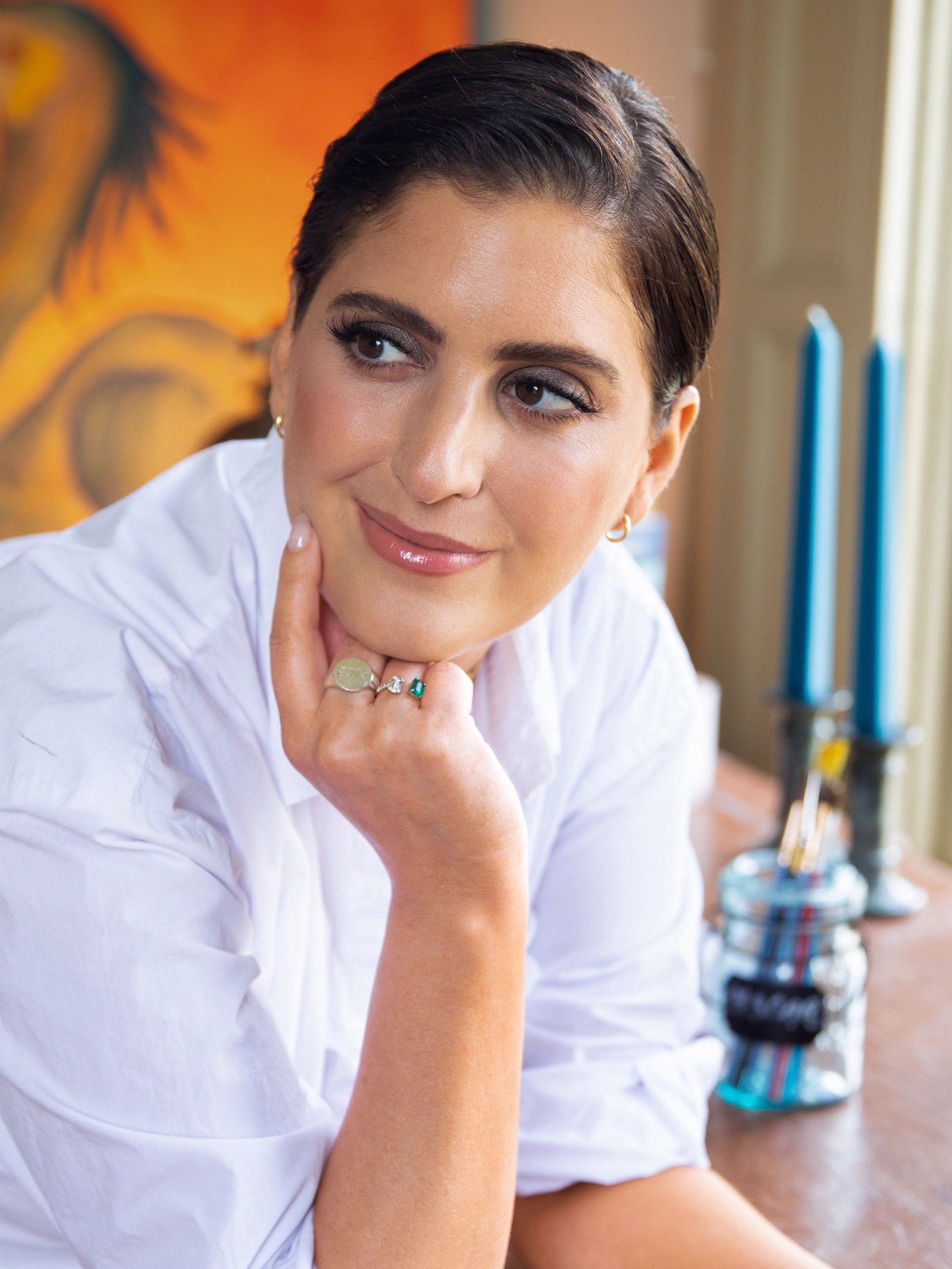
Attr: Hoffman Institute
| 7 Quotes | |
| Occup. | Author |
| From | USA |
| Spouse | Jon Batiste |
| Born | July 5, 1988 New York City, New York, USA |
| Age | 37 years |
| Cite | |
Citation Formats
APA Style (7th ed.)
Suleika jaouad biography, facts and quotes. (2026, March 17). FixQuotes. https://fixquotes.com/authors/suleika-jaouad/
Chicago Style
"Suleika Jaouad biography, facts and quotes." FixQuotes. March 17, 2026. https://fixquotes.com/authors/suleika-jaouad/.
MLA Style (9th ed.)
"Suleika Jaouad biography, facts and quotes." FixQuotes, 17 Mar. 2026, https://fixquotes.com/authors/suleika-jaouad/. Accessed 7 Apr. 2026.
Early Life and Background
Suleika Jaouad was born in New York City in 1988 and grew up in a richly hybrid household shaped by migration, journalism, medicine, and art. Her father is Tunisian, her mother Swiss, and the family moved between New York and the suburbs of New Jersey, giving her an early sense of cultural doubleness - Arab and European inheritances, urban energy and suburban quiet, cosmopolitan ambition and private vulnerability. That mixture later became central to her voice: intimate yet outward-looking, skeptical of easy identity labels, and alert to how illness, love, and belonging unsettle any fixed idea of the self.Childhood also acquainted her with precarity beneath outward accomplishment. Jaouad has written and spoken about growing up close to adults whose professional lives were serious and demanding, which gave her both discipline and a feel for storytelling as labor rather than ornament. As a young woman she seemed poised for a conventional path of achievement, but just after college she was diagnosed with leukemia, a break so violent it reorganized time itself. For Jaouad, biography cannot be separated from survivorship: before illness there was striving; after diagnosis there was a long apprenticeship in uncertainty, dependence, and the daily negotiation between despair and will.
Education and Formative Influences
Jaouad studied at Princeton University, where she developed as a writer and reporter while absorbing a broad literary and journalistic tradition. The formative pressure on her imagination came not only from books but from collision - between youthful plans and the reality of catastrophic illness, between literary ambition and hospital routine, between the polished public story of recovery and the messier truth of fear, isolation, and bodily fragility. Those years trained her in a rare double vision: she learned to observe experience with a reporter's precision while also inhabiting it with a diarist's candor. The result was a style that would later resist sentimentality without surrendering tenderness.Career, Major Works, and Turning Points
Jaouad first came to wide attention through "Life, Interrupted", her New York Times column chronicling cancer treatment, remission, and the disorienting aftermath of survival. The column mattered because it addressed a neglected zone: not simply the drama of diagnosis, but the lonely, anticlimactic work of living on after crisis, when others expect gratitude and normalcy while the survivor still feels exiled from ordinary life. She expanded those concerns in essays, public speaking, and her memoir Between Two Kingdoms (2021), a book that braided medical narrative, love story, road chronicle, and philosophical inquiry. A decisive turning point came when, after years of treatment and remission, she set out across America to meet people who had written to her during her illness. That journey transformed private suffering into relational witness and confirmed her as an author whose authority rests less on uplift than on exacting honesty. Her later work, including The Book of Alchemy, continued this effort to turn personal crisis into a broader meditation on creativity, ritual, and self-making.Philosophy, Style, and Themes
Jaouad's work is driven by a refusal of false resolution. She is interested in thresholds - between sickness and health, dependence and autonomy, private pain and shared meaning - and she writes from the conviction that those thresholds are rarely crossed cleanly. “To learn to swim in the ocean of not-knowing, this is my constant work”. That sentence captures her deepest psychological signature: she does not claim mastery over uncertainty but practices endurance within it. Likewise, “I don't think there is ever a Hallmark version of any of life”. Her prose resists inspirational simplification because she knows that neat narratives can become a form of erasure, especially for the ill, the grieving, and the not-yet-healed.This moral seriousness gives her style its particular tension: lyrical but reportorial, confessional yet disciplined, emotional without melodrama. She returns again and again to the problem of how to make meaning without lying about pain. “This is so much of life, holding the really beautiful things and the deeply cruel, profoundly hard things in the same palm”. That image explains both her aesthetic and her ethics. She treats survival not as triumph but as an unfinished creative practice, one that asks a person to remake identity after it has been shattered. In this sense, her memoiristic voice is not merely self-revelation; it is an inquiry into how a self is revised by ordeal, by love, by the body's betrayals, and by the obligation to continue.
Legacy and Influence
Jaouad has become one of the most influential contemporary writers on illness, survivorship, and the uses of personal narrative in American public life. Her importance lies in widening the emotional vocabulary available to readers confronting cancer, caregiving, trauma, and recovery; she helped normalize the idea that remission is not the end of the story and that healing may be psychological, communal, and artistic as much as medical. For younger writers, she has offered a model of memoir that is neither exhibitionistic nor evasive, but ethically alert to the risks of turning suffering into art. For general readers, she has made vulnerability intellectually serious. Her enduring influence will likely rest on this achievement: she transformed the language of survival from a script of victory into a literature of ambiguity, companionship, and hard-won meaning.Our collection contains 7 quotes written by Suleika, under the main topics: Writing - Life - Deep - Meaning of Life - Reinvention.
Source / external links