
Sunita Williams Biography Quotes 9 Report mistakes
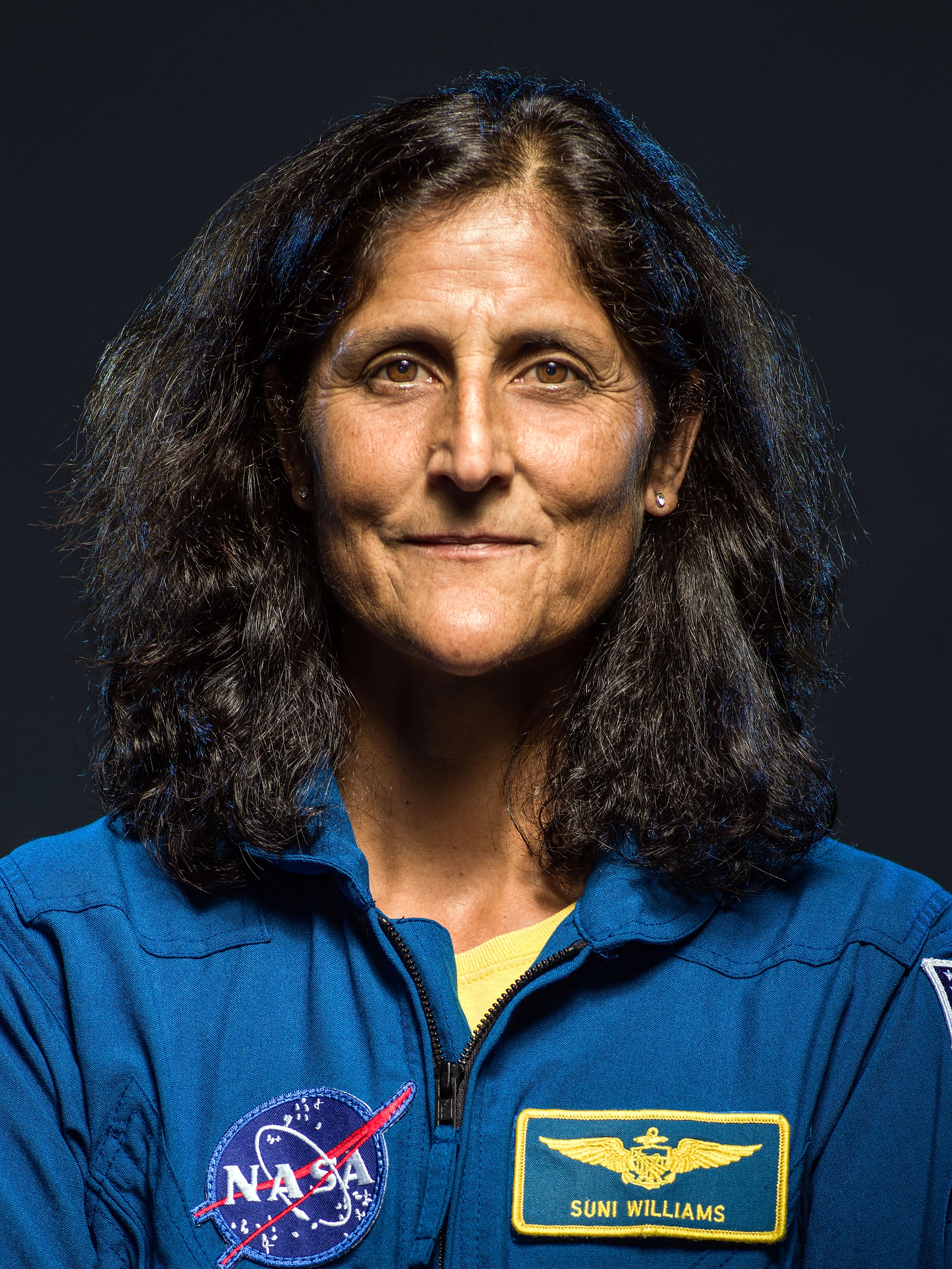
| 9 Quotes | |
| Born as | Sunita Lyn Williams |
| Occup. | Astronaut |
| From | USA |
| Spouse | Michael J. Williams |
| Born | September 19, 1965 Euclid, Ohio, USA |
| Age | 60 years |
| Cite | |
Citation Formats
APA Style (7th ed.)
Sunita williams biography, facts and quotes. (2026, February 14). FixQuotes. https://fixquotes.com/authors/sunita-williams/
Chicago Style
"Sunita Williams biography, facts and quotes." FixQuotes. February 14, 2026. https://fixquotes.com/authors/sunita-williams/.
MLA Style (9th ed.)
"Sunita Williams biography, facts and quotes." FixQuotes, 14 Feb. 2026, https://fixquotes.com/authors/sunita-williams/. Accessed 14 Feb. 2026.
Early Life and Background
Sunita Lyn Williams was born on September 19, 1965, in Euclid, Ohio, and grew up mostly in Needham, Massachusetts, in the long afterglow of Apollo and the uneasy, technical optimism of the Cold War. Her family life braided cultures and professions: her father, Deepak Pandya, was an Indian American neuroanatomist and physician, and her mother, Bonnie Pandya, traced Slovene American roots. That mixed inheritance mattered less as a slogan than as a daily practice of discipline, study, and quiet resilience, the kind of household that normalizes hard problems and expects you to stay with them.Needham in the 1970s and early 1980s offered the ordinary American landscape of schools, sports, and public ambition, but Williams gravitated toward the physically exacting - swimming, running, endurance - and the idea that competence is built, not bestowed. She came of age as the Space Shuttle program turned spaceflight from singular national spectacle into repeatable work, a shift that made a future astronaut feel, to the right temperament, like a job you could train for. The combination of family science, athletic stubbornness, and an era that rebranded space as operations formed her earliest inner script: mastery comes from repetition, and nerves are part of the process, not a veto.
Education and Formative Influences
Williams graduated from Needham High School in 1983, earned a BS in Physical Science from the US Naval Academy in 1987, and later completed an MS in Engineering Management at Florida Institute of Technology in 1995. The Naval Academy shaped her most durable habits: responsibility in teams, comfort with checklists, and the mental switch between decisive action and patient procedure. Naval aviation then sharpened the traits NASA values most - situational awareness, risk literacy, and the ability to keep learning under stress - while the 1990s military workplace, increasingly technical and joint, trained her to translate between specialists without losing the plot.Career, Major Works, and Turning Points
Commissioned as a naval officer, Williams became a helicopter pilot, deployed in the Mediterranean, Red Sea, and Persian Gulf, and later served as an instructor and a test pilot at the US Naval Test Pilot School. Selected by NASA as an astronaut in 1998, she moved from flight decks to the Shuttle era's final decades and the ISS era's consolidation. Her first spaceflight, STS-116 (2006), delivered her to Expedition 14/15, where she performed multiple spacewalks and, by running the Boston Marathon on the station treadmill, turned endurance into a public language for orbital life. Returning to space on Soyuz TMA-05M in 2012, she served on Expeditions 32/33 and became commander of the ISS - a role that marked both personal authority and a broader institutional transition as NASA leaned on international partners and commercial cargo. Across her missions she logged more than 300 days in space and set, at the time, a women's record for cumulative EVA time, building a reputation for calm execution in the hardest, most improvisational kind of maintenance: repairing the fragile machine you live inside.Philosophy, Style, and Themes
Williams' public philosophy reads as a distillation of operational culture: focus on the controllable, accept fear as data, and choose the harder path if it widens your competence. “If you have the ability to do something, if you have the opportunity to do something, why not?” In psychological terms, that is not bravado but a practiced refusal to romanticize risk - she treats opportunity as a responsibility to attempt, then lets training carry the burden of emotion. “It’s all about not being afraid”. Coming from an astronaut, the line is revealing precisely because it cannot be literal; the subtext is that fear is managed through preparation, teamwork, and an almost playful curiosity about systems.Her style in interviews and in the symbolism she chooses - exercise, maintenance work, small rituals, gratitude - emphasizes joy as a performance requirement, not a sentimental add-on. “You have to enjoy what you do”. That insistence functions as self-regulation: in isolation and high consequence, enjoyment becomes a tool for sustaining attention and preventing burnout. Williams also repeatedly credits others, aligning with the reality that modern spaceflight is a social technology as much as a mechanical one: mission success is distributed across engineers, trainers, international crewmates, and the quiet competence of ground teams. The theme running beneath her career is a disciplined optimism - not the denial of danger, but the decision to meet it with skill, humor, and steady work.
Legacy and Influence
Sunita Williams stands as a bridge figure between the Shuttle generation and the mature ISS era: a naval aviator turned orbital mechanic, a public-facing endurance athlete, and a commander in a program defined by international cooperation. Her records and firsts matter, but her deeper influence lies in how she made astronauting legible - as preparation, teamwork, and repeated practice rather than mythic exception. For women in STEM, for children of immigrants, and for anyone who doubts they "look like" an astronaut, her career offers a concrete template: build competence, accept help, keep your body and mind ready, and treat the extraordinary as a set of tasks you can learn to do well.Our collection contains 9 quotes written by Sunita.
Source / external links