
Susan Sontag Biography Quotes 49 Report mistakes
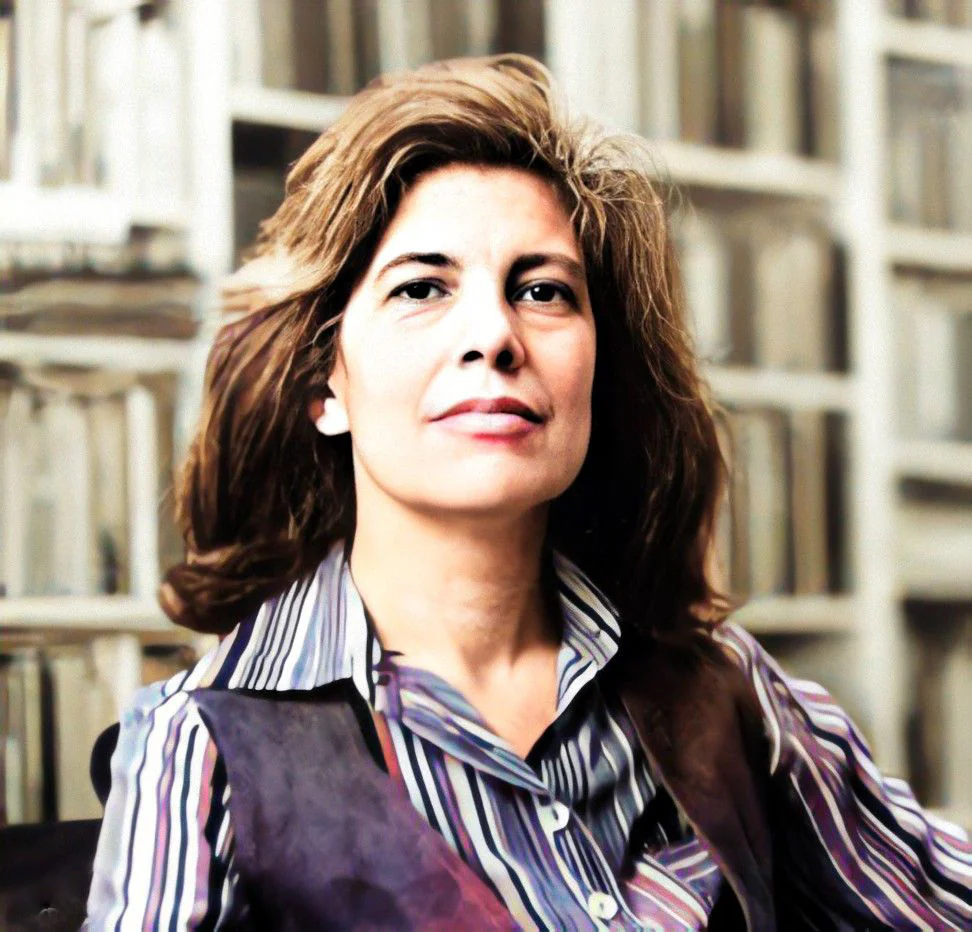
Attr: Lynn Gilbert, CC BY-SA 4.0
| 49 Quotes | |
| Occup. | Author |
| From | USA |
| Born | January 28, 1933 New York City, New York, USA |
| Died | December 28, 2004 New York City, New York, USA |
| Cause | Leukemia |
| Aged | 71 years |
| Cite | |
Citation Formats
APA Style (7th ed.)
Susan sontag biography, facts and quotes. (2026, February 3). FixQuotes. https://fixquotes.com/authors/susan-sontag/
Chicago Style
"Susan Sontag biography, facts and quotes." FixQuotes. February 3, 2026. https://fixquotes.com/authors/susan-sontag/.
MLA Style (9th ed.)
"Susan Sontag biography, facts and quotes." FixQuotes, 3 Feb. 2026, https://fixquotes.com/authors/susan-sontag/. Accessed 26 Mar. 2026.
Early Life and Background
Susan Sontag was born Susan Rosenblatt on January 28, 1933, in New York City to Jack Rosenblatt and Mildred Jacobsen Rosenblatt. Her father, a fur trader, died of tuberculosis in China when she was very young, leaving absence - and the idea of mortality as a defining fact rather than an abstraction - to haunt her imagination. After her mother remarried Nathan Sontag, Susan took his surname; the marriage was uneasy, and the household often felt provisional, a stopover rather than a home.She grew up largely in Tucson, Arizona, and then in Los Angeles, a self-invented adolescent in the postwar American landscape of new suburbs, Hollywood surfaces, and Cold War anxieties. Reading became her shelter and her engine: she advanced quickly, cultivated precocity, and learned early that intensity could be a kind of discipline. The tension between a private life kept guarded and a public voice sharpened for argument began here, in a childhood defined by relocation, vigilance, and the need to author oneself.
Education and Formative Influences
Sontag entered the University of Chicago at fifteen, drawn to its Great Books culture and argumentative seriousness; there she met sociologist Philip Rieff, married him in 1950, and had her son David Rieff in 1952, a compressed initiation into adult roles she would later resist as identity. Graduate study followed at Harvard, where she worked with thinkers such as Paul Tillich and absorbed European philosophy, then further study in Oxford and Paris, where the immediacy of French intellectual life - existentialism, structuralism, cinephilia - deepened her sense that criticism could be a form of creation and that style was not decoration but moral posture.Career, Major Works, and Turning Points
In the 1960s Sontag emerged as one of the most formidable American essayists, publishing in Partisan Review and then the landmark collection Against Interpretation (1966), which announced her as a critic impatient with reductive readings and hungry for new forms of attention. Essays on camp, cinema, and modernism made her a public intellectual with a sensibility tuned to both high art and mass culture, while her fiction - including The Benefactor (1963), Death Kit (1967), and later The Volcano Lover (1992) and In America (1999) - tested how consciousness narrates itself. Turning points came through illness and war: her 1975 breast cancer diagnosis and recovery fueled Illness as Metaphor (1978) and later AIDS and Its Metaphors (1989), polemics against moralizing language that punishes the sick; and her solidarity with besieged Sarajevo in the 1990s, where she staged Beckett's Waiting for Godot, embodied her belief that art is not a luxury but a civic act under fire.Philosophy, Style, and Themes
Sontag treated consciousness as an instrument that can either deaden experience or heighten it. She distrusted explanatory reflexes that turn art into a message and feeling into a diagnosis, arguing instead for an ethics of perception. “Interpretation is the revenge of the intellectual upon art”. The line is not anti-intellectual so much as anti-domestication: she wanted criticism to restore the shock, density, and pleasure of the work itself, and she wrote in a cool, sinewy prose that could sound like a verdict while actually clearing space for sensation.Her psychology was built around vigilance - toward illness, toward ideology, toward the lies people tell to remain comfortable. “Sanity is a cozy lie”. That suspicion fed her anti-sentimental bravery: she refused the consolations of easy coherence and instead pursued a strenuous lucidity, especially where pain and public myth intersect. In her account of sickness, she noted how societies enlist disease to dramatize fear and assign blame: “Any important disease whose causality is murky, and for which treatment is ineffectual, tends to be awash in significance”. Across her work, the target was the same - the conversion of reality into morality play - and the remedy was attention, unsparing and aesthetically alive.
Legacy and Influence
Sontag died on December 28, 2004, in New York City, after years of cancer, leaving behind journals, fiction, films, and essays that remain templates for fearless cultural argument. She helped define what a late-20th-century public intellectual could be: cosmopolitan without being vague, political without reducing art to propaganda, skeptical without surrendering to cynicism. Her influence runs through contemporary criticism, photography theory, illness narrative, and activist aesthetics; even her contradictions - sensual yet severe, glamorous yet ascetic, vulnerable yet controlling - became part of her lesson. She endures because she made seriousness feel like appetite, and because she insisted that how we look, name, and interpret is never neutral: it is a decision about what kinds of lives, and what kinds of truths, we will allow.Our collection contains 49 quotes written by Susan, under the main topics: Witty One-Liners - Motivational - Truth - Wisdom - Art.
Other people related to Susan: Annie Leibovitz (Photographer), Elizabeth Hardwick (Critic), Leni Riefenstahl (Director)
Susan Sontag Famous Works
- 2003 Regarding the Pain of Others (Book)
- 2000 In America (Novel)
- 1992 The Volcano Lover (Novel)
- 1978 Illness as Metaphor (Book)
- 1977 On Photography (Book)
- 1966 Against Interpretation (Book)
Source / external links