
Svetlana Tikhanovskaya Biography Quotes 9 Report mistakes
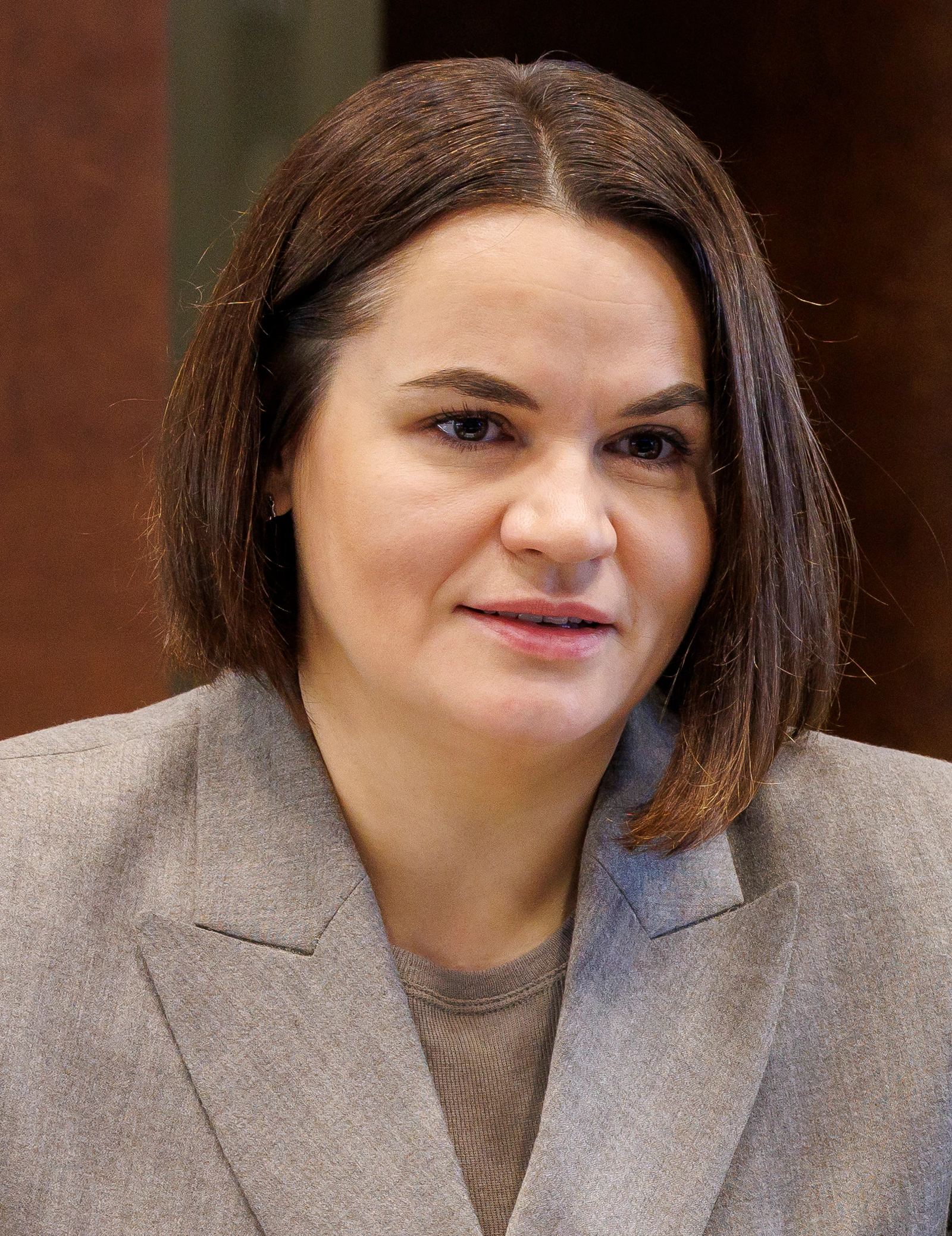
| 9 Quotes | |
| Occup. | Politician |
| From | Belarus |
| Spouse | Siarhei Tikhanouski |
| Born | September 11, 1982 Mikashevichi, Brest Region, Belarus (then Byelorussian SSR, Soviet Union) |
| Age | 43 years |
| Cite | |
Citation Formats
APA Style (7th ed.)
Svetlana tikhanovskaya biography, facts and quotes. (2026, February 11). FixQuotes. https://fixquotes.com/authors/svetlana-tikhanovskaya/
Chicago Style
"Svetlana Tikhanovskaya biography, facts and quotes." FixQuotes. February 11, 2026. https://fixquotes.com/authors/svetlana-tikhanovskaya/.
MLA Style (9th ed.)
"Svetlana Tikhanovskaya biography, facts and quotes." FixQuotes, 11 Feb. 2026, https://fixquotes.com/authors/svetlana-tikhanovskaya/. Accessed 12 Feb. 2026.
Early Life and Background
Svetlana Tikhanovskaya (Belarusian: Sviatlana Tsikhanouskaya), born in 1982, came of age in a Belarus shaped by the aftershocks of the Soviet collapse and, soon after, the consolidation of Alyaksandr Lukashenka's rule. In the 1990s and 2000s, the state promised stability while narrowing the space for dissent, and ordinary ambitions were often quietly calibrated to avoid politics. Tikhanovskaya's early adulthood fit that pattern: practical, family-centered, and largely outside public life.Her private world became inseparable from national events through her marriage to blogger and activist Sergei Tikhanovsky, whose blunt, street-level interviews and anti-corruption message drew large audiences and official hostility. Their family experienced the kinds of pressure that many Belarusians recognized but seldom publicized - intimidation, surveillance, and the ever-present risk of detention. When Sergei was arrested in 2020 and barred from running for president, the boundary between home and state collapsed, and Tikhanovskaya stepped into the vacuum as both spouse and substitute candidate.
Education and Formative Influences
Tikhanovskaya studied at Mozyr State Pedagogical University and trained as an English teacher, later working as a translator and raising her children. Those experiences shaped a politics of plain speech and practical empathy: she was not a product of party hierarchies or ideological schools, but of classrooms, family responsibilities, and the Belarusian habit of improvising under constraints. Her formative influence was less a single text than a lived understanding of how authoritarian systems turn everyday life - jobs, education, parenting - into leverage.Career, Major Works, and Turning Points
The turning point came in spring-summer 2020, when she registered as a presidential candidate and quickly became the focal point of a broad anti-Lukashenka coalition, symbolically joined by Maria Kalesnikava and Veronika Tsepkalo. Her campaign offered a minimalist program - release political prisoners, stop violence, and hold new elections - allowing disparate groups to unite around process rather than ideology. After the August 9, 2020 election, widely condemned as fraudulent, mass protests erupted nationwide; amid escalating repression she was pressured into leaving Belarus for Lithuania, where she continued as the most visible international representative of the democratic movement, meeting European leaders, addressing the European Parliament, and advocating sanctions and diplomatic pressure while supporting Belarusian civil society in exile.Philosophy, Style, and Themes
Tikhanovskaya's public identity is built on a deliberate inversion: she frames herself not as a professional power-seeker but as a citizen forced into leadership by coercion and moral necessity. The psychological core of her appeal is that she speaks from the threshold between domestic life and state violence, insisting that the political is what intrudes when basic dignity is denied. "I am not a politician. I am just a woman who loves her husband and wants to live in a free country". The line is not coyness so much as strategy - it disarms regime propaganda, lowers the cost of identification for hesitant supporters, and casts her legitimacy as relational and ethical rather than bureaucratic.Her rhetoric also turns fear into a collective milestone, presenting 2020 as a national awakening rather than a failed revolt. "Belarusians have woken up". "We are not afraid anymore". She consistently avoids ethnic chauvinism and geopolitical provocation, emphasizing a civic nation whose central demand is agency: fair procedures, accountable authority, and the right to choose leaders without violence. This restraint - incremental in goals, maximal in principle - helped her become a unifying symbol while keeping focus on political prisoners, documentation of abuses, and the long game of sustaining solidarity under repression.
Legacy and Influence
Tikhanovskaya's enduring influence lies in how she translated an improvised candidacy into a durable democratic representation during a period when the Belarusian state sought to erase opposition from public space. Even in exile, she has functioned as a moral ledger for the 2020 crackdown and a diplomatic conduit for Belarusians who cannot safely speak, keeping attention on detainees, torture allegations, and the demand for legitimate elections. Her legacy is still unfolding, but her role has already altered the repertoire of post-Soviet protest: a leader without party machinery who made vulnerability and ordinary life into political force, and who helped fix in global memory the idea that Belarus is not synonymous with its ruler.Our collection contains 9 quotes written by Svetlana, under the main topics: Leadership - Freedom - Human Rights.
Source / external links
- Associated Press: Interview/report from Davos: denounces trial in absentia (Jan 17: 2023)
- Associated Press: Belarus sentences exiled opposition leader to 15 years
- Euronews profile/news feature: Sakharov Prize award (Dec 16: 2020)
- LinkedIn: Office of Sviatlana Tsikhanouskaya
- Instagram: @prezident.sveta
- X (Twitter): @Tsihanouskaya
- Sviatlana Tsikhanouskaya: Official biography (tsikhanouskaya.org)
- Wikipedia: Sviatlana Tsikhanouskaya