
Tabitha Soren Biography Quotes 20 Report mistakes
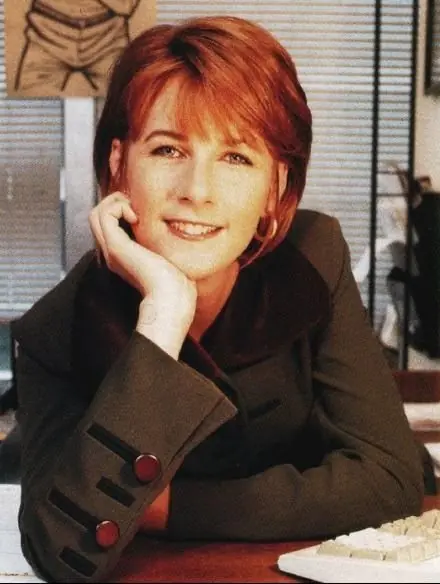
| 20 Quotes | |
| Occup. | Celebrity |
| From | USA |
| Born | August 19, 1967 |
| Age | 58 years |
Tabitha Soren was born in 1967 in the United States and came of age at a moment when mass media and youth culture were reshaping American public life. From an early point in her career she gravitated toward the intersection of current events and storytelling, a path that would first make her recognizable to national audiences and later define her as a distinctive voice in fine art photography. Though details of her formal training are not the centerpiece of her public profile, Soren's early professional choices reveal a clear curiosity about politics, culture, and the mechanics of influence.
Rise in Journalism
Soren became widely known in the 1990s as a reporter and anchor for MTV News, where she helped translate the day's major stories for a younger audience. She was a prominent face of the network's political coverage, especially during the 1992 presidential campaign season, when MTV's civic-engagement programming galvanized first-time voters. On-air, she interviewed candidates and officeholders, including figures such as then-Governor Bill Clinton, and she drew musical artists and cultural leaders into conversations about policy, rights, and responsibility. Working alongside colleagues such as Kurt Loder, Alison Stewart, and Serena Altschul, she helped broaden the idea of what youth-oriented journalism could do: connect entertainment, politics, and lived experience without condescension.
Her reporting style balanced professionalism with accessibility, and she developed a reputation for asking direct, grounded questions that framed complex issues in terms relevant to viewers who were new to national politics. In addition to electoral coverage, she reported on social trends, public health topics, and the rapidly changing media landscape. The MTV News platform gave her the reach to bring civic discourse to millions of people who might not otherwise have encountered it.
Transition to Photography
After years in front of the camera, Soren made a decisive shift behind it, devoting herself to fine art photography. The change was less a break than an evolution: she redirected her journalistic instincts toward long-form visual projects, using photography to investigate risk, uncertainty, and the psychological texture of contemporary life. The work retained the urgency of her reporting days while embracing the ambiguity and metaphor of art. She spent extended periods on research, fieldwork, and editing, allowing individual projects to unfold over many years.
Major Projects and Themes
Soren's series are known for clear conceptual frameworks and patient, rigorous execution. In Running, she photographed people in mid-sprint across varied environments, creating images that feel like stills from a collective dream of flight and pursuit. The pictures function as portraits of bodily instinct and social anxiety, drawing on cinematic language to explore what it feels like to be propelled by fear, hope, or both.
In Fantasy Life, she followed a cohort of professional baseball hopefuls over a long span, tracking the way time, chance, and injury shape careers launched on promise. The project situates the national pastime within a matrix of labor, aspiration, and loss. It resonates with broader American themes and, given that her husband Michael Lewis wrote about baseball's analytics revolution in Moneyball, it also converses indirectly with the culture of the sport that surrounded their family life.
Surface Tension examines the glass of digital screens, photographing the smudges, streaks, and incidental marks left by human touch. These works turn the residue of daily scrolling into landscapes that feel planetary or oceanic, asking viewers to confront the physical traces of our virtual habits. Across these and other series, Soren has shown a consistent interest in the ways individuals navigate systems larger than themselves.
Exhibitions, Publications, and Reception
Soren's photographs have been exhibited at museums and galleries across the United States and internationally, and they have entered public and private collections. Her projects have been accompanied by monographic books that extend the work's reach beyond the gallery, making her investigations accessible to readers who encounter them on the page. Curators and critics have noted the continuity between her journalistic past and her fine art practice: both pursue complex subjects with clarity, and both treat ordinary people as protagonists in a story shaped by chance, institutions, and technology.
Personal Life
Soren's personal and professional lives have frequently intersected with the worlds she documents. She married the writer Michael Lewis, known for books such as Liar's Poker, Moneyball, and The Big Short, and their partnership has placed her near the frontier of stories about markets, risk, and performance that also haunt her own projects. The couple built their family life in Northern California, close to communities of artists, writers, and technologists whose work likewise addresses volatility and change. In 2021 the family suffered the devastating loss of one of their children in a car accident, a tragedy widely reported in the press. The experience, while private, sits in somber parallel to the themes of contingency and fragility that recur in Soren's art.
Continuity of Purpose
Though the mediums differ, Soren's career traces a coherent arc. The on-air interviewer who pressed public figures for answers is of a piece with the photographer who lingers for years with a subject until deeper truths emerge. Both roles require patience, trust, and a willingness to approach large systems through the intimate scale of individual lives. The transit from television journalism to fine art has expanded her creative latitude, but it has not altered her core fascination with how people endure, adapt, and imagine futures for themselves.
Legacy and Influence
Soren stands as an example of how a public figure can reformulate a career without abandoning its earliest commitments. To viewers who first encountered her on MTV News, she offered a bridge from pop culture to public life; to audiences encountering her in galleries and books, she offers finely observed meditations on contemporary existence. Colleagues from her broadcast years and collaborators from her art practice, along with family members like Michael Lewis, form a constellation of influences and interlocutors that continues to shape her work. Across decades, she has insisted that stories about politics, sport, technology, and environment are also stories about ordinary bodies in motion, touching the world and being touched by it.
Our collection contains 20 quotes who is written by Tabitha, under the main topics: Witty One-Liners - Ethics & Morality - Wisdom - Justice - Music.
Source / external links