
Tacitus Biography Quotes 30 Report mistakes
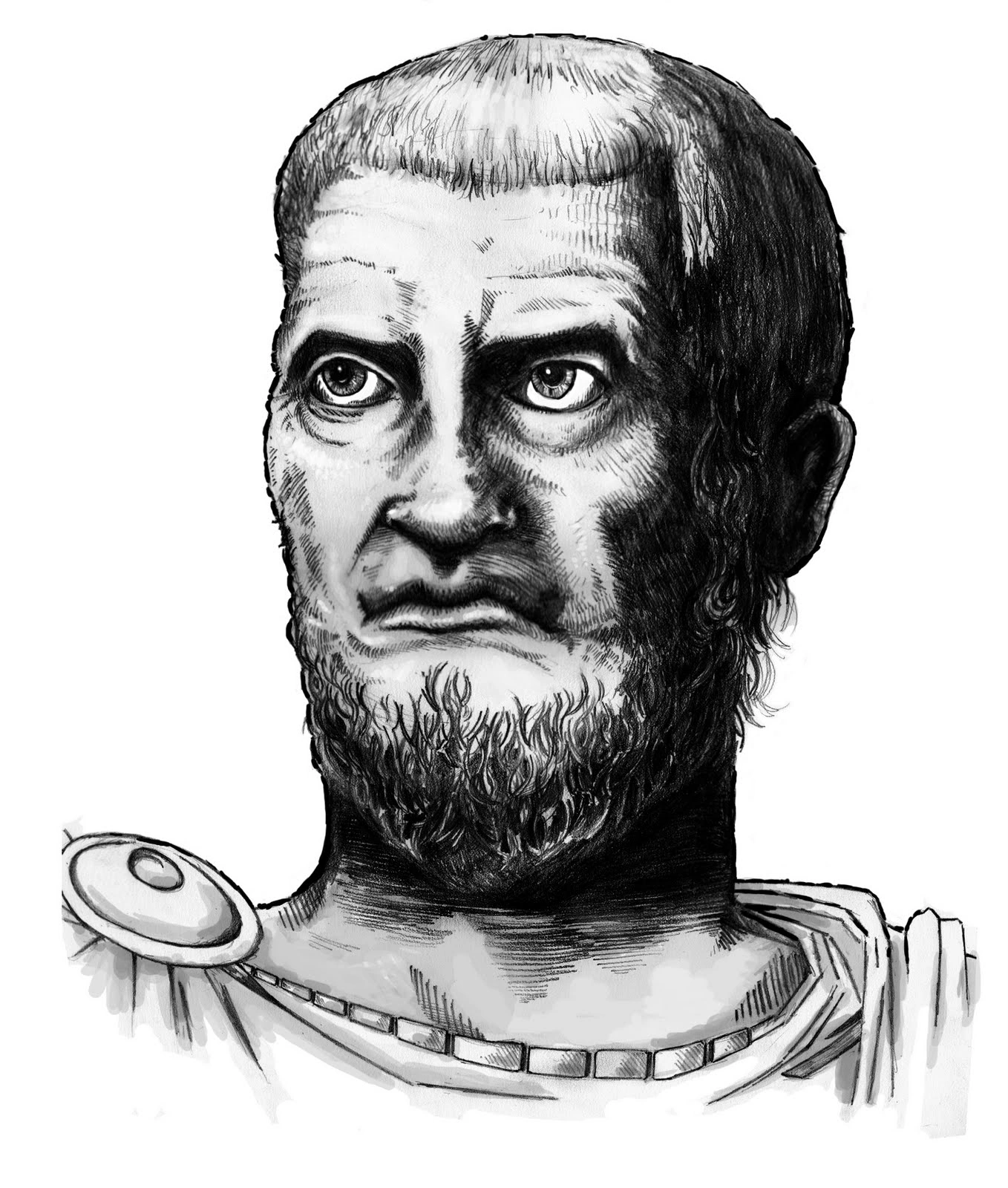
| 30 Quotes | |
| Occup. | Historian |
| From | Rome |
| Born | 56 AC |
| Died | 117 AC |
| Cite | |
Citation Formats
APA Style (7th ed.)
Tacitus biography, facts and quotes. (2026, February 11). FixQuotes. https://fixquotes.com/authors/tacitus/
Chicago Style
"Tacitus biography, facts and quotes." FixQuotes. February 11, 2026. https://fixquotes.com/authors/tacitus/.
MLA Style (9th ed.)
"Tacitus biography, facts and quotes." FixQuotes, 11 Feb. 2026, https://fixquotes.com/authors/tacitus/. Accessed 5 Mar. 2026.
Early Life and Background
Publius Cornelius Tacitus was born around AD 56, probably in northern Italy or the provinces of Gallia Narbonensis rather than in the city of Rome itself; the exact place remains uncertain, but his later intimacy with Roman power suggests an equestrian or rising senatorial family with means, connections, and a careful eye for advancement. He came of age under the Julio-Claudians last shadows and the violent improvisations that followed: Nero's court culture, the Year of the Four Emperors (69), and the hard reordering of Vespasian and Titus. Those shocks formed the emotional weather of his generation - a cohort trained to read official optimism against private fear.Tacitus' earliest memories likely included public displays of loyalty that few fully believed and the quiet arithmetic of survival practiced in elite households. By the time Domitian's reign (81-96) tightened into suspicion and informers, Tacitus was already on the cursus honorum, learning that a public career could be made by eloquence and undone by rumor. This double vision - the necessity of serving the state and the corrosions of power - became his lifelong subject, and the source of the restrained anger that pulses beneath his prose.
Education and Formative Influences
He was educated in the capital's rhetorical culture, where declamation trained ambition and sharpened moral language into a political instrument; he later recalls the era when oratory began to lose its old freedom even as schools multiplied. He married Julia Agricola, daughter of the general Gnaeus Julius Agricola, around 77, binding his fortunes to a household marked by provincial command, military discipline, and cautious integrity. The marriage also gave him a living model of virtue under tyranny: a man who served Rome in Britain without courting the spotlight that endangered others under Domitian.Career, Major Works, and Turning Points
Tacitus rose steadily: quaestor (probably under Vespasian or Titus), praetor in 88, membership in the priestly college of the quindecimviri sacris faciundis, and later the consulship in 97 under Nerva, when he delivered the funeral oration for the revered Verginius Rufus. Under Trajan he governed the province of Asia as proconsul (112/113), and with Pliny the Younger prosecuted the extortionist governor Marius Priscus - episodes that sharpened his interest in administrative ethics and the theater of senatorial justice. His major works followed a deliberate arc: the Agricola (98) and Germania (98) paired a portrait of character with an ethnographic mirror held up to Rome; the Dialogus de Oratoribus (date debated, often placed c. 102) anatomized the decline of free speech; the Histories (c. 105-109, surviving for 69-70 and fragments) traced civil war into Flavian consolidation; and the Annals (c. 110-117, partly lost) returned to Tiberius, Caligula, Claudius, and Nero to show how principate stability could rot into court terror. His late style - compressed, ironical, and morally charged - reads like the product of a man who had watched the senate perform obedience and then, under better emperors, refuse to forget.Philosophy, Style, and Themes
Tacitus wrote history as moral diagnosis, not antiquarian compilation. He distrusted simple causality and exposed how fear, vanity, and grievance make institutions lie. His Rome is not only a city but a centrifuge: “All things atrocious and shameless flock from all parts to Rome”. The sentence is more than satire; it reveals his psychological sense that empire gathers temptations faster than character can metabolize them, turning the capital into a marketplace of souls where provincial talents and vices are equally rewarded. Power, in his view, does not merely command - it reshapes what people dare to be.His prose aims for the pressure-point: short clauses, unexpected turns, the constant insinuation that public virtue is often private calculation. When he observes, “The more corrupt the state, the more numerous the laws”. , he is describing a feedback loop he had lived through - regimes that multiply rules to mask the loss of trust, and elites who exploit complexity as camouflage. That same realism informs his portraits of emperors and senatorial accomplices: he could praise competence yet expose how even good administration can coexist with moral collapse. The bleak pity behind his judgments surfaces in lines like, “It belongs to human nature to hate those you have injured”. , a principle he uses to explain the politics of denunciation and the intimate cruelty of court life, where wrongdoing demands further wrongdoing to silence witnesses and conscience alike.
Legacy and Influence
Tacitus died around AD 117, leaving the Latin West one of its most penetrating accounts of power. Medieval readers mined him selectively; Renaissance humanists rediscovered his hard lessons about reason of state, while early modern "Tacitists" treated him as a handbook for navigating courts. His Germania was later abused by nationalist fantasies, a misuse that underscores how potent - and dangerous - his compressed moral imagery can be when severed from context. Yet his enduring influence rests on something sterner: the method of writing politics as character under pressure, and the refusal to let imperial success count as moral absolution. For historians, political theorists, and skeptical citizens alike, Tacitus remains the classic anatomist of how civilizations justify what they cannot admit.Our collection contains 30 quotes written by Tacitus, under the main topics: Ethics & Morality - Wisdom - Truth - Justice - Friendship.
Other people related to Tacitus: Quintilian (Educator), Moses Hadas (Writer), Arthur Murphy (Writer), Giambattista Vico (Philosopher), Pontius Pilate (Politician)
Source / external links