
Tadao Ando Biography Quotes 24 Report mistakes
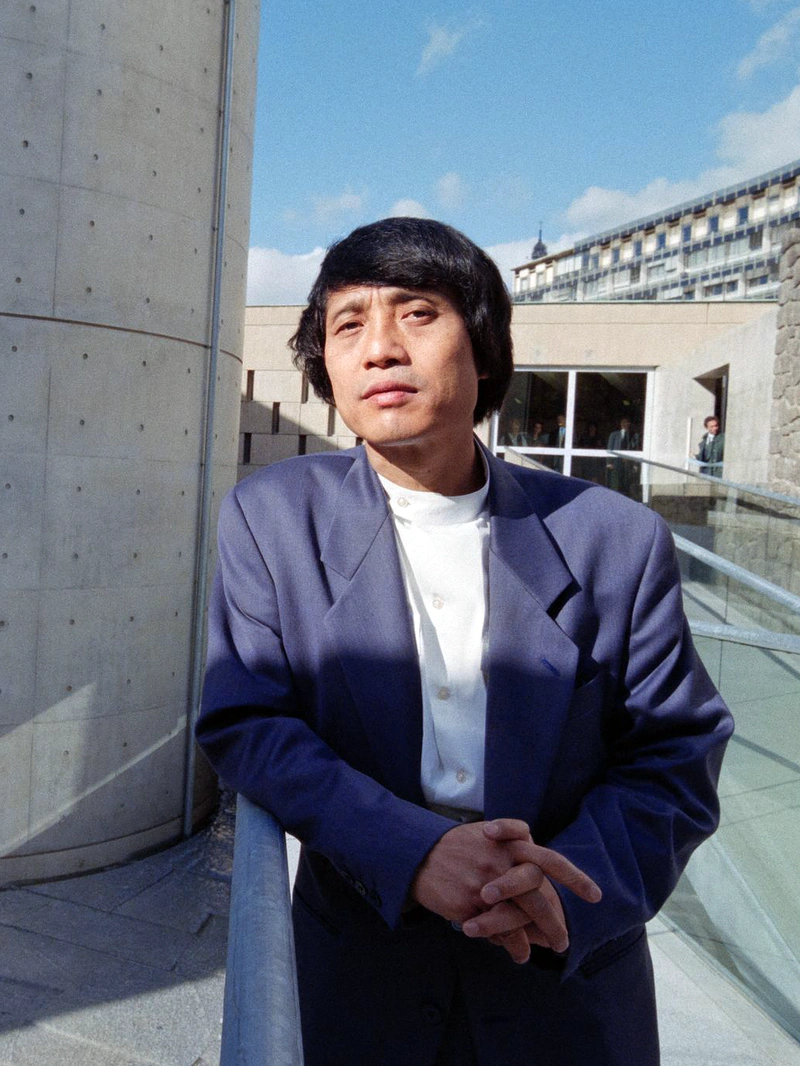
Attr: AD Middle East
| 24 Quotes | |
| Occup. | Architect |
| From | Japan |
| Born | September 13, 1941 Osaka, Japan |
| Age | 84 years |
| Cite | |
Citation Formats
APA Style (7th ed.)
Tadao ando biography, facts and quotes. (2026, February 11). FixQuotes. https://fixquotes.com/authors/tadao-ando/
Chicago Style
"Tadao Ando biography, facts and quotes." FixQuotes. February 11, 2026. https://fixquotes.com/authors/tadao-ando/.
MLA Style (9th ed.)
"Tadao Ando biography, facts and quotes." FixQuotes, 11 Feb. 2026, https://fixquotes.com/authors/tadao-ando/. Accessed 6 Mar. 2026.
Early Life and Background
Tadao Ando was born on 1941-09-13 in Osaka, Japan, into a city still marked by wartime rupture and postwar improvisation. The dense, working-class neighborhoods of Kansai - with their tight alleys, small workshops, and the everyday discipline of rebuilding - became his earliest classroom in proportion and restraint. Unlike many later "starchitect" narratives, Ando's beginnings were not cushioned by elite institutions; his early years trained him to read the grit of ordinary materials and the dignity of careful making.As a teenager he gravitated toward drawing and craft, and he also boxed seriously, an experience he later echoed in his architectural temperament: patience, repetition, and control under pressure. In a rapidly modernizing Japan of the 1950s and early 1960s - when concrete highways and industrial growth remade the urban landscape - Ando absorbed both the promise and the violence of development. That double awareness, of aspiration and erasure, would later drive his insistence that buildings should confront their sites and their societies rather than merely decorate them.
Education and Formative Influences
Ando is largely self-taught as an architect. He studied buildings the way others study texts: by sketching, traveling, and looking hard. In the 1960s he traveled through Europe and the United States, encountering modernism firsthand - the measured power of Le Corbusier, the spatial rigor of Louis Kahn, and the clarity of early modern planning - while also deepening his attention to Japanese precedents where light, shadow, and seasonal change are treated as structural forces. Those trips did not produce imitation so much as a test: whether an architecture of modern materials could still feel ethical, intimate, and culturally grounded.Career, Major Works, and Turning Points
In 1969 he founded Tadao Ando Architect and Associates in Osaka and began producing compact houses and small commissions that quickly signaled an unusual control of concrete, silence, and sequence. The turning point came with Azuma House (Row House in Sumiyoshi, Osaka, 1976), where an open courtyard interrupts a narrow urban dwelling, making weather and light unavoidable companions. From there his work expanded in scale and international visibility: the Church of the Light (Ibaraki, Osaka, 1989) distilled belief into a cruciform incision of daylight; the Rokko Housing projects (Kobe, 1980s-90s) wrestled with a steep hillside to propose community as a terraced landscape; and the Naoshima cultural projects for Benesse (1980s onward), including Chichu Art Museum (opened 2004), fused art, earth, and controlled illumination into a new kind of pilgrimage. Recognition followed, including the Pritzker Architecture Prize in 1995, but his most consistent turning point was internal: the decision to make architecture not an object to be consumed, but an experience that trains attention.Philosophy, Style, and Themes
Ando's architecture is often summarized as smooth exposed concrete, sharp geometry, and choreographed light. That is accurate but incomplete: the concrete is less a fetish than a neutral field against which life - footsteps, wind, reflected water, a shaft of sun - becomes legible. His spaces are built to be approached, entered, and gradually understood, with thresholds that slow the body and sharpen the mind. “When I design buildings, I think of the overall composition, much as the parts of a body would fit together. On top of that, I think about how people will approach the building and experience that space”. The psychological key is empathy through discipline: he composes sequences that make visitors participants, not spectators.Beneath the severity lies a persistent belief in nature as co-author. His courtyards, water planes, and framed skies are not nostalgic gestures but a cultural argument about how modern life can remain porous to seasons and silence. “When you look at Japanese traditional architecture, you have to look at Japanese culture and its relationship with nature. You can actually live in a harmonious, close contact with nature - this very unique to Japan”. Yet he is not a pure traditionalist; he is a translator who demands the site speak first. “You cannot simply put something new into a place. You have to absorb what you see around you, what exists on the land, and then use that knowledge along with contemporary thinking to interpret what you see”. His recurring themes - emptiness as capacity, constraint as freedom, and light as moral rather than decorative - mirror a personal trajectory from self-invention to civic responsibility.
Legacy and Influence
Ando's enduring influence lies in proving that minimalism can be humane and that concrete can carry tenderness. He helped reshape late-20th-century and early-21st-century architecture by insisting on experiential depth - the long walk, the calibrated darkness, the sudden flare of daylight - as a counterweight to spectacle. In Japan, his work offered a model for building modernity without surrendering to placeless speed; internationally, it expanded the language of sacred and cultural architecture, inspiring architects to treat silence, void, and nature as primary materials. Through decades of work and public engagement, Ando has become a biographical emblem of self-education and exacting craft: an architect who made his own formation, then used it to ask others to slow down and see.Our collection contains 24 quotes written by Tadao, under the main topics: Motivational - Art - Nature - Leadership - Freedom.