
Ted Cruz Biography Quotes 12 Report mistakes
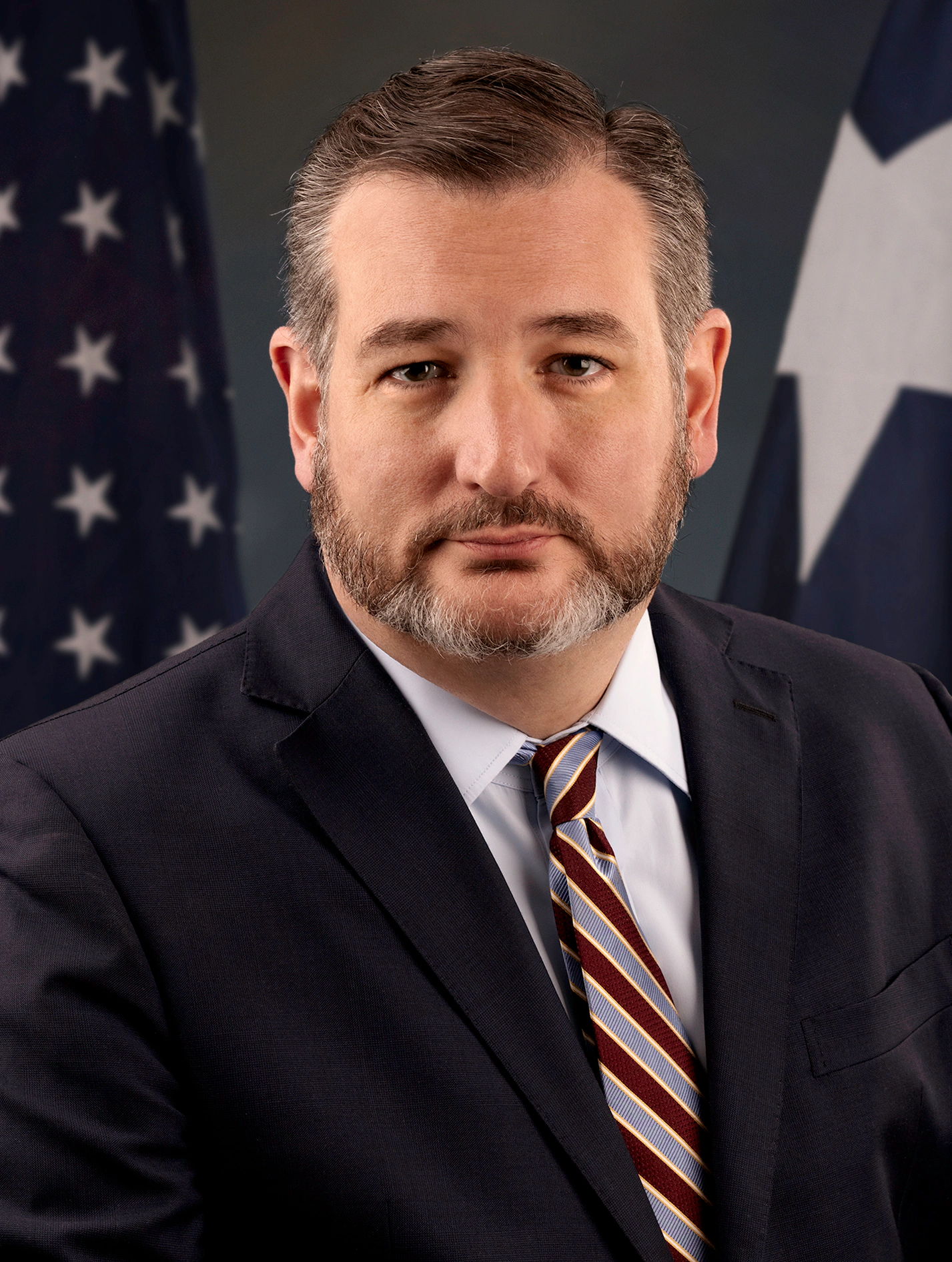
| 12 Quotes | |
| Born as | Rafael Edward Cruz |
| Occup. | Politician |
| From | USA |
| Spouse | Heidi Cruz |
| Born | December 22, 1970 Calgary, Alberta, Canada |
| Age | 55 years |
| Cite | |
Citation Formats
APA Style (7th ed.)
Ted cruz biography, facts and quotes. (2026, February 11). FixQuotes. https://fixquotes.com/authors/ted-cruz/
Chicago Style
"Ted Cruz biography, facts and quotes." FixQuotes. February 11, 2026. https://fixquotes.com/authors/ted-cruz/.
MLA Style (9th ed.)
"Ted Cruz biography, facts and quotes." FixQuotes, 11 Feb. 2026, https://fixquotes.com/authors/ted-cruz/. Accessed 5 Mar. 2026.
Early Life and Background
Rafael Edward "Ted" Cruz was born on December 22, 1970, in Calgary, Alberta, to parents whose biographies carried the political weather of the Cold War into a single household. His father, Rafael Cruz, left Cuba after the 1959 revolution, later telling a familiar exile story of a life remade in North America; his mother, Eleanor Darragh Wilson Cruz, was born in Delaware and became a U.S. citizen link that would later matter to constitutional argument and campaign drama. The family moved frequently before settling in Texas, and Cruz grew up with a child-of-immigrants intensity - a sense that history is not abstract, but something that can take your country, your property, your safety, and then your language.Houston became the proving ground. In a state where oil wealth sat beside church-going populism, Cruz absorbed a politics of grievance and aspiration at once: the conviction that elites look down on ordinary people, and the counter-conviction that law and faith can discipline that resentment into purpose. His early ambition was less social than argumentative - a preference for rules, debate, and the clean satisfactions of winning on the merits - yet it developed alongside the social fluency required in Texas Republican networks, where personal loyalty and cultural signaling can matter as much as ideology.
Education and Formative Influences
Cruz attended Princeton University, where he gained national attention as a champion debater and refined a combative, lawyerly style that would later read as both formidable and polarizing. After Princeton he earned his J.D. from Harvard Law School, then clerked for Chief Justice William Rehnquist at the U.S. Supreme Court - a formative apprenticeship in conservative constitutional method and institutional power. In the 1990s and early 2000s he worked in national politics and government, including time in the George W. Bush administration, building relationships within the conservative legal movement and learning how personnel, litigation, and messaging interact to shape policy long before a vote is cast.Career, Major Works, and Turning Points
Cruz became Solicitor General of Texas in 2003 and later served as Texas Solicitor General, arguing repeatedly before the U.S. Supreme Court and making his name as a litigator aligned with federalism and limited government. Elected to the U.S. Senate in 2012 after a Tea Party-fueled upset over Lt. Gov. David Dewhurst, he quickly became a national figure through confrontational tactics, most famously the 2013 marathon floor speech tied to an effort to block funding for the Affordable Care Act, which preceded a government shutdown. He ran for president in 2016, winning Iowa and positioning himself as an ideological insurgent, before losing the nomination to Donald Trump; his subsequent decision to back Trump and later work closely with him marked a major pivot from insurgent purity to coalition pragmatism. In the Senate he has remained a leading conservative voice on judicial confirmations, immigration and border enforcement, energy policy, and culture-war flashpoints, while also drawing intense scrutiny for hardline rhetoric and episodic controversies that shaped his public image.Philosophy, Style, and Themes
Cruz's inner life, as expressed in his speeches and political choices, is organized around a moralized view of politics: not as mere administration, but as a stage for testing courage under pressure. He frames compromise less as negotiation than as temptation, and he often speaks as if the primary political danger is not defeat but accommodation. “There are worse things in life than losing an election. There are worse things than losing your job. There are worse things than losing your fortune. There are worse things than losing your reputation. There are worse things than losing even your life. And the worst thing you can do is not stand for your principles”. The psychology beneath that sentence is revealing: Cruz seeks invulnerability through principle, treating steadfastness as a form of moral armor against both establishment derision and the volatility of modern media.His governing imagination is anchored in constitutional conservatism and a distrust of bureaucratic power, paired with a rhetoric of individual striving that fits the Texan mythos and the immigrant narrative he inherited. “The Constitution is the anchor of our freedoms”. He returns to this anchor as a way to stabilize politics in an age of rapid cultural change, presenting textual fidelity as both restraint and liberation. Likewise, “Liberty means the freedom to live your life without the government's heavy hand”. That framing elevates autonomy as the highest civic good and casts government as the default suspect - a posture that helps explain his preference for confrontation, his impatience with process, and his skill at turning procedural fights into moral theater.
Legacy and Influence
Cruz's legacy is still unfolding, but his impact is already visible in the post-Tea Party Republican Party: a fusion of conservative legalism, populist anger at institutions, and media-savvy combat that rewards ideological clarity over bipartisan craftsmanship. He helped normalize the idea that a senator can function as an opposition leader within his own government, using hearings, podcasts, litigation language, and viral confrontation to keep supporters mobilized. To admirers he embodies disciplined constitutional resistance; to critics he exemplifies the incentives of performative polarization. Either way, Cruz has become a template for a generation of Republican politicians who treat the Senate not only as a legislature, but as a courtroom and a campaign stage, with the Constitution and the culture war as the perpetual exhibits.Our collection contains 12 quotes written by Ted, under the main topics: Motivational - Leadership - Freedom - Honesty & Integrity.
Other people related to Ted: Mike Huckabee (Politician), John Kasich (Politician), Louie Gohmert (Politician), John Culberson (Politician), Steve King (Politician), Jimmy Kimmel (Celebrity), Kay Bailey Hutchison (Politician), John Carter (Politician)
Frequently Asked Questions
- Ted Cruz plane: In February 2021, Ted Cruz flew from Texas to Cancún, Mexico, during a major winter storm and power outages in Texas. Ted Cruz returned to Texas the next day after the trip drew widespread criticism.
- Ted Cruz religion: Ted Cruz is a Christian and has described himself as a Southern Baptist. Ted Cruz has spoken publicly about his evangelical faith.
- Can Ted Cruz run for president: Ted Cruz is eligible to run for U.S. president because he is a natural-born U.S. citizen. Ted Cruz was born December 22, 1970, in Calgary, Alberta, Canada, to a U.S.-citizen mother.
- Ted Cruz tapes: In 2016, Ted Cruz accused Donald Trump of having links to "the mob" and said he did not know what "tapes" Trump might have. Ted Cruz did not provide evidence of any such tapes.
- Ted Cruz trump: Ted Cruz ran against Donald Trump in the 2016 Republican presidential primaries. Ted Cruz later endorsed Donald Trump and supported him in the 2016 general election.
- Ted Cruz wife: Ted Cruz is married to Heidi Cruz. They married in 2001.
- How old is Ted Cruz? He is 55 years old
Source / external links