
Tennessee Williams Biography Quotes 43 Report mistakes
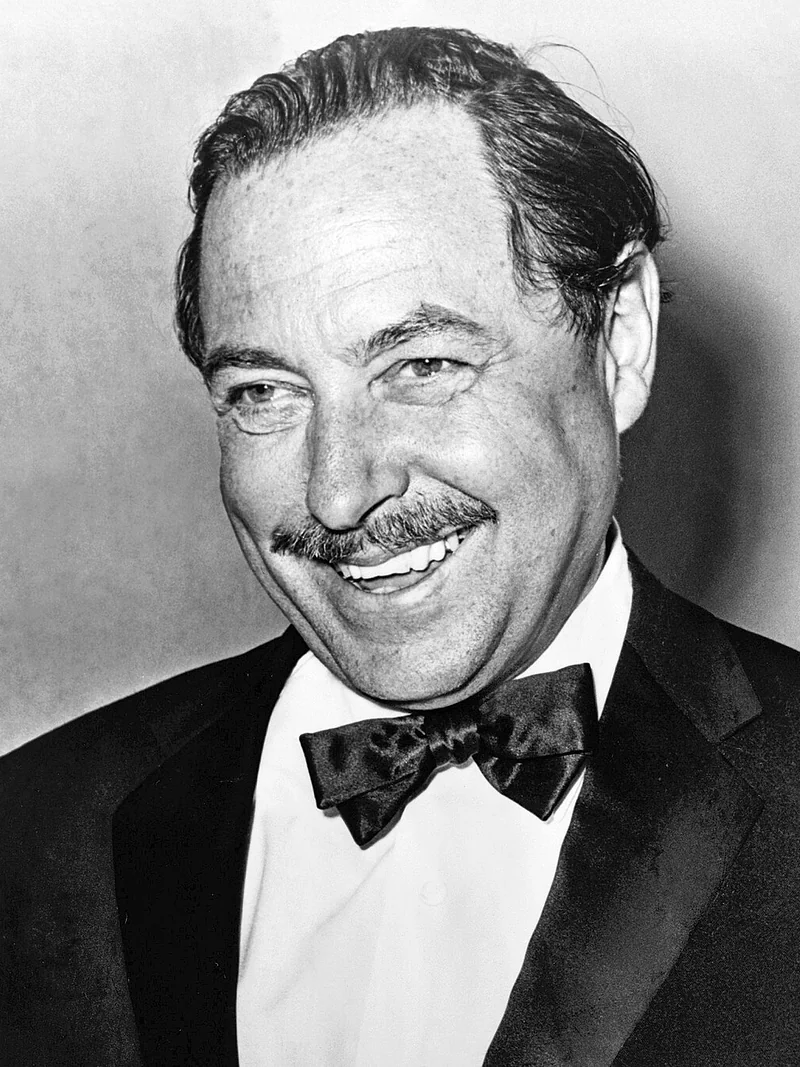
| 43 Quotes | |
| Born as | Thomas Lanier Williams III |
| Occup. | Dramatist |
| From | USA |
| Born | March 26, 1911 Columbus, Mississippi, USA |
| Died | February 25, 1983 New York City, New York, USA |
| Cause | choking |
| Aged | 71 years |
| Cite | |
Citation Formats
APA Style (7th ed.)
Tennessee williams biography, facts and quotes. (2026, February 2). FixQuotes. https://fixquotes.com/authors/tennessee-williams/
Chicago Style
"Tennessee Williams biography, facts and quotes." FixQuotes. February 2, 2026. https://fixquotes.com/authors/tennessee-williams/.
MLA Style (9th ed.)
"Tennessee Williams biography, facts and quotes." FixQuotes, 2 Feb. 2026, https://fixquotes.com/authors/tennessee-williams/. Accessed 26 Mar. 2026.
Early Life and Background
Thomas Lanier Williams III was born on March 26, 1911, in Columbus, Mississippi, into a family whose tenderness and volatility became his lifelong material. His mother, Edwina Dakin Williams, came from a genteel, status-conscious Delta background; his father, Cornelius Coffin "C.C". Williams, was a hard-drinking traveling salesman whose absences and sudden eruptions helped fix in the boy a sense of home as both shelter and trap. His nickname "Tennessee" was a college-era tag that stuck, but the emotional geography of his work remained the humid South of memory, with its coded desire and public pieties.In 1918 the family moved to St. Louis, Missouri, where industrial city life replaced the mythic small-town South and intensified his feelings of fragility and outsiderness. A childhood bout of diphtheria left him weak for months, and he retreated into books, notebooks, and private fantasies. The household became a pressure chamber: a domineering mother; a father who scorned sensitivity; and, at the center of his moral imagination, an adored sister, Rose, whose mental illness would culminate in a lobotomy in 1943. That wound - personal, familial, and ethical - never closed, and it gave Williams his characteristic mixture of lyric compassion and dread.
Education and Formative Influences
Williams attended the University of Missouri briefly, writing early plays and stories, then returned to St. Louis to work at the International Shoe Company, an experience he later described as spiritually suffocating. After renewed study at Washington University in St. Louis and the University of Iowa (where he completed an MFA), he absorbed Chekhov, Strindberg, and the American vernacular of the 1930s - blues, burlesque, and the new psychological realism - while also discovering the liberating, perilous honesty of a gay life lived in partial secrecy. The Great Depression, the rise of mass entertainment, and the tightening norms of midcentury respectability shaped his sense that private truth must be smuggled onto the public stage.Career, Major Works, and Turning Points
After years of itinerant writing and small productions, Williams broke through with The Glass Menagerie (Chicago 1944; Broadway 1945), a "memory play" that transformed family recollection into dramatic form and made his name. A Streetcar Named Desire followed in 1947, with Blanche DuBois and Stanley Kowalski becoming archetypes of ruin and brute vitality; it won the Pulitzer Prize, as did Cat on a Hot Tin Roof (1955). In the 1940s-50s he also wrote The Rose Tattoo (1951), Camino Real (1953), Suddenly Last Summer (1958), Sweet Bird of Youth (1959), and Night of the Iguana (1961), while Hollywood adaptations expanded his fame and distorted his intentions. From the mid-1960s his work grew more experimental and his reception harsher, as addiction, grief (including the 1963 death of partner Frank Merlo), and changing theatrical fashions converged; he continued writing relentlessly until his death in New York City on February 25, 1983.Philosophy, Style, and Themes
Williams wrote as a lyric realist: sweat, cheap rooms, and liquor bottles rendered with tactile precision, yet always haunted by music, moth-light, and the ache of what cannot be kept. His stage directions behave like prose poems, insisting that atmosphere is argument and that psychology is an environment. Time, for him, is not chronological but emotional, a replaying record: “In memory everything seems to happen to music”. That line is not decorative; it is diagnostic, revealing a mind that processed pain through aesthetic patterning, turning recollection into a score where tenderness and terror share the same melody.His moral vision is unsentimental about consolation, and it is here that his personal discipline - to look at suffering without blinking - becomes visible. “We are all sentenced to solitary confinement inside our own skins, for life”. His characters press against that sentence with talk, sex, fantasy, or violence, yet intimacy remains provisional, easily revoked by shame and social force. He distrusted the proud rhetoric of "honesty" when it was used as a weapon - “All cruel people describe themselves as paragons of frankness”. - and he dramatized how brutality often arrives wearing the mask of plain speaking, good sense, or masculine realism.
Legacy and Influence
Tennessee Williams reshaped American drama by marrying poetic language to lived American desperation, making the apartment, the hotel, and the fading parlor into sites of myth. His frank portrayal of desire, his empathy for the "misfit", and his willingness to stage mental illness, addiction, and erotic shame without moral bookkeeping expanded what Broadway realism could contain. Actors and directors continue to test themselves against his roles, while playwrights from the postwar generation onward have borrowed his musical sense of memory and his heat-struck ethics of compassion. His finest plays endure because they do not excuse their characters - they recognize them, and in doing so, they recognize the audience back.Our collection contains 43 quotes written by Tennessee, under the main topics: Witty One-Liners - Motivational - Truth - Wisdom - Art.
Other people related to Tennessee: Anton Chekhov (Dramatist), Eugene O'Neill (Dramatist), John Patrick (Playwright), Anna Magnani (Actress), Jane Alexander (Actress), James Laughlin (Poet), Carl Van Vechten (Writer), Marisa Tomei (Actress), Jack Kroll (Editor), Al Hirschfeld (Cartoonist)