
Terence Biography Quotes 34 Report mistakes
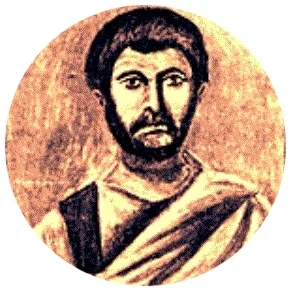
| 34 Quotes | |
| Born as | Publius Terentius Afer |
| Occup. | Playwright |
| From | Rome |
| Born | 185 BC Greek Italy |
| Died | 159 BC Rome |
| Cite | |
Citation Formats
APA Style (7th ed.)
Terence biography, facts and quotes. (2026, February 2). FixQuotes. https://fixquotes.com/authors/terence/
Chicago Style
"Terence biography, facts and quotes." FixQuotes. February 2, 2026. https://fixquotes.com/authors/terence/.
MLA Style (9th ed.)
"Terence biography, facts and quotes." FixQuotes, 2 Feb. 2026, https://fixquotes.com/authors/terence/. Accessed 26 Mar. 2026.
Early Life and Background
Publius Terentius Afer, known as Terence, was born around 185 BCE, probably in or near Carthage in North Africa, and came to Rome as a youth in the aftermath of the Punic Wars, when the Republic was remaking the Mediterranean and absorbing its peoples. The cognomen "Afer" marks him as African, and later tradition holds that he arrived as an enslaved person in the household of the senator Terentius Lucanus, who freed him and gave him the nomen "Terentius". Whether every detail of that story is tidy or not, it reflects a real Roman fact: talent, once noticed, could sometimes pierce the hard social crust of status, especially in circles eager for Greek learning and new forms of literary prestige.Rome in Terence's lifetime was confident, expansionist, and anxious about cultural change. Greek art and philosophy were flooding elite life even as moralists warned of softness and foreign manners. Comedy, staged at public games, became a venue where private domestic pressures - marriage arrangements, generational conflict, patronage, money, reputation - could be tested in public laughter. Terence grew into this environment as an outsider made insider: a man whose biography embodied the Republic's contradictions, and whose stage would become a polite but sharp instrument for examining Roman households.
Education and Formative Influences
Terence was trained in the language, rhetoric, and social polish demanded by Roman literary circles, and he steeped himself in Greek New Comedy, above all Menander, Diphilus, and Apollodorus. Ancient reports connect him with the "Scipionic Circle" around Scipio Aemilianus and Gaius Laelius - aristocrats who prized Hellenic culture and cultivated an image of humane refinement - and hostile gossip even claimed they helped write his plays, a backhanded compliment to their elegance. Whether patronage or friendship, the association placed Terence at the hinge between Roman public life and imported Greek forms, encouraging him to make comedy less farce-driven and more psychologically legible.Career, Major Works, and Turning Points
Between roughly 166 and 160 BCE Terence produced six surviving comedies for the Roman stage: Andria (166), Hecyra (first staged 165, disrupted; later successfully revived), Heauton Timorumenos (163), Eunuchus (161), Phormio (161), and Adelphoe (160). He adapted Greek plots with careful Latin speech, prologues that openly sparred with critics, and an unusual commitment to coherent motivation rather than stock chaos; Eunuchus, for instance, mixed sexual intrigue with a hard look at desire and power, while Adelphoe set two education styles in argument, not caricature. After Adelphoe, Terence left Rome for Greece, likely to gather materials and refine his art; he died around 159 BCE, perhaps at sea on the return voyage, leaving a small oeuvre whose polish made it seem, to later ages, improbably complete.Philosophy, Style, and Themes
Terence's distinctive achievement was to make comedy feel like a moral conversation without turning it into sermon. His people speak in a plain, flexible Latin that privileges timing, implication, and social tact; the humor often comes from how characters rationalize themselves. He distrusts tyranny inside the household and treats affection as a sturdier bond than coercion: “He makes a great mistake... who supposes that authority is firmer or better established when it is founded by force than that which is welded by affection”. That line is not just advice to fathers; it reveals Terence's own temperament, shaped by dependency and patronage, wary of domination yet realistic about how power actually works.Under the elegance lies a radical insistence that the stage can hold the whole human range - lust, shame, generosity, fear, pride - without dividing people into monsters and saints. His most famous claim, spoken in Heauton Timorumenos, becomes an artistic program: “I am human and let nothing human be alien to me”. From that premise follows his dramaturgy: sympathy as method, not sentimentality, and comedy as a means to understand rather than merely to punish. Even his apparent modesty has bite; the world, he implies, is made of recycled motives and recurring plots, so originality lies in insight and proportion: “Nothing is said that has not been said before”. The psychology here is disciplined, almost stoic in its suspicion of excess - a playwright who builds laughter from balance, from the careful calibration of competing claims inside families.
Legacy and Influence
Terence's immediate Roman successors learned from him, even when they preferred louder effects; his long afterlife came through education. Late Republican and imperial schools used his plays to teach Latin, conversation, and ethics, and commentators preserved his text with unusual care. In the Middle Ages and Renaissance he became a model of urbane dialogue and stagecraft; humanists admired his humane scrutiny of social roles, and playwrights from Moliere to later European comedy inherited his belief that domestic life is a serious arena where power can be negotiated through speech. With only six plays, Terence helped fix a durable ideal of comedy: graceful language, recognizable psychology, and moral pressure applied not by force, but by understanding.Our collection contains 34 quotes written by Terence, under the main topics: Witty One-Liners - Ethics & Morality - Wisdom - Justice - Friendship.
Terence Famous Works
- -160 Adelphoe (Play)
- -161 Phormio (Play)
- -161 Eunuchus (Play)
- -163 Heauton Timoroumenos (Play)
- -165 Hecyra (Play)
- -166 Andria (Play)
Source / external links