
Terry Pratchett Biography Quotes 23 Report mistakes
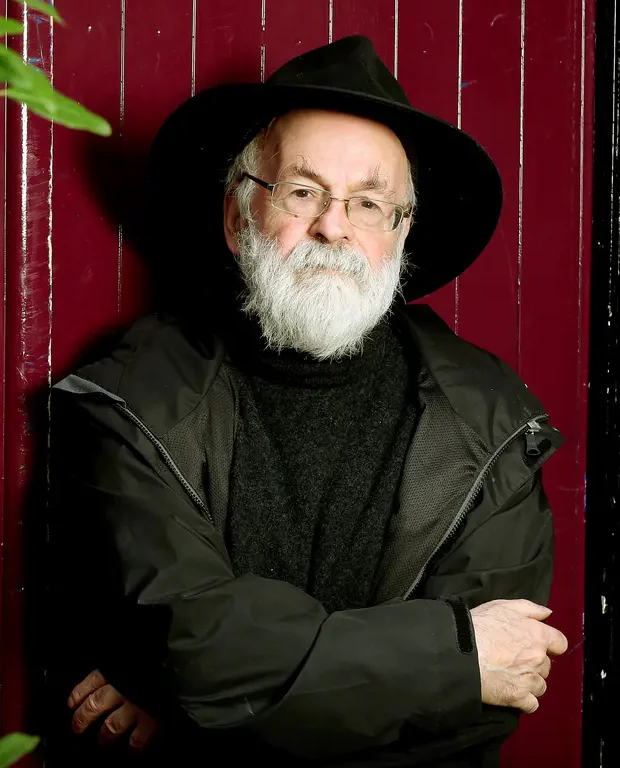
| 23 Quotes | |
| Born as | Terence David John Pratchett |
| Known as | Sir Terry Pratchett |
| Occup. | Author |
| From | United Kingdom |
| Spouse | Lyn Pratchett |
| Born | April 28, 1948 Beaconsfield, Buckinghamshire, England |
| Died | March 12, 2015 Broad Chalke, Wiltshire, England |
| Cause | Alzheimer's Disease |
| Aged | 66 years |
| Cite | |
Citation Formats
APA Style (7th ed.)
Terry pratchett biography, facts and quotes. (2026, February 2). FixQuotes. https://fixquotes.com/authors/terry-pratchett/
Chicago Style
"Terry Pratchett biography, facts and quotes." FixQuotes. February 2, 2026. https://fixquotes.com/authors/terry-pratchett/.
MLA Style (9th ed.)
"Terry Pratchett biography, facts and quotes." FixQuotes, 2 Feb. 2026, https://fixquotes.com/authors/terry-pratchett/. Accessed 26 Mar. 2026.
Early Life and Background
Terence David John Pratchett was born on April 28, 1948, in Beaconsfield, Buckinghamshire, England, into a postwar Britain reshaping itself through rationing hangovers, new suburbs, and expanding mass media. His father, David Pratchett, worked for the electricity board, and his mother, Eileen, encouraged reading; the household was practical, secular, and attentive to the everyday systems that make life run. That attention to mundane infrastructure later became a hallmark of his comedy: gods, wizards, and tyrants were never as interesting as paperwork, civic habit, and the price of bread.Pratchett grew up amid the mid-century boom in libraries and paperbacks, when science fiction and satire traveled cheaply and quickly. He was an early writer, publishing "The Hades Business" in his school magazine and then in a professional venue as a teenager, a small triumph that suggested not merely talent but stamina - the willingness to finish and submit. The young Pratchett was observant rather than romantic, drawn to the friction between what people say they value and what they actually do, and to the way institutions quietly train the imagination.
Education and Formative Influences
He attended High Wycombe Technical High School and left formal education at 17 to work as a journalist at the Bucks Free Press, apprenticing in deadlines, interviews, and local politics - training that gave his later fantasy its documentary tang. He absorbed the British tradition of comic skepticism (from Wodehouse to radio satire), the moral machinery of fairy tale, and the emerging genre confidence of mid-century SF; just as important, he learned how narratives get used in towns and councils to justify power, soothe panic, and sell progress.Career, Major Works, and Turning Points
Pratchett published his first novel, "The Carpet People" (1971), while continuing journalism and later working for the Central Electricity Generating Board, where he handled press work around a highly technical, tightly regulated industry. The Discworld sequence began with "The Colour of Magic" (1983), a spoof that rapidly evolved into a vast social novel in comic-fantasy form; by the late 1980s he wrote full time, producing at a pace that astonished peers. Key arcs - the City Watch ("Guards! Guards!", 1989), Death ("Mort", 1987), witches ("Wyrd Sisters", 1988), and the Industrial Revolution of Ankh-Morpork ("Going Postal", 2004; "Making Money", 2007) - turned parody into sustained moral inquiry. In 2007 he announced a diagnosis of posterior cortical atrophy, a rare form of Alzheimer's disease; he continued writing with adaptions to his process, advocated for dementia research, and publicly argued for assisted dying, turning private fear into civic engagement. He was knighted in 2009, and died on March 12, 2015.Philosophy, Style, and Themes
Pratchett wrote like a satirist with a reporter's ear: brisk scenes, tactile settings, and jokes that double as arguments. His footnotes acted as a second consciousness, correcting the story's pretensions and exposing the hidden rules by which societies run. He distrusted grand theory and preferred ethics that survive contact with weather, rent, and human vanity; his heroes are often administrators of decency - Sam Vimes policing himself as much as criminals, Granny Weatherwax refusing glamour in favor of "headology", and Death discovering compassion through duty. Even his most farcical lines carry a stern sense of consequences, a belief that laughter should sharpen attention rather than blur it.Under the comedy sits a bleakly lucid psychology: Pratchett saw modern life as a bargain between imagination and necessity, insisting, “Only in our dreams are we free. The rest of the time we need wages”. His suspicion of mass emotion - mobs, panics, fashionable cruelty - surfaces in the cool mathematical jab, “The intelligence of the creature known as a crowd, is the square root of the number of people in it”. Yet he was not a pessimist about individuals; he kept returning to the possibility that craft, skepticism, and small mercies can outwit brutality, even when the world encourages the opposite. That is why his humor can be violently logical, as in, “Build a man a fire, and he'll be warm for a day. Set a man on fire, and he'll be warm for the rest of his life”. - a joke that is also a warning about the temptations of power to solve problems permanently, and the thin line between policy and cruelty.
Legacy and Influence
Pratchett's enduring influence lies in how he made fantasy a civic instrument: Discworld became a map of modernity - policing, journalism, banking, postal systems, religion, nationalism - translated into dragons and trolls without losing its bite. He helped legitimate comic fantasy as serious literature, sold tens of millions of books worldwide, and inspired writers, game designers, and activists who learned from his model that entertainment can carry moral weight without preaching. His late-life public candor about dementia and autonomy deepened his cultural role from beloved storyteller to moral witness, and his work remains a practical manual for staying human inside large, absurd systems.Our collection contains 23 quotes written by Terry, under the main topics: Witty One-Liners - Wisdom - Dark Humor - Sarcastic - Writing.
Other people related to Terry: Neil Gaiman (Author)
Terry Pratchett Famous Works
- 2003 The Wee Free Men (Novel)
- 1992 Small Gods (Novel)
- 1990 Good Omens (Novel)
- 1987 Mort (Novel)
- 1983 The Colour of Magic (Novel)
Source / external links