
Terry Riley Biography Quotes 16 Report mistakes
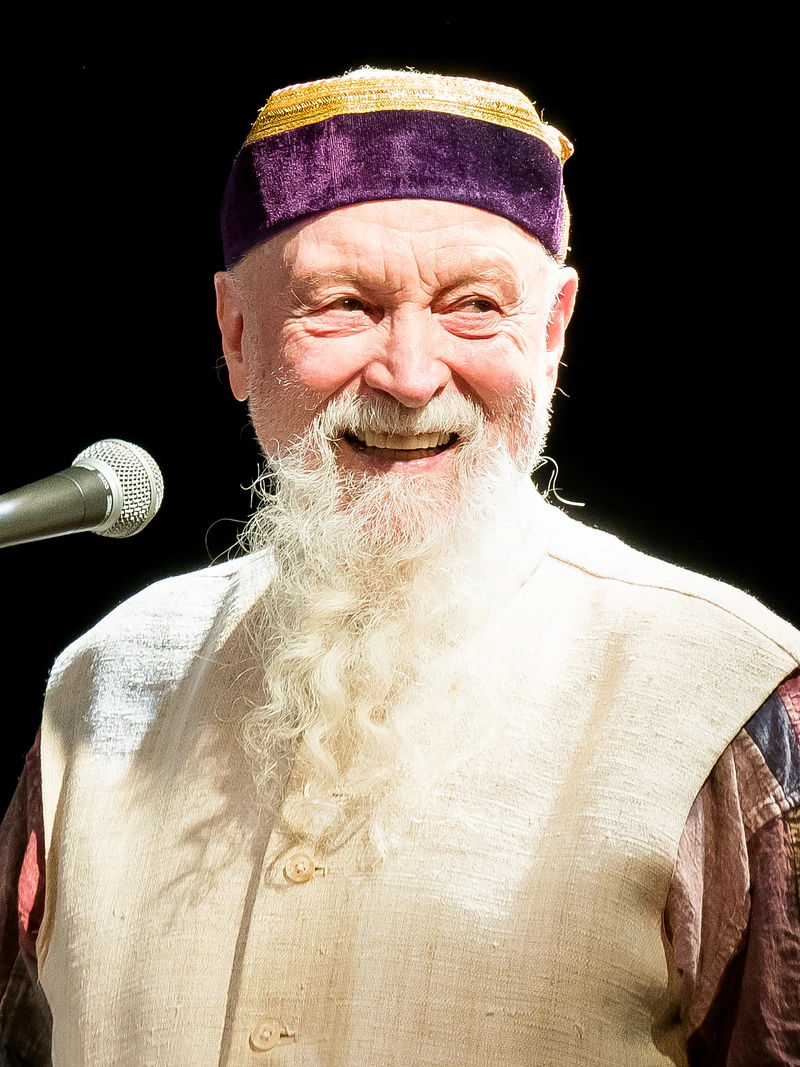
| 16 Quotes | |
| Born as | Terrence Mitchell Riley |
| Occup. | Composer |
| From | USA |
| Born | June 24, 1935 Colfax, California, USA |
| Age | 90 years |
| Cite | |
Citation Formats
APA Style (7th ed.)
Terry riley biography, facts and quotes. (2026, February 11). FixQuotes. https://fixquotes.com/authors/terry-riley/
Chicago Style
"Terry Riley biography, facts and quotes." FixQuotes. February 11, 2026. https://fixquotes.com/authors/terry-riley/.
MLA Style (9th ed.)
"Terry Riley biography, facts and quotes." FixQuotes, 11 Feb. 2026, https://fixquotes.com/authors/terry-riley/. Accessed 6 Mar. 2026.
Early Life and Background
Terrence Mitchell Riley was born on June 24, 1935, in Colfax, California, a railroad town in the Sierra foothills where itinerant labor, radio, and dance-band records mixed with the rural quiet. He grew up during the long aftershock of the Depression and World War II, in a West that was modernizing fast but still felt spacious and unfinished. That tension - between wide-open time and industrial rhythm - would later surface in his music as a fascination with pulse, duration, and communal listening.Riley played piano early and absorbed American vernacular sound before he ever met the word "minimalism": boogie-woogie drive, jazz phrasing, and the bright harmonies of popular song. By the 1950s, Northern California offered a rare blend of conservatory training and experimental curiosity, with San Francisco acting as a hinge between classical institutions, Beat culture, and a growing West Coast avant-garde. Riley came of age precisely as tape technology, postwar prosperity, and countercultural networks began to rewire what a composer could be.
Education and Formative Influences
He studied composition and performance in California, attending San Francisco State College and later the University of California, Berkeley, where the orbit of new music, jazz, and interdisciplinary performance encouraged him to treat sound as a material rather than a fixed score. Crucial early encounters included the composer Robert Erickson, whose openness to non-Western tuning and timbre validated Riley's ear for drones and micro-shadings, and the example of La Monte Young, whose sustained tones and concept-driven rigor pointed toward a music built from duration itself.Career, Major Works, and Turning Points
In the early 1960s Riley moved through San Francisco's experimental scene, working with tape recorders and delay systems, often in collaboration with dancers and small ensembles, turning limited equipment into a laboratory for repetition and phase-like echoes. His breakthrough arrived with "In C" (1964), a modular score of 53 short patterns that performers repeat and align by ear, creating a shimmering, democratic engine of sound; it quickly became a defining work of American minimalism and a portable model for ensemble freedom. Around the same period he developed time-lag performances and tape-loop pieces such as "Music for the Gift" (1963), and later expanded into long-form improvisation and composition for organ and keyboards, including "A Rainbow in Curved Air" (1969), whose layered pulses and bright arpeggios fed directly into rock, electronic music, and ambient practice. Over subsequent decades he deepened his relationship with Indian classical music and toured widely, often performing extended, trance-like sets that blurred the line between concert, ritual, and communal happening.Philosophy, Style, and Themes
Riley's core intuition was that repetition is not redundancy but revelation - a way to let tiny differences become dramatic and to make listening an active, bodily practice. He framed his early work as a decisive shift in Western emphasis: “So, essentially my contribution was to introduce repetition into Western music as the main ingredient without any melody over it, without anything just repeated patterns, musical patterns”. Psychologically, the statement is both modest and radical: he defines himself less as a romantic author of themes than as an engineer of conditions, someone who trusts the ear to find meaning inside recurrence. In Riley's hands, patterns behave like mantras - stable enough to hold attention, flexible enough to invite individual agency and collective drift.His methods also grew from the practical and the social: late-night concerts, small rooms, and the improvised technologies that made duration possible. “Talking about the all night concerts, I did some of the first all night concerts back in the 60's with this little harmonium, and I also had saxophone taped delays”. The image captures his inner life as a mixture of ascetic focus and playful invention - staying awake with a pumping bellows, feeding sound into a loop, letting the room become a time machine. Under the surface is a spiritual aim that never quite leaves the sensual: “Music can also be a sensual pleasure, like eating food or sex. But its highest vibration for me is that point of taking us to a real understanding of something in our nature which we can very rarely get at. It is a spiritual state of oneness”. That "oneness" is not abstraction in his music; it is produced by audible processes - shared pulse, overlapping cycles, and the feeling that a group can think with one breath.
Legacy and Influence
Riley stands as a founding architect of musical minimalism and a bridge between postwar experimental composition, jazz improvisation, and global devotional practice. "In C" remains one of the most performed contemporary scores of the last half-century because it is both simple and inexhaustible - a template for community, not a museum object. His tape-delay experiments prefigured live looping and electronic performance, while works like "A Rainbow in Curved Air" helped open the harmonic and rhythmic vocabulary of 1970s rock and later electronic genres. More broadly, his career modeled an alternative composer identity: not the distant modernist, but a working musician whose technique serves a human question - how repetition, attention, and shared time can make a room feel briefly reordered, and a listener briefly more whole.Our collection contains 16 quotes written by Terry, under the main topics: Music - Meaning of Life - Science - Change - Time.
Other people related to Terry: Philip Glass (Composer)
Source / external links