
Tertullian Biography Quotes 28 Report mistakes
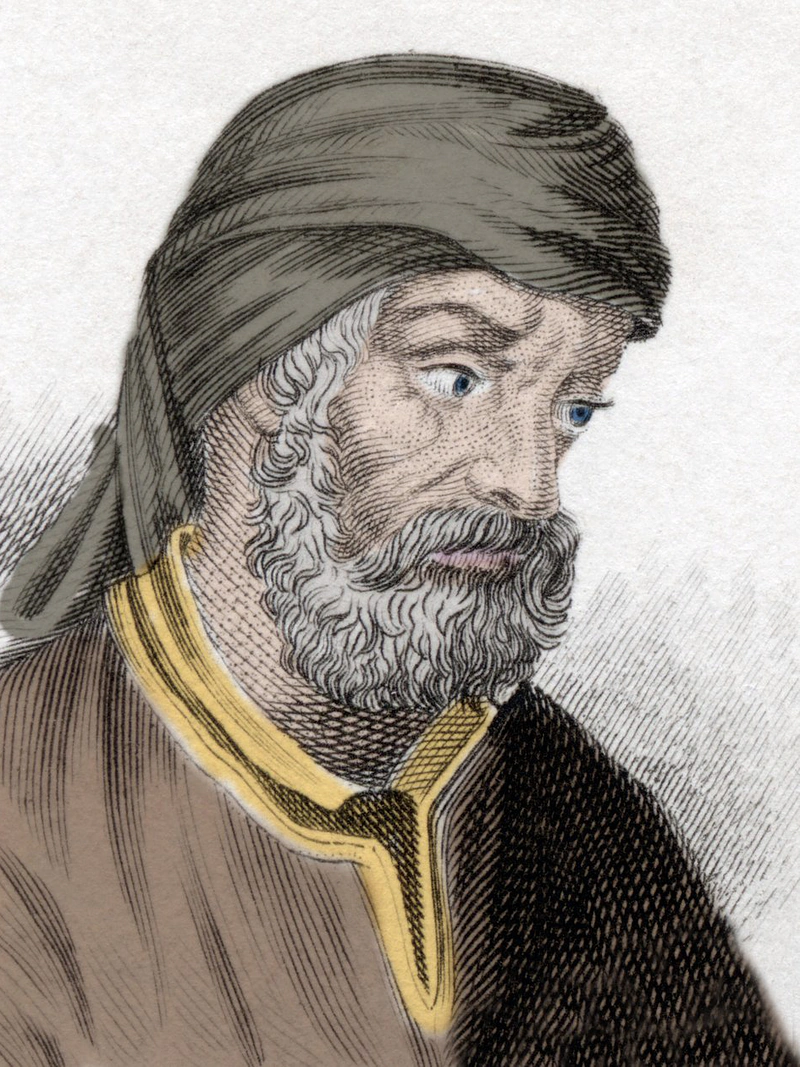
Attr: meisterdrucke.us
| 28 Quotes | |
| Occup. | Author |
| From | Rome |
| Died | 225 AC |
| Cite | |
Citation Formats
APA Style (7th ed.)
Tertullian biography, facts and quotes. (2026, February 11). FixQuotes. https://fixquotes.com/authors/tertullian/
Chicago Style
"Tertullian biography, facts and quotes." FixQuotes. February 11, 2026. https://fixquotes.com/authors/tertullian/.
MLA Style (9th ed.)
"Tertullian biography, facts and quotes." FixQuotes, 11 Feb. 2026, https://fixquotes.com/authors/tertullian/. Accessed 11 Mar. 2026.
Background and Early Life
Tertullian, whose full name is commonly given as Quintus Septimius Florens Tertullianus, emerged as one of the first great Latin Christian writers from Roman North Africa. Most ancient testimonies place his origins in Carthage, the thriving metropolitan center of the province of Africa Proconsularis. Precise dates for his birth are not certain, but many scholars situate it in the mid- to late second century. His education was clearly rigorous. He wrote with a sharp command of Latin rhetoric, showed familiarity with legal reasoning, and displayed wide reading in Greco-Roman literature and philosophy. Later reports suggest he might have practiced law or at least had professional exposure to forensic argument, though hard evidence is sparse. What is clear is that he brought to Christian writing the tools of a trained rhetorician steeped in the urban culture of Carthage.Conversion and Ecclesial Setting
Tertullian converted to Christianity as an adult, likely in the 190s. He refers appreciatively to Christian discipline, prayer, fasting, and the resilience of martyrs, and he wrote as a man who had embraced the church's moral demands in a pagan society. He was married, addressing two books to his wife (Ad uxorem), and he urged believers to live distinctly from surrounding customs. Carthage's Christian community, increasingly visible in his day, stood under the watch of Roman officials, such as the proconsul Scapula, to whom Tertullian later wrote. The atmosphere was not constant persecution, but it remained precarious, and public trials and executions of Christians did occur. The passion of Perpetua and Felicitas in Carthage around 203 formed part of the same world in which Tertullian wrote, a witness he admired as emblematic of steadfast faith.Apologist and Polemicist
Tertullian came to prominence through a stream of works defending Christians and confronting what he considered error. His Apologeticus (Apology), composed around 197, addressed Roman magistrates and argued that Christians were loyal subjects unjustly condemned for mere name. He also wrote Ad nationes, castigating the irrationality of popular accusations against Christians and critiquing pagan religion. His famous line, commonly paraphrased as "the blood of the martyrs is the seed of Christians", crystallized his view that persecution often strengthened the church.He turned his polemical skill against heretical movements. In De praescriptione haereticorum, he proposed that disputes should be settled not by endless philosophical speculation but by reference to the apostolic rule of faith and the churches that held it from the beginning. He wrote extensive refutations in Adversus Marcionem against Marcion's dualistic reading of Scripture and in works against Valentinian and other gnostic teachings. Against Praxeas, he defended a distinction of Father, Son, and Spirit from modalist interpretations that collapsed the persons into a single acting subject.
Moral Teaching and Pastoral Concerns
Alongside doctrinal disputation, Tertullian's pen shaped the moral imagination of Latin Christianity. In De spectaculis, he urged Christians to renounce violent and idolatrous entertainments; in De idololatria, he examined subtle social complicities with idolatry in trades and civic life; and in De cultu feminarum, he advocated modesty and warned against vanity. He wrote on prayer (De oratione), on baptism (De baptismo), on patience (De patientia), on repentance (De paenitentia), and on the thorny question of second marriages (De monogamia and De exhortatione castitatis), where his counsel grew increasingly strict over time. These writings reveal both a pastor's concern for Christian discipline and a moralist's zeal for purity in a hostile world.Theological Contributions
As the earliest major Christian author to write extensively in Latin, Tertullian forged vocabulary that would shape Western theology. In Adversus Praxean, he articulated a formula that would echo through later centuries: one substance and three persons (una substantia, tres personae), a way to confess the unity of God while confessing the real distinction of Father, Son, and Spirit. He also explored Christology in De carne Christi and De resurrectione carnis, defending the reality of Christ's incarnation and bodily resurrection against docetic and gnostic views. In De anima, he probed the nature of the soul, drawing on Scripture and philosophical sources, often with a lawyer's appetite for precedent and a rhetorician's flair for paradox.Engagement with Roman Authority
Tertullian's relationship to Roman governance was complex. In the Apology he insisted Christians prayed for emperors and sought the empire's peace, but he protested laws that criminalized Christian identity rather than proven crimes. His Ad Scapulam, addressed to the African proconsul Scapula, combined warning and admonition: persecutions bring trouble to those who inflict them and cannot extinguish a faith willing to die rather than betray conscience. This engagement shows a writer attuned to provincial administration and the practical realities of trials and punishments in Africa. In this, he stood alongside other Christian intellectuals of his era, such as Irenaeus in Gaul and, later, Hippolytus in Rome, who also wrestled with the church's place within imperial society.Montanism and the New Prophecy
In the second phase of his career, Tertullian aligned himself with the movement sometimes called the New Prophecy, originating in Phrygia with Montanus and the prophetesses Priscilla and Maximilla. The movement emphasized heightened discipline, rigorous fasting, and a lively expectation of the Spirit's guidance. In Africa, Tertullian defended such rigor against what he perceived as laxity in church leadership, especially over penitential policies and remarriage. His association with the Montanists has led to portrayals of a sharp break with the broader church. The precise contours of that break are debated, but his later treatises show him invoking the Paraclete's authority for stricter practices.In this context he sparred not only with heretical teachers like Marcion and Praxeas but also with fellow Christians whom he judged too accommodating. His voice became a conscience for uncompromising discipline, even as it risked alienating moderates. The friction within the African churches mirrored controversies throughout the empire, with figures like Clement of Alexandria seeking a learned Christian philosophy while others emphasized prophetic fervor and ascetic demands.
Later Years and Death
The details of Tertullian's final years are uncertain. He remained active into the early third century, and several of his later works reflect the concerns of African Christianity under changing imperial moods. He is generally thought to have died after 220, with some placing his death around 225. Later North African tradition remembered a group called Tertullianists, a sign that his influence fostered a distinct current of practice; Augustine of Hippo, writing much later, mentions them as a Carthaginian sect that eventually rejoined the church. While much about his personal circumstances then is lost, his literary legacy continued to circulate widely.Reception and Legacy
Tertullian's impact was profound. His Latin style, compressed and biting, furnished the West with a theological idiom equal to Greek counterparts. He bequeathed sharp conceptual tools for discussing the Trinity, the incarnation, Scripture and tradition, and the ethics of daily life amid pagan culture. Later churchmen mined his works. Jerome cataloged his writings and noted his gifts alongside his severity. Cyprian of Carthage, a generation after Tertullian, drew deeply on his thought; later sources report that Cyprian esteemed him as a master and returned often to his books. Even when later orthodoxy did not endorse all his rigorist positions, his arguments proved invaluable in clarifying boundaries between apostolic faith and its distortions.He stood at the crossroads of several currents: the jurisprudential habit of Roman Africa, the rhetorical schools of the Latin West, the scriptural exegesis of the emerging catholic tradition, and the prophetic asceticism of the New Prophecy. In his polemics, names like Marcion and Praxeas mark the opponents that helped him refine doctrine by disputation; in his letters to magistrates like Scapula, we glimpse a Christian intellectual probing the conscience of imperial power; in the memory of martyrs such as Perpetua and Felicitas, we hear the heartbeat of a church he sought to fortify through words. Through these strands, Tertullian remains a foundational architect of Latin Christian literature and a compelling, if sometimes severe, witness to the challenges and convictions of the early third century.
Our collection contains 28 quotes written by Tertullian, under the main topics: Ethics & Morality - Truth - Wisdom - Freedom - Hope.