
Thaddeus Stevens Biography Quotes 2 Report mistakes
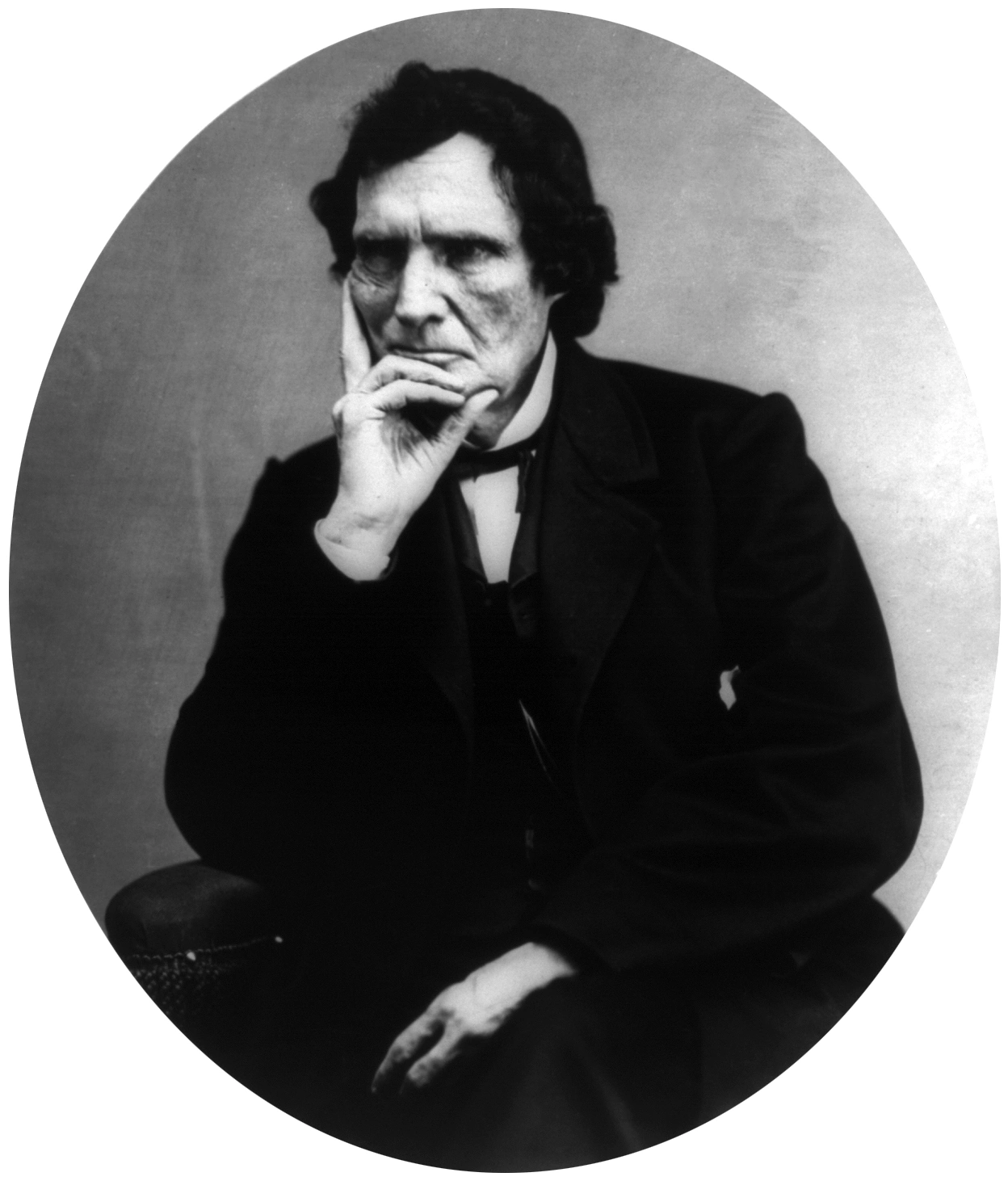
| 2 Quotes | |
| Occup. | Politician |
| From | USA |
| Born | April 4, 1792 Danville, Vermont, U.S. |
| Died | August 11, 1868 Washington, D.C., U.S. |
| Aged | 76 years |
| Cite | |
Citation Formats
APA Style (7th ed.)
Thaddeus stevens biography, facts and quotes. (2026, February 19). FixQuotes. https://fixquotes.com/authors/thaddeus-stevens/
Chicago Style
"Thaddeus Stevens biography, facts and quotes." FixQuotes. February 19, 2026. https://fixquotes.com/authors/thaddeus-stevens/.
MLA Style (9th ed.)
"Thaddeus Stevens biography, facts and quotes." FixQuotes, 19 Feb. 2026, https://fixquotes.com/authors/thaddeus-stevens/. Accessed 25 Mar. 2026.
Early Life and Background
Thaddeus Stevens was born on April 4, 1792, in Danville, Vermont, into a family marked by hardship and instability. His father, Joshua Stevens, drifted in and out of the household and was widely reported to struggle with debt and alcoholism; his mother, Sarah Morrill Stevens, carried the practical burden of keeping the family intact. Stevens grew up with a clubfoot and a pronounced limp, a physical difference that sharpened his sensitivity to humiliation and dependence and later fed his obsession with the social machinery that produced winners and permanent losers.In the early 1800s his mother moved the family to upstate New York, seeking work and schooling. The young Stevens learned early how quickly respectability could be conferred or withheld, and he developed a combative self-reliance that never mellowed into gentleness. He rarely indulged nostalgia in public life, but the pattern of his later politics - sympathy for the powerless joined to contempt for the self-excusing rich - reads like an adult answer to a childhood in which dignity had to be seized, not granted.
Education and Formative Influences
Stevens studied at Dartmouth College, then completed his degree at the University of Vermont, graduating in 1814, before reading law and moving to Pennsylvania. Gettysburg became his first major base of operations: there he built a legal practice and entered local politics, absorbing the hard-edged partisanship of the post-Jefferson era, when banks, internal improvements, tariffs, and slavery hardened into rival moral economies. The early republic taught him that institutions were not neutral and that law could either freeze inequality in place or crack it open.Career, Major Works, and Turning Points
After serving in the Pennsylvania legislature, Stevens rose to national power as a Whig, then as a founder of the Republican coalition, and finally as the House of Representatives' most relentless Radical Republican during the Civil War and Reconstruction. He supported the Union war effort, pressed for emancipation as military necessity and moral imperative, and helped shape the 13th Amendment ending slavery. As chair of the House Ways and Means Committee, he wielded taxation and finance as tools of national survival; after Appomattox, he became the strategic mind behind congressional Reconstruction, insisting that the former Confederate states were "conquered provinces" subject to federal terms, and he drove the impeachment of President Andrew Johnson in 1868 when Johnson resisted civil and political equality for freedpeople. He died in Washington, D.C., on August 11, 1868, having chosen burial in a cemetery that accepted Black and white alike - a final act of public argument.Philosophy, Style, and Themes
Stevens' inner life was disciplined by grievance and by a fierce, almost ascetic clarity about power. He distrusted sentimentality because he believed it allowed elites to congratulate themselves without surrendering advantage. His speeches used sarcasm, legal precision, and moral indictment in the same breath; he was less a reconciler than a prosecutor, and he aimed his rhetoric at the structures behind events - land, labor, credit, and the violence required to keep a caste system intact.His Reconstruction vision was grounded in the premise that peace without enforced transformation would simply rebrand slavery. “The future condition of the conquered power depends on the will of the conquerer”. The line is stark, but it reveals his psychology: he saw history as a courtroom in which the verdict could be overturned by leniency. That is why he entertained sweeping confiscation and land redistribution, not as vengeance but as civic surgery. “Strip the proud nobility of their bloated estates, reduce them to a level with plain republicans, send forth to labor, and teach their children to enter the workshops or handle the plow, and you will thus humble proud traitors”. Beneath the thunder lies a consistent theme - that republican equality required material rearrangement, not merely constitutional phrases, because he believed old hierarchies would regenerate unless broken at their roots.
Legacy and Influence
Stevens remains a defining figure of Radical Reconstruction - admired as a prophet of equal citizenship and condemned by opponents as a fanatic who would not forgive. In practice, his influence is visible in the constitutional revolution of the 1860s and in the model of Congress as an engine of civil rights, even when presidents resist. His failures also instruct: he could not secure lasting land reform, and the retreat from Reconstruction after his death confirmed his fear that unresolved power would reassert itself. Yet his life fixed a lasting standard for American democracy: that freedom is not complete until law, policy, and political will make it durable for those most exposed to domination.Our collection contains 2 quotes written by Thaddeus, under the main topics: Equality - War.
Other people related to Thaddeus: Fawn M. Brodie (Author), Lyman Trumbull (Politician), Henry Wilson (Politician), Benjamin F. Wade (Politician)
Source / external links