
Tharman Shanmugaratnam Biography Quotes 8 Report mistakes
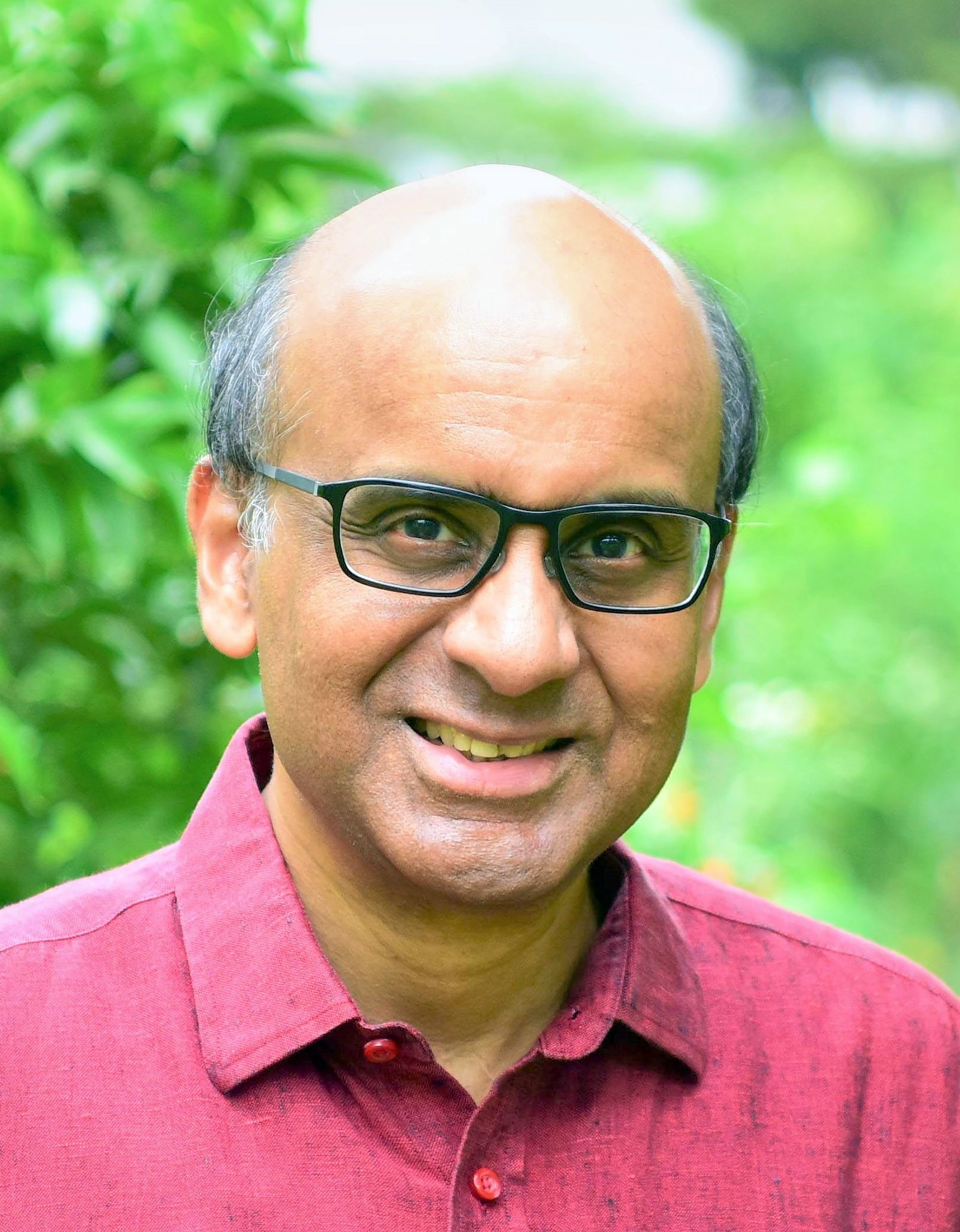
Attr: SG:Indian
| 8 Quotes | |
| Occup. | President |
| From | Singapore |
| Spouse | Jane Ittogi Shanmugaratnam |
| Born | February 25, 1957 Singapore |
| Age | 68 years |
| Cite | |
Citation Formats
APA Style (7th ed.)
Tharman shanmugaratnam biography, facts and quotes. (2026, February 17). FixQuotes. https://fixquotes.com/authors/tharman-shanmugaratnam/
Chicago Style
"Tharman Shanmugaratnam biography, facts and quotes." FixQuotes. February 17, 2026. https://fixquotes.com/authors/tharman-shanmugaratnam/.
MLA Style (9th ed.)
"Tharman Shanmugaratnam biography, facts and quotes." FixQuotes, 17 Feb. 2026, https://fixquotes.com/authors/tharman-shanmugaratnam/. Accessed 17 Feb. 2026.
Early Life and Background
Tharman Shanmugaratnam was born in Singapore in 1957, growing up as the city-state moved from anxious post-independence improvisation to a disciplined, export-driven economy. He came of age in a society defined by vulnerability - no hinterland, no natural resources, and a constant need to prove relevance abroad - alongside the everyday realities of a multiracial polity still close to the traumas of the 1960s. That atmosphere helped form his later instinct: pragmatism without cynicism, and a belief that national cohesion is an active project rather than a demographic fact.His family background and community life placed him inside Singapore's meritocratic institutions while also keeping him close to the cultural complexity they were designed to manage. The Tamil Indian minority experience in a largely Chinese-majority nation sharpened his sensitivity to how inequality, status, and identity can quietly corrode trust. Long before he became a national figure, his public persona was built on an unusual mix for Singapore politics: rigorous technocratic confidence paired with a patient, explanatory style aimed at the broad public, not just insiders.
Education and Formative Influences
Tharman attended the London School of Economics and later studied at the University of Cambridge, training his mind on economics and public policy at a time when globalization, deregulation, and the early fractures of postwar social contracts were becoming visible. The intellectual milieu of late-1970s and 1980s Britain - debates over markets, welfare states, and industrial change - supplied a comparative lens for Singapore's own choices: how to pursue growth without leaving citizens feeling disposable. That comparative habit remained: he often argued from first principles, but with an eye on what works across different cultures and political systems.Career, Major Works, and Turning Points
Entering Singapore's political leadership through the People's Action Party, Tharman held senior portfolios that made him one of the republic's most influential economic stewards, most notably as Minister for Finance (2007-2015) and later as Deputy Prime Minister (2011-2019). He chaired the Monetary Authority of Singapore for years, and his international stature rose through roles such as chair of the International Monetary and Financial Committee and leadership in global discussions on growth, inequality, and climate-linked development, including chairing the Group of Thirty. A key turning point was the era spanning the global financial crisis and its long aftermath, when Singapore's model had to answer new questions: not only how to stay competitive, but how to keep faith with citizens amid disruption, wage pressure, and rising expectations of dignity and voice. In 2023 he became Singapore's President, shifting from executive policymaking to a constitutional role that still demands moral authority and an ability to steady public confidence.Philosophy, Style, and Themes
Tharman's governing philosophy is anchored in the psychology of uncertainty: he treats volatility not as an episodic crisis but as a permanent condition of modern life, intensified by technology, geopolitics, and demographic change. “We have to learn to live with this. It is unlikely that these uncertainties will be resolved or eliminated soon. But uncertainty does not mean a lack of opportunity”. The sentence carries his characteristic blend of realism and refusal of despair; it also explains his political temperament - calm, analytic, and oriented toward problem-solving over blame. His speeches often aim to replace panic with agency, insisting that a small country can remain secure by staying adaptable and outward-looking.Just as central is his view that cohesion must be engineered through norms, institutions, and everyday reciprocity, not left to chance. “For a multicultural society to remain cohesive in today's world, requires more than the coexistence of different races, religions and cultures”. Here the inner logic is ethical as much as administrative: a fear of social fragmentation, and a conviction that trust is a form of national infrastructure. That same ethic appears in his emphasis on learning as a lifelong capacity rather than a credential. “We have to reflect on the fundamentals of learning. What do we mean by learning outcomes or educational outcomes? It is not about how quickly you can access knowledge. It's about how well you think”. In his worldview, cognition is citizenship - the ability to reason, revise beliefs, and collaborate across differences is what keeps a society governable in a high-information, high-anxiety age.
Legacy and Influence
Tharman's enduring influence lies less in a single signature law than in a public philosophy that broadened what technocratic governance can sound like: humane without being sentimental, global without being detached from local loyalties. As a finance minister and economic strategist, he helped steer Singapore through a period when the old bargain of growth-for-compliance was no longer sufficient; as an international voice, he pushed for a capitalism that accounts for social resilience and long-term risks; and as President, he symbolizes continuity with a modernizing state while insisting that cohesion, education, and dignity are the true balance sheet. His legacy will likely be measured by whether Singapore can keep its trademark competence while deepening solidarity - the harder task for successful societies in an era of radical uncertainty.Our collection contains 8 quotes written by Tharman.
Source / external links