
Theodor Adorno Biography Quotes 62 Report mistakes
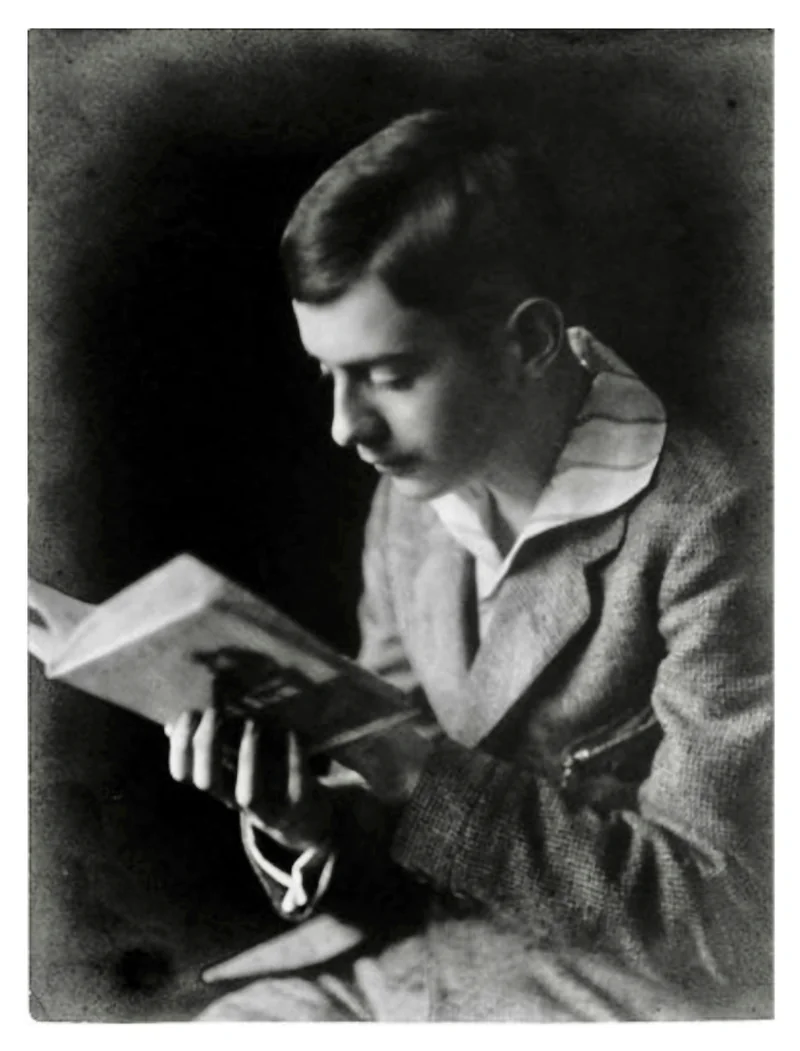
| 62 Quotes | |
| Born as | Theodor Ludwig Wiesengrund |
| Occup. | Philosopher |
| From | Germany |
| Born | September 11, 1903 Frankfurt am Main, Germany |
| Died | August 6, 1969 Visp, Switzerland |
| Cause | heart attack |
| Aged | 65 years |
| Cite | |
Citation Formats
APA Style (7th ed.)
Theodor adorno biography, facts and quotes. (2026, February 11). FixQuotes. https://fixquotes.com/authors/theodor-adorno/
Chicago Style
"Theodor Adorno biography, facts and quotes." FixQuotes. February 11, 2026. https://fixquotes.com/authors/theodor-adorno/.
MLA Style (9th ed.)
"Theodor Adorno biography, facts and quotes." FixQuotes, 11 Feb. 2026, https://fixquotes.com/authors/theodor-adorno/. Accessed 26 Mar. 2026.
Early Life and Background
Theodor Ludwig Wiesengrund was born on 1903-09-11 in Frankfurt am Main, in the German Empire, into a household that was both bourgeois and musically saturated. His father, Oscar Alexander Wiesengrund, was a successful wine merchant; his mother, Maria Calvelli-Adorno, was a professional singer of Corsican-Italian background, and his aunt Agathe was also a musician. The child grew up amid rehearsals, scores, and the disciplined pleasures of chamber music, experiences that would later feed his conviction that modern culture could not be understood apart from its forms of listening, repetition, and distraction.Frankfurt in his youth was a city where commerce, Jewish assimilation, and the aftershocks of World War I pressed uneasily against one another. Though raised Catholic, Adorno carried the social marking of Jewish ancestry and, more crucially, a sensitized awareness of how quickly an apparently stable civil society could tip into organized cruelty. The Weimar years gave him both a laboratory of cultural modernism and a warning: a technologically advanced society could still regress. That tension between refinement and barbarism became the emotional bedrock of his later work.
Education and Formative Influences
Adorno studied philosophy, sociology, and musicology at the University of Frankfurt, completing a doctorate in 1924 on Edmund Husserl, while already writing music criticism and moving in avant-garde circles. A decisive formative turn came with his 1925-1926 stay in Vienna to study composition with Alban Berg, where the Second Viennese School sharpened his sense that modern art's fractures were historically truthful rather than merely stylistic. Back in Germany he pursued habilitation work that ultimately led him into the orbit of the Institute for Social Research (later identified with the Frankfurt School), engaging Max Horkheimer, Walter Benjamin, and the broader Marxist debate over capitalism, mass culture, and consciousness at a moment when the Nazi movement was converting economic grievance into racial myth.Career, Major Works, and Turning Points
The Nazi seizure of power forced exile and reorientation: by the mid-1930s Adorno was in Britain, then the United States, collaborating with the Institute in New York and later in California. In American exile he produced, with Horkheimer, "Dialectic of Enlightenment" (written 1944), a bleak anatomy of how reason could mutate into domination, and he helped craft the empirical "The Authoritarian Personality" (1950), probing the psychic infrastructure of fascism. After returning to West Germany in 1949 he became a leading public intellectual, teaching in Frankfurt and publishing "Minima Moralia" (1951), "Negative Dialectics" (1966), and "Aesthetic Theory" (published posthumously, 1970), all while intervening in debates over rearmament, democratization, and the persistence of antisemitic and authoritarian residues in the Federal Republic. The late 1960s brought a painful turning point: sympathetic to student critiques of conformity yet wary of voluntarism and coercive rhetoric, he clashed with parts of the student movement; soon after, exhausted and ill, he died on 1969-08-06 in Visp, Switzerland, following a heart attack.Philosophy, Style, and Themes
Adorno wrote as if argument had to carry the scars of history. He distrusted systems that smoothed contradictions into uplifting narratives, insisting that critical thought must stay close to suffering, to what concepts fail to capture. His aphoristic intensity was not a pose but a method: fragments could resist the false consolation of totality. “The whole is the false”. The line condenses both a philosophical wager and a psychological stance - an almost allergic refusal to be comforted by "overall pictures" when those pictures are purchased at the price of ignored victims and rationalized violence.That same vigilance shaped his account of modern subjectivity and art. He heard in everyday language the pressure to become an interchangeable functionary, noting how selfhood itself could be socially policed: “In many people it is already an impertinence to say 'I'”. Art, for him, was not a moral lecture but a site where historical antagonisms became form - dissonance, montage, silence, the refusal of easy harmony. “Every work of art is an uncommitted crime”. The "crime" names art's necessary transgression against administered life, its theft of time and attention from the marketplace and its stubborn insistence that other ways of sensing and thinking remain possible even when politics appears blocked.
Legacy and Influence
Adorno's influence endures less as a school than as a demanding conscience for modernity: he changed how scholars read culture industries, propaganda, popular music, and the politics of taste, while forcing philosophy to reckon with Auschwitz as a rupture in ethical confidence. In critical theory, sociology, musicology, and aesthetics, his work remains a touchstone for analyzing how domination works through pleasure, habit, and "normality", and for defending art's negative power without romanticizing it. Admired and resisted in equal measure, he left a model of intellectual life defined by historical responsibility: a commitment to think without soothing, and to keep faith with the damaged by refusing to let suffering be rounded off into doctrine.Our collection contains 62 quotes written by Theodor, under the main topics: Witty One-Liners - Ethics & Morality - Truth - Wisdom - Art.
Theodor Adorno Famous Works
- 1970 Aesthetic Theory (Book)
- 1966 Negative Dialectics (Book)
- 1964 The Jargon of Authenticity (Book)
- 1955 Prisms (Book)
- 1951 Minima Moralia: Reflections from Damaged Life (Book)
- 1944 Dialectic of Enlightenment (Book)