
Thom Mayne Biography Quotes 20 Report mistakes
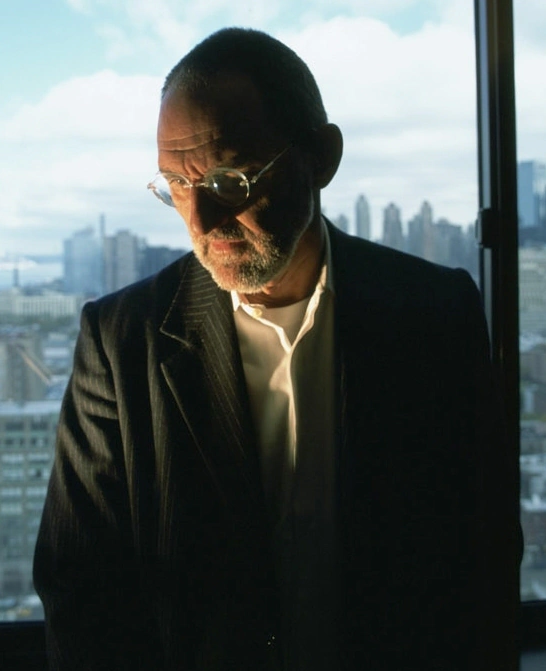
| 20 Quotes | |
| Occup. | Architect |
| From | USA |
| Spouse | Beverly Thorne |
| Born | January 19, 1942 Waterbury, Connecticut |
| Age | 84 years |
| Cite | |
Citation Formats
APA Style (7th ed.)
Thom mayne biography, facts and quotes. (2026, February 11). FixQuotes. https://fixquotes.com/authors/thom-mayne/
Chicago Style
"Thom Mayne biography, facts and quotes." FixQuotes. February 11, 2026. https://fixquotes.com/authors/thom-mayne/.
MLA Style (9th ed.)
"Thom Mayne biography, facts and quotes." FixQuotes, 11 Feb. 2026, https://fixquotes.com/authors/thom-mayne/. Accessed 5 Mar. 2026.
Early Life and Background
Thom Mayne was born on January 19, 1942, in Waterbury, Connecticut, into a wartime-generation America that trusted institutions yet was beginning to feel the tremors of postwar transformation. His early years were marked by the ordinary landscapes of small-city New England and, later, by the wider horizons of the American West, where the scale of infrastructure, car culture, and rapid growth sharpened his sense that the built environment is never neutral. Even before he had a vocabulary for it, he was encountering the central drama that would define his career: how architecture mediates between private desire and public life, between personal invention and the messy, negotiated reality of cities.Coming of age as modernism hardened into convention, Mayne developed a temperamental resistance to the merely correct. The 1960s and early 1970s - Vietnam, civil-rights struggles, and campus unrest - were not background noise but an atmosphere that made authority feel provisional and culture feel up for renegotiation. That pressure, combined with Southern California's experimental ethos and its constant remaking of land into lifestyle, helped form an architect who would treat buildings as arguments: not decorative objects, but active participants in civic behavior, bureaucracy, and everyday movement.
Education and Formative Influences
Mayne studied architecture at the University of Southern California, earning his undergraduate degree in 1968, then pursued an M.Arch at Harvard's Graduate School of Design, completed in 1978, where debates around urbanism, systems, and late-modern form met the emerging critique of modernism's social failures. Back in Los Angeles he helped found SCI-Arc (the Southern California Institute of Architecture) in 1972, a school built on the premise that architectural education could be a laboratory rather than an apprenticeship to prevailing taste; that institutional insurgency became a lifelong pattern as he moved between teaching, practice, and provocation, treating the discipline itself as a site to be redesigned.Career, Major Works, and Turning Points
In 1972 Mayne co-founded Morphosis in Los Angeles (with Michael Rotondi), and the firm became a primary vehicle for his evolving idea of architecture as both civic instrument and artistic system, often expressed through complex massing, exposed structure, and interiors organized as routes rather than rooms. Early works and experiments established a reputation for edge and intensity, but the major turning points came as he moved from smaller commissions to public and institutional buildings that forced confrontation with regulation and public accountability: the Caltrans District 7 Headquarters in downtown Los Angeles (completed 2004) fused workplace, infrastructure, and city image into a single civic machine; the San Francisco Federal Building (completed 2007, with the GSA) tested environmental strategies, workplace politics, and the limits of "icon" narratives; academic buildings such as the University of Cincinnati's Michael Graves College expansion and the Cooper Union's 41 Cooper Square in New York (opened 2009) translated his spatial ambition into dense urban and campus contexts. In 2005 he received the Pritzker Architecture Prize, an inflection point that amplified both his influence and scrutiny, pushing his work into the global debate over contemporary form, sustainability, and the public's right to readable architecture.Philosophy, Style, and Themes
Mayne's work is often described through its angular envelopes and layered facades, but the deeper engine is behavioral: he treats buildings as choreography for institutions and publics. He has been explicit that architecture is not a private sculpture placed in public space, insisting that “But I absolutely believe that architecture is a social activity that has to do with some sort of communication or places of interaction, and that to change the environment is to change behaviour”. That sentence is less a slogan than a psychological self-portrait - an architect wary of complacency, using design as a lever on habit, circulation, and the often-invisible rules that govern how people share space.At the same time, Mayne defends architecture's right to be difficult, even opaque, not out of elitism but from a conviction that the discipline thinks in forms that precede explanation. “Architecture is involved with the world, but at the same time it has a certain autonomy. This autonomy cannot be explained in terms of traditional logic because the most interesting parts of the work are non-verbal. They operate within the terms of the work, like any art”. The tension between social purpose and artistic autonomy helps explain the restless complexity of his buildings: they are not meant to comfort with familiar typologies, but to make users feel the institution they inhabit - the routes, thresholds, constraints, and moments of release. He is equally drawn to pluralism as method, insisting that “The multiplicity of ideas is what I'm interested in”. , a stance reflected in projects that read like assembled systems - screens, voids, ramps, and structural frames - rather than a single heroic gesture.
Legacy and Influence
Mayne's legacy rests on making contemporary architecture a civic question again: not simply whether a building is beautiful, but what it does to labor, security, climate, and urban life. Through Morphosis and decades of teaching and institution-building, he influenced a generation that sees design as research, bureaucracy as material, and form as the visible trace of competing demands rather than a final, calm resolution. His best-known buildings remain polarizing - and that is part of their historical role - because they insist that public architecture can be experimental without surrendering to spectacle, and that the city is not a backdrop but an argument in which every wall, passage, and facade participates.Our collection contains 20 quotes written by Thom, under the main topics: Wisdom - Art - Deep - Science - Work.
Source / external links