
Thomas Aquinas Biography Quotes 60 Report mistakes
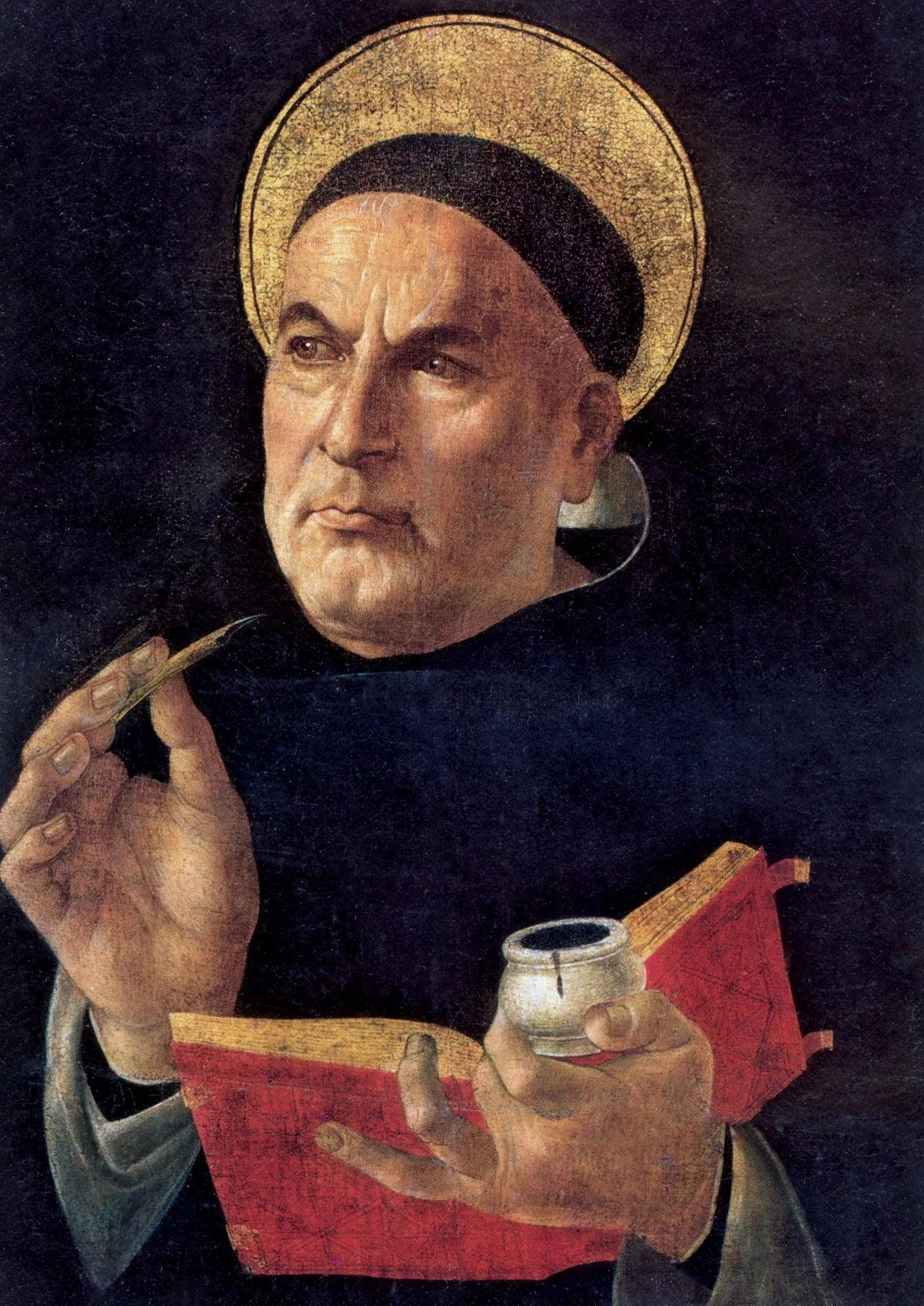
| 60 Quotes | |
| Known as | Thomas of Aquin |
| Native name | Saint Thomas Aquinas |
| Occup. | Theologian |
| From | Italy |
| Born | 1225 AC Aquino, Italia |
| Died | March 7, 1274 Fossanuova, Terracina, Italia |
| Cause | Believed to be a stroke |
| Cite | |
Citation Formats
APA Style (7th ed.)
Thomas aquinas biography, facts and quotes. (2026, February 2). FixQuotes. https://fixquotes.com/authors/thomas-aquinas/
Chicago Style
"Thomas Aquinas biography, facts and quotes." FixQuotes. February 2, 2026. https://fixquotes.com/authors/thomas-aquinas/.
MLA Style (9th ed.)
"Thomas Aquinas biography, facts and quotes." FixQuotes, 2 Feb. 2026, https://fixquotes.com/authors/thomas-aquinas/. Accessed 31 Mar. 2026.
Early Life and Background
Thomas Aquinas was born around 1225 at Roccasecca, near Aquino in the Kingdom of Sicily, into a noble family tied to the imperial order of Frederick II. His father, Landulf of Aquino, served the politics of the Hohenstaufen south, a world where castle loyalties, papal claims, and imperial administration collided. That frontier atmosphere mattered: Aquinas grew up amid competing authorities that forced careful distinctions between spiritual and temporal power, and he would later write as a man who had watched institutions contend for the soul of Europe.Family plans aimed him toward ecclesiastical prestige without poverty. Yet Aquinas showed an early gravity that contemporaries described as quiet rather than charismatic, a temperament suited to long study and slow synthesis. The decisive personal tension of his youth was not doubt about God but conflict over vocation: whether holiness required the security of a great monastery or the itinerant, intellectually risky life of a mendicant friar.
Education and Formative Influences
As a boy he was sent to the Benedictine abbey of Monte Cassino, then to the University of Naples, where he encountered Aristotelian logic and natural philosophy newly circulating in Latin Christendom, alongside the preaching of the Dominicans. Around 1244 he entered the Order of Preachers against his family's wishes; he was briefly detained by relatives to break the decision, a formative ordeal that clarified his sense that vocation is chosen under pressure, not granted by comfort. Released, he studied under Albertus Magnus at Paris and Cologne, absorbing a method that joined reverence for Scripture with disciplined argument, and learning to treat pagan philosophy not as a rival revelation but as material to be judged, purified, and employed.Career, Major Works, and Turning Points
Aquinas became a master at the University of Paris in the 1250s, teaching amid bitter disputes over the role of mendicant orders in university life. He wrote polemical defenses of the Dominicans, commentaries on Aristotle, and systematic theology that culminated in the Summa contra Gentiles (begun c. 1259) and the Summa theologiae (begun c. 1265). His career moved between Paris and Italy, including service to the papal court at Orvieto and elsewhere, where he composed liturgical texts for the Feast of Corpus Christi and refined his account of the Eucharist. In 1273, after an intense mystical experience while celebrating Mass, he ceased writing, calling his work "straw" compared to what he had seen; nonetheless he set the agenda for scholastic theology. In early 1274 he was summoned to the Second Council of Lyons, fell ill en route, and died on 1274-03-07 at Fossanova Abbey.Philosophy, Style, and Themes
Aquinas's inner life was marked by an unusual blend of intellectual confidence and spiritual self-effacement. His writing voice is calm, almost impersonal, but psychologically it is the voice of a man determined to honor every pressure on truth: the claims of revelation, the findings of reason, the weight of inherited authorities, and the stubborn texture of experience. He treated faith not as an argument-terminator but as an orientation of the whole person. “Three things are necessary for the salvation of man: to know what he ought to believe; to know what he ought to desire; and to know what he ought to do”. The triad maps his moral psychology: cognition, appetite, and action must be educated together, because sin is not merely intellectual error but disordered love.His method - disputation, objections answered one by one - served a deeper ethical aim: to train conscience and humility. He insisted that moral life is lived from within, under the binding pressure of judgment: “Every judgement of conscience, be it right or wrong, be it about things evil in themselves or morally indifferent, is obligatory, in such wise that he who acts against his conscience always sins”. That claim is not permissiveness; it is a sober account of agency, and it explains his patience with opponents and his care with distinctions. At the same time, he distrusted intellectual monoculture, warning against narrowness in study and piety: “Beware of the person of one book”. The line fits an era when Aristotle, Scripture, canon law, and Arabic commentators competed for authority, and it reveals Aquinas's conviction that truth is spacious - and that a soul becomes cramped when it refuses the labor of comparison.
Legacy and Influence
Condemned in part at Paris in 1277 yet steadily vindicated, Aquinas became the central architect of Latin Christian theology: canonized in 1323, named Doctor of the Church in 1567, and repeatedly commended in modern Catholic teaching, especially after Leo XIII's Aeterni Patris (1879) revived Thomism. His influence extends beyond Catholicism into political theory (natural law), metaphysics (essence and existence), ethics (virtue and teleology), and debates over reason and revelation. More subtly, he bequeathed a disciplined interior posture: to seek clarity without brutality, to argue without contempt, and to let the love of God and neighbor govern even the most technical thinking.Our collection contains 60 quotes written by Thomas, under the main topics: Ethics & Morality - Funny - Truth - Wisdom - Art.
Other people related to Thomas: Pope John Paul II (Clergyman), Meister Eckhart (Philosopher), Flannery O'Connor (Author), Umberto Eco (Novelist), Lionel Blue (Clergyman), Peter Lombard (Theologian), Matthew Fox (Writer)
Frequently Asked Questions
- St Thomas Aquinas school: St. Thomas Aquinas School is a common name for educational institutions worldwide, particularly Catholic institutions. These schools honor and aim to teach the intellectual principles of St. Thomas Aquinas, such as the integration of faith and reason.
- St Thomas Aquinas university: St. Thomas Aquinas is associated with universities both as a prominent scholar and as the inspiration for educational institutions. Many universities and colleges worldwide are named after him, such as the University of St. Thomas in Houston, Texas, and the St. Thomas Aquinas College in New York.
- Saint Thomas Aquinas patron saint of: St. Thomas Aquinas is the patron saint of academics, philosophers, theologians, and students.
- St Thomas Aquinas tragedy: The tragedy associated with St. Thomas Aquinas could refer to his seemingly abrupt death at the age of 49, or the initial opposition and persecution he faced during his lifetime due to his intellectual advancements and fusion of Aristotelian thought with Christianity.
- What are Thomas Aquinas Philosophy? Thomas Aquinas's philosophy includes natural theology, metaphysics, ethics, and epistemology. Key ideas include the existence of God proven by the Five Ways, the concept of essence and existence, and the fusion of faith and reason. He integrated Aristotelian philosophy into Christian thought.
- What is St Thomas Aquinas known for? St Thomas Aquinas is known for his contributions to theology and philosophy, particularly his synthesis of Aristotle's philosophy with Christian doctrine. He is famous for his 'Summa Theologica,' a comprehensive work that systematized Christian theology and philosophy.
- Why is St Thomas Aquinas important today? St Thomas Aquinas is important today because his work, especially the 'Summa Theologica,' remains influential in philosophical and theological studies. His principles and writings on ethics, law, and the relationship between faith and reason continue to guide contemporary thought.
Source / external links