
Thomas B. Macaulay Biography Quotes 36 Report mistakes
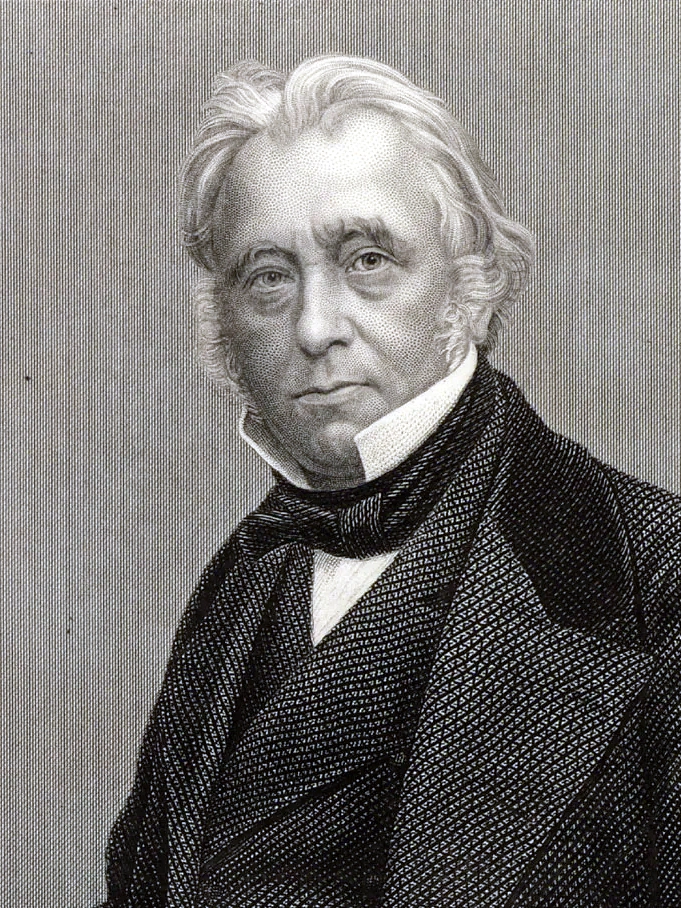
Attr: Britannica
| 36 Quotes | |
| Born as | Thomas Babington Macaulay |
| Occup. | Historian |
| From | England |
| Born | October 25, 1800 Rothley, Leicestershire, England |
| Died | December 28, 1859 London, England |
| Aged | 59 years |
| Cite | |
Citation Formats
APA Style (7th ed.)
Thomas b. macaulay biography, facts and quotes. (2026, February 11). FixQuotes. https://fixquotes.com/authors/thomas-b-macaulay/
Chicago Style
"Thomas B. Macaulay biography, facts and quotes." FixQuotes. February 11, 2026. https://fixquotes.com/authors/thomas-b-macaulay/.
MLA Style (9th ed.)
"Thomas B. Macaulay biography, facts and quotes." FixQuotes, 11 Feb. 2026, https://fixquotes.com/authors/thomas-b-macaulay/. Accessed 1 Mar. 2026.
Early Life and Background
Thomas Babington Macaulay was born on 25 October 1800 at Rothley Temple, Leicestershire, into the serious, reforming world of the evangelical Clapham Sect. His father, Zachary Macaulay, had managed a Jamaican plantation before becoming a leading abolitionist; his mother, Selina Mills Macaulay, brought strong religious discipline and literary taste. In the household, politics and conscience were not abstractions. Slavery, parliamentary reform, and the moral accounting of empire were daily talk, and the young Macaulay grew up learning that public action could be a form of piety.A precocious child with an astonishing memory, he absorbed books early and performed as if intellect were a duty. Yet the atmosphere also trained him in combativeness: conversation was argument, and argument aimed at victory. That blend of moral earnestness and competitive brilliance would become the signature of his public persona - confident to the point of imperiousness, certain that history had a direction, and convinced that prose should be clear enough to recruit readers to a cause.
Education and Formative Influences
At Trinity College, Cambridge, Macaulay dazzled in debate and prizes, culminating in the Chancellor's Medal for poetry in 1819 for "Pompeii". He moved through the Cambridge Apostles circle, honing a Whig rationalism that prized constitutional liberty, commercial modernity, and Protestant national identity. Early reviews and essays, especially for the Edinburgh Review, taught him a craft that fused wide reading with courtroom-style argument: state the case, marshal the examples, press the verdict. Classical histories and Enlightenment narratives of progress shaped his sense that the past was intelligible, and that the historian's task was to turn it into a public education.Career, Major Works, and Turning Points
Called to the bar but drawn to letters and politics, Macaulay entered Parliament in 1830 as a Whig and became a prominent voice for the Reform Act, then for administrative and legal change. In 1834 he went to India as a member of the Supreme Council; his 1835 "Minute on Indian Education" argued for English as the medium for creating an Indian elite trained in Western knowledge, a stance later celebrated and condemned as a blueprint for cultural hierarchy. Back in Britain he served briefly as Secretary at War and Paymaster General, but his enduring work began with the "Lays of Ancient Rome" (1842) and reached its peak with The History of England from the Accession of James the Second (1848-1855), whose panoramic narrative made him a literary celebrity. Elevated to the peerage as Baron Macaulay in 1857, he devoted his remaining years to writing, dying in London on 28 December 1859 and being buried in Westminster Abbey.Philosophy, Style, and Themes
Macaulay wrote history as a moral drama with the pace of a novel and the confidence of a closing argument. His Whig philosophy treated England's story as a long struggle in which constitutional government, religious toleration, and commerce gradually tamed violence and arbitrariness. That confidence made his pages vivid and teachable, but it also tempted him toward sharp contrasts: heroes and villains, light and darkness, progress and reaction. He liked the solid and workable over the merely ideal, insisting that “An acre in Middlesex is better than a principality in Utopia”. The line is not just policy advice; it reveals a mind impatient with abstraction, determined to measure ideas by their effects on lived institutions.His psychology is clearest when his wit turns diagnostic. “The puritan hated bear baiting, not because it gave pain to the bear, but because it gave pleasure to the spectators”. The sentence exposes his suspicion of moral posturing and his belief that politics often disguises envy and social control as virtue. Yet he was not a cynic about improvement. “Reform, that we may preserve”. Here is the core of his temperament: change as a conservative instrument, history as a warning system, and progress as something achieved by timely concessions rather than rupture. This is why his narratives praise prudence, distrust fanaticism, and celebrate the middle path that keeps the state intact while widening liberty.
Legacy and Influence
Macaulay helped invent the Victorian model of the historian as a public writer whose books competed with the popular novel, and his History of England set a benchmark for narrative clarity and argumentative force. His Whig interpretation - history as a rising curve toward modern liberty - shaped British self-understanding for generations and influenced politicians, teachers, and journalists as much as academics. At the same time, later scholarship challenged his teleology, his simplified character portraits, and the imperial assumptions visible in his Indian education policy. What endures is the tension he embodied: an earnest moralist who distrusted moralists, a reformer who feared revolution, and a stylist whose prose made national history feel like a shared inheritance, contested but unforgettable.Our collection contains 36 quotes written by Thomas, under the main topics: Witty One-Liners - Ethics & Morality - Wisdom - Truth - Art.