
Thomas Beecham Biography Quotes 10 Report mistakes
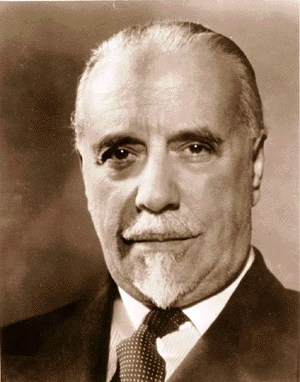
| 10 Quotes | |
| Occup. | Composer |
| From | England |
| Born | April 29, 1879 St. Helens, Merseyside |
| Died | March 8, 1961 London, England |
| Aged | 81 years |
| Cite | |
Citation Formats
APA Style (7th ed.)
Thomas beecham biography, facts and quotes. (2026, February 11). FixQuotes. https://fixquotes.com/authors/thomas-beecham/
Chicago Style
"Thomas Beecham biography, facts and quotes." FixQuotes. February 11, 2026. https://fixquotes.com/authors/thomas-beecham/.
MLA Style (9th ed.)
"Thomas Beecham biography, facts and quotes." FixQuotes, 11 Feb. 2026, https://fixquotes.com/authors/thomas-beecham/. Accessed 12 Feb. 2026.
Early Life and Family
Thomas Beecham (1879, 1961) was one of the defining English conductors of the 20th century. Born in St Helens, Lancashire, into the prosperous household of Joseph Beecham, whose patent-pill business underwrote the family's fortunes, he grew up with the means and the freedom to pursue music with unusual independence. He studied piano and composition privately and began conducting as a teenager, organizing and leading ensembles in the north of England. His ear for color, his decisive beat, and an instinct for theater were apparent early on. Though he never completed a formal conservatory program, he compensated with voracious listening, score study, and a practical apprenticeship on the podium.Opera Builder and Impresario
From the first decade of the 20th century, Beecham used his resources and energies to reshape Britain's operatic life. He mounted ambitious seasons, became a key figure at the Royal Opera House, Covent Garden, and founded companies when established institutions could not meet his expectations. During these years he championed contemporary continental repertory, especially the operas of Richard Strauss, and helped bring Salome, Elektra, and Der Rosenkavalier decisively into the British mainstream. He believed opera should be rehearsed meticulously and presented with stylish orchestral playing and an ensemble ethos that served the drama above star turns. His ventures were not always financially secure, but they left a lasting institutional footprint and raised standards.Champion of Composers
Few conductors have been as closely associated with particular composers as Beecham was with Frederick Delius. A personal friendship and artistic allegiance led him to conduct Delius's orchestral and choral works repeatedly, to organize major festivals in the late 1920s devoted to them, and to collaborate after Delius's death with Eric Fenby on establishing reliable performing editions. He also became a persuasive exponent of French music, Chabrier, Bizet, and Rameau, as well as a refined interpreter of Mozart and Haydn. His Rossini overtures and ballet scores were prized for their sparkle and rhythm. With Jean Sibelius he shared a musical affinity that produced searching performances of the symphonies; he visited and corresponded with the Finnish master and helped secure Sibelius's standing in British concert life. Beecham was not principally a composer, though he did make adaptations and orchestrations, particularly in his idiosyncratic and lush reimaginings of Handel's music for modern orchestra.The London Philharmonic and an Orchestral Ideal
In 1932 Beecham founded the London Philharmonic Orchestra, assembling a hand-picked body of players and insisting on a collective identity shaped in rehearsal. He nurtured a flexible, singing string tone, characterful winds, and buoyant rhythms. Colleagues such as Sir Malcolm Sargent also appeared with the orchestra, but its sound and profile bore Beecham's stamp. He took the ensemble on extensive tours across Britain, introducing symphonic repertory to new audiences and proving that high technical polish and stylistic flair could go hand in hand. The LPO's broadcasts and early electrical recordings spread the Beecham style well beyond London.War Years and Return
During the Second World War Beecham spent extended periods abroad, guest-conducting major American orchestras and opera houses. He brought his repertory, including Mozart, French scores, and Delius, to new listeners and built relationships that later supported his postwar recording projects. On returning to Britain he threw himself into rebuilding musical life, advocating for generous rehearsal standards and for an orchestral culture that valued principals as individual voices within a coherent ensemble.The Royal Philharmonic Orchestra
In 1946 he founded the Royal Philharmonic Orchestra, the most personal of his creations. He recruited distinctive principals, the famed "Royal Family" of winds, among them clarinetist Jack Brymer and bassoonist Gwydion Brooke, and drilled the group to produce a luminous, balanced sonority. Under his direction the RPO toured widely, collaborated with leading soloists and singers, and made recordings that set interpretive benchmarks. Beecham's authority was absolute but never dry: he prized elegance, rhythmic point, and a singing line, qualities that he cultivated relentlessly in rehearsal.Recording Legacy and Collaborations
Beecham's recorded legacy, largely for HMV/EMI with producers such as Walter Legge and colleagues like Victor Olof, preserves the sweep of his repertory. His Mozart symphonies and operatic excerpts retain their charm and poise; his Haydn, especially the London symphonies, balances grandeur with wit; and his Delius recordings remain foundational documents, shaped in consultation with Eric Fenby. Among his most celebrated opera sets is Bizet's Carmen with Victoria de los Angeles and Nicolai Gedda, an interpretation prized for its warmth, pacing, and orchestral finesse. His Sibelius readings, Rossini overtures, and French suites also stand out for their combination of polish and character.Style, Personality, and Rehearsal Craft
A formidable organizer and a natural entertainer, Beecham cultivated a public persona enlivened by aphorisms and quick humor, he is frequently quoted as saying that the English may not like music but love the noise it makes, yet his humor masked exacting standards. He demanded clarity of articulation, transparent balances, and shaped phrasing, addressing players by name and drawing individualized color, especially from winds. He admired colleagues such as Sir Henry Wood for broadening audiences, even as he pursued a different path to excellence through intensive rehearsal and carefully curated programs. His approach to Handel and other baroque composers, employing modern orchestral resources, sparked debate, but it also reflected a coherent vision: to make older music speak vividly to contemporary ears.Honors, Title, and Final Years
After the death of his father, Joseph Beecham, he succeeded to the family baronetcy in 1916 and was thereafter widely known as Sir Thomas Beecham, 2nd Baronet. He continued to lead major projects into the 1950s, alternating between concert hall and recording studio, and mentoring a generation of British players who absorbed his emphasis on phrasing and color. Even as health concerns multiplied, he maintained an ambitious schedule, returning repeatedly to Mozart, Delius, and the French repertory that he felt most deeply embodied his ideal of style.Legacy
When Beecham died in 1961, he left behind not only two great London orchestras, both still central to British musical life, but also an interpretive tradition. The colleagues and collaborators around him, from Frederick Delius and Eric Fenby to Richard Strauss and Jean Sibelius, from producers like Walter Legge to principals such as Jack Brymer and Gwydion Brooke, helped him articulate a vision of orchestral and operatic performance that prized clarity, character, and theatrical instinct. His recordings continue to circulate widely, shaping modern ears; his editions and advocacy secured repertory that might otherwise have faded; and his institutional creations ensured that the sound he imagined could be heard long after he was gone.Our collection contains 10 quotes written by Thomas, under the main topics: Witty One-Liners - Music - Sarcastic.
Other people related to Thomas: Peter Warlock (Composer), Victoria de los Angeles (Musician), Walter Legge (Businessman), Jack Brymer (Musician)
Source / external links