
Thomas Carlyle Biography Quotes 111 Report mistakes
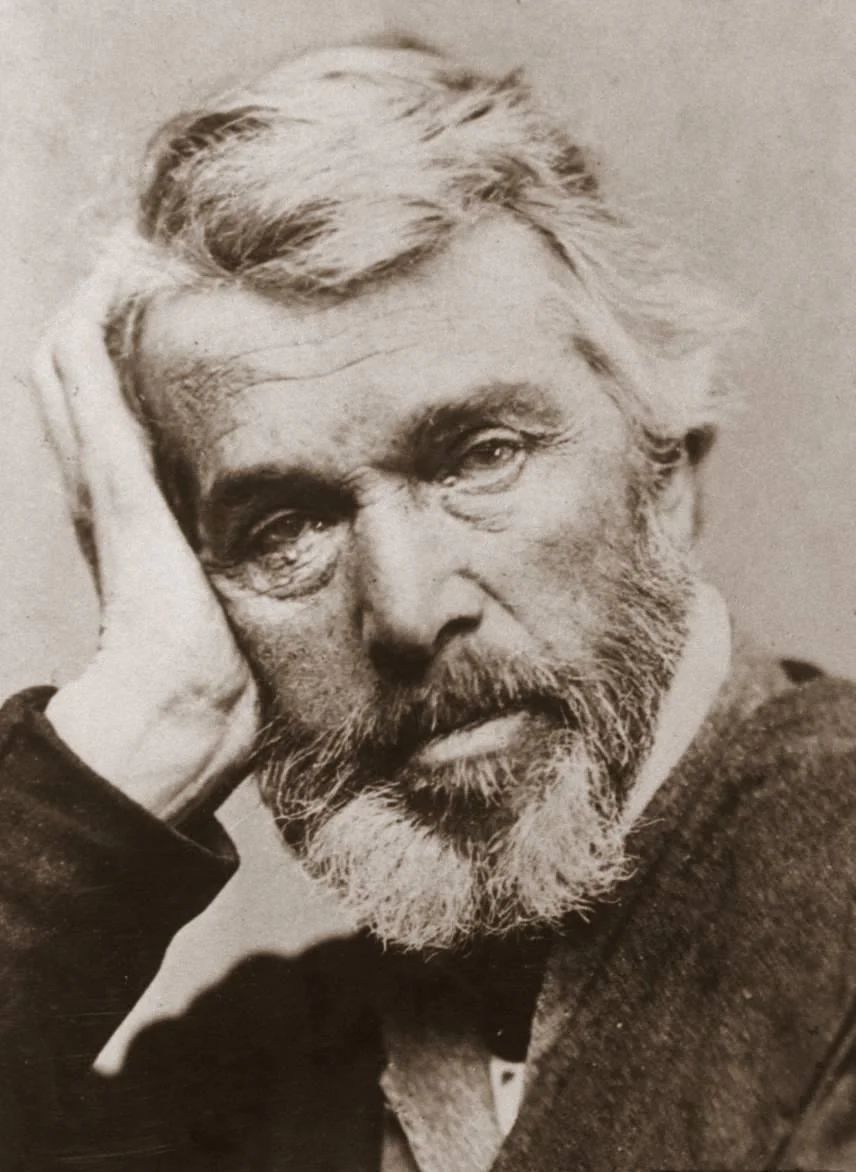
| 111 Quotes | |
| Occup. | Writer |
| From | Scotland |
| Born | December 4, 1795 |
| Died | February 5, 1881 |
| Aged | 85 years |
| Cite | |
Citation Formats
APA Style (7th ed.)
Thomas carlyle biography, facts and quotes. (2026, February 1). FixQuotes. https://fixquotes.com/authors/thomas-carlyle/
Chicago Style
"Thomas Carlyle biography, facts and quotes." FixQuotes. February 1, 2026. https://fixquotes.com/authors/thomas-carlyle/.
MLA Style (9th ed.)
"Thomas Carlyle biography, facts and quotes." FixQuotes, 1 Feb. 2026, https://fixquotes.com/authors/thomas-carlyle/. Accessed 24 Mar. 2026.
Early Life and Background
Thomas Carlyle was born on 4 December 1795 in Ecclefechan, Dumfriesshire, a borderland parish where Presbyterian discipline, hard work, and oral storytelling shaped character as much as doctrine. His father, James Carlyle, was a stonemason of formidable integrity; his mother, Margaret Aitken, supplied the intimate piety and moral scrutiny that would later become the inward engine of his prose. In a Scotland still echoing with the Enlightenment yet tightening under post-French Revolution anxiety, Carlyle grew up with a double inheritance: reverence for learning and suspicion of comfortable skepticism.That tension became personal. Early impressions of poverty and self-reliance, and the emotional austerity of a household that treated truth-telling as a duty, left him both grateful and restless. As Britain industrialized and politics hardened after 1815, Carlyle watched old communal certainties erode while new forms of power - money, bureaucracy, mass opinion - rose with little spiritual language to interpret them. His later fixation on "heroism" and work as moral salvation can be read as an attempt to rescue meaning from that dislocation.
Education and Formative Influences
Carlyle attended Annan Academy and entered the University of Edinburgh in 1809, initially preparing for the ministry before abandoning it in a crisis of belief that was as psychological as theological. He supported himself by tutoring and hack writing while educating himself in German literature and philosophy, absorbing Goethe, Schiller, and the idealists at a moment when British letters still distrusted them. The encounter provided a vocabulary for his own "Everlasting No" and eventual "Everlasting Yea" - the movement from negation to a stern, chosen faith in duty - and it brought him into the Edinburgh intellectual scene, where his brilliance was matched by irritability, insomnia, and a lifelong sense of being at war with cant.Career, Major Works, and Turning Points
After early essays and translations, Carlyle found his distinctive voice in Sartor Resartus (serialized 1833-34; book 1836), a pseudo-German philosophical novel that turned spiritual autobiography into cultural diagnosis. In 1826 he married Jane Welsh, an incisive correspondent whose wit and suffering became intertwined with his own ambitions; they later withdrew to Craigenputtoch in remote Dumfriesshire, where isolation sharpened his style and his nerves. Moving to London in 1834, he published The French Revolution (1837), a prose epic that made his reputation, followed by On Heroes, Hero-Worship, and the Heroic in History (1841), Past and Present (1843), and Latter-Day Pamphlets (1850). His monumental History of Friedrich II of Prussia (1858-65) consumed years and health, while public controversies - especially his defense of strong rule, his harsh judgments on democracy, and his reactionary essays on labor and empire - made him both oracle and irritant of Victorian Britain.Philosophy, Style, and Themes
Carlyle wrote as if language were a moral instrument and the age were in peril of spiritual bankruptcy. He distrusted abstraction when it excused evasion; his recurring demand was that thought prove itself in conduct: “Our main business is not to see what lies dimly at a distance, but to do what lies clearly at hand”. That sentence is less self-help than self-discipline - a clue to a man who fought paralysis, melancholy, and the lure of grand systems by forcing himself back to immediate duty. Even his fascination with "heroes" was not mere admiration of power but a search for persons whose inner certainty could steady a society he saw dissolving into talk, statistics, and appetite.His style fused biblical cadence, Germanic inversion, comic grotesque, and sudden tenderness, creating a rhetoric of urgency that could illuminate or bully. Beneath the thunder lay a psychology skeptical of mere cleverness and wary of corrosive wit; late self-reproach is audible in, “Sarcasm I now see to be, in general, the language of the devil; for which reason I have long since as good as renounced it”. That renunciation was incomplete - his pages still bite - but it reveals the moral stakes he attached to tone itself. For Carlyle, unhappiness signaled not meaninglessness but the soul's overlarge capacity: “Man's unhappiness, as I construe, comes of his greatness; it is because there is an Infinite in him, which with all his cunning he cannot quite bury under the Finite”. The idea turns suffering into evidence of vocation, and it helps explain his lifelong oscillation between despair and commandment: to work, to revere, to endure.
Legacy and Influence
Carlyle died in London on 5 February 1881, a Scottish moralist who had become a Victorian institution and a provocation. He reshaped English prose with a voice that treated history as lived experience and criticism as spiritual diagnosis, influencing writers from Ruskin and Dickens to later modernists who admired his intensity while rejecting his politics. Yet his legacy is double-edged: his critique of mechanized society and "cash nexus" remains prophetic, while his authoritarian temper and racialized arguments have rightly drawn sustained condemnation. Read now, he stands as a case study in the nineteenth century's hunger for meaning under industrial pressure - a man who tried to replace collapsing faith with an ethic of work and reverence, and who paid for that mission with personal strain, marital tragedy, and a reputation forever contested.Our collection contains 111 quotes written by Thomas, under the main topics: Witty One-Liners - Motivational - Ethics & Morality - Truth - Wisdom.
Other people related to Thomas: John Ruskin (Writer), James Anthony Froude (Historian), John Sterling (Author), William Allingham (Poet), John Stuart Blackie (Writer), James Mcneill Whistler (Painter), Julia Margaret Cameron (Photographer), Edward Irving (Clergyman)
Thomas Carlyle Famous Works
- 1858 History of Friedrich II of Prussia, called Frederick the Great (Book)
- 1851 The Life of John Sterling (Book)
- 1845 Oliver Cromwell's Letters and Speeches, with Elucidations (Book)
- 1843 Past and Present (Book)
- 1841 On Heroes, Hero-Worship, and The Heroic in History (Book)
- 1837 The French Revolution: A History (Book)
- 1836 Sartor Resartus (Novel)
Source / external links