
Thomas Cavendish Biography Quotes 1 Report mistakes
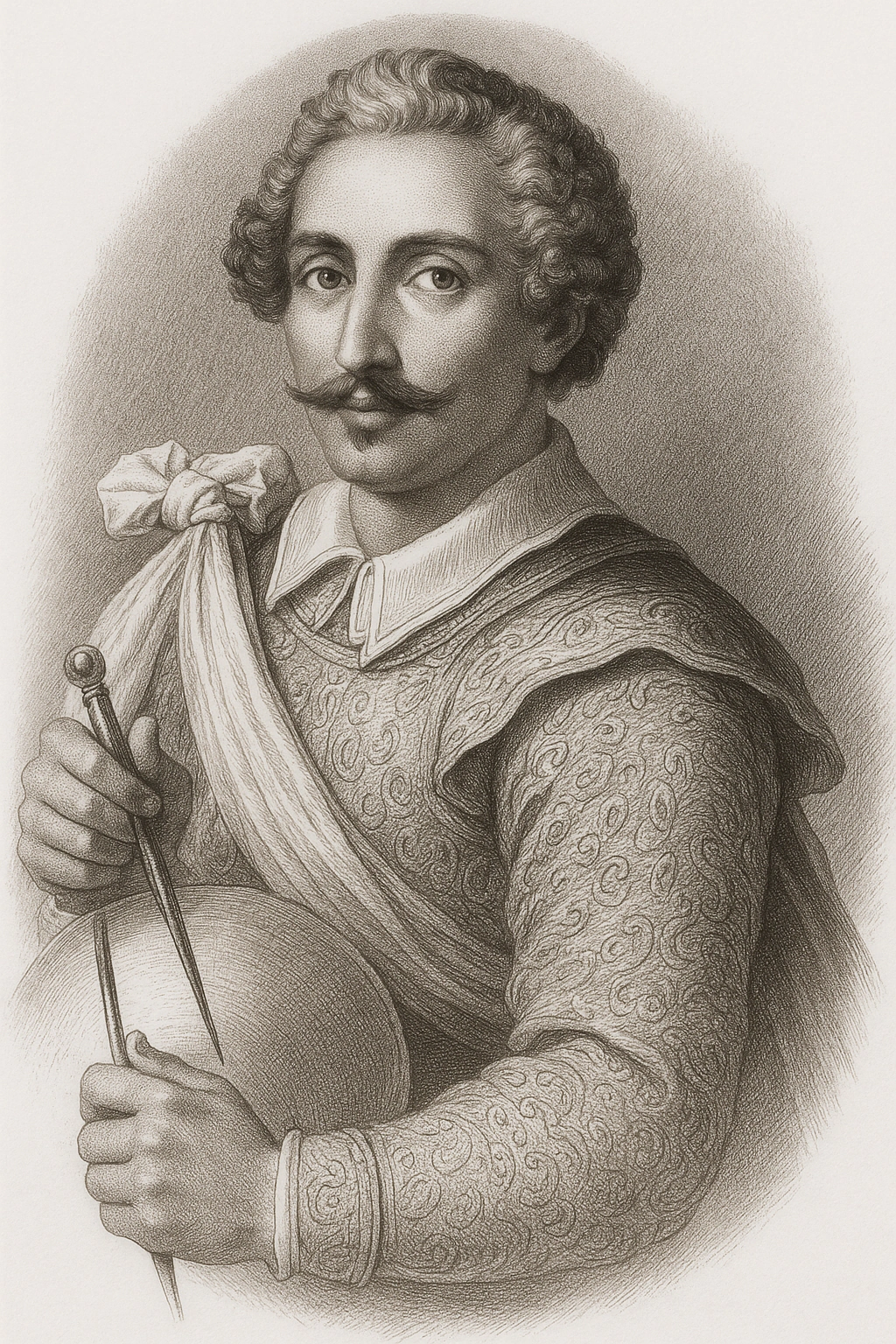
| 1 Quotes | |
| Known as | Sir Thomas Cavendish |
| Occup. | Explorer |
| From | England |
| Born | September 19, 1560 Suffolk, England, Kingdom of England |
| Died | May 1, 1592 At sea in the Atlantic Ocean |
| Cause | Presumed lost at sea |
| Aged | 31 years |
| Cite | |
Citation Formats
APA Style (7th ed.)
Thomas cavendish biography, facts and quotes. (2026, February 11). FixQuotes. https://fixquotes.com/authors/thomas-cavendish/
Chicago Style
"Thomas Cavendish biography, facts and quotes." FixQuotes. February 11, 2026. https://fixquotes.com/authors/thomas-cavendish/.
MLA Style (9th ed.)
"Thomas Cavendish biography, facts and quotes." FixQuotes, 11 Feb. 2026, https://fixquotes.com/authors/thomas-cavendish/. Accessed 26 Mar. 2026.
Early Life and Background
Thomas Cavendish was born around 1560, probably in Suffolk, England, into a family of the minor gentry. His exact birthplace is uncertain, but he is generally associated with Trimley St Martin and the Cavendish family network rooted in East Anglia. Little is securely documented about his childhood, yet his later career indicates a youth spent among people familiar with maritime affairs, overseas trade, and the ambitions of Elizabethan expansion. He grew into manhood under the long reign of Queen Elizabeth I, whose government, advisers, and private adventurers were turning England into a major seafaring power.The England of his youth was shaped by men such as Francis Walsingham, the queen's principal secretary and spymaster, and the statesman William Cecil, Lord Burghley. Their policies encouraged privateering and long-distance voyages as tools against Spanish power. This climate offered opportunities for a young gentleman with limited inherited wealth but considerable ambition. Cavendish is believed to have attended one of the Inns of Court in London, placing him in the orbit of aspiring courtiers, lawyers, and investors who discussed colonial schemes and maritime ventures. Though not one of the richest gentlemen of his generation, he had enough means, connections, and appetite for risk to pursue a life at sea.
Entry into Maritime Ventures
By the mid-1580s, Cavendish was already engaged with oceanic enterprise. He attached himself to men who had direct experience of global navigation, most notably Sir Richard Grenville and those who had sailed with Sir Walter Raleigh. The circle of Raleigh, an important courtier and promoter of English colonies, helped shape Cavendish's ideas about trading with distant lands, harassing Spanish shipping, and seeking wealth across the globe. Through this atmosphere of daring and calculation, he was exposed to the example of Sir Francis Drake, whose circumnavigation of the world between 1577 and 1580 had created a powerful model for aspiring adventurers.In this environment, Cavendish moved from being a gentleman with maritime interests to an active organizer of expeditions. He drew on the support of private investors, including merchants attracted by the potential profits of captured silver and exotic trade goods. Although official records of every contract and financial arrangement have not survived, it is evident he was able to raise sufficient capital to equip a modest fleet and to secure the tacit approval of influential figures at court. The combination of private money and royal tolerance allowed him to plan a voyage comparable in scope, if not in scale, to Drake's earlier journey.
The First Circumnavigation
In 1586, Cavendish launched the expedition that would make his name. Leading a small squadron, he sailed from England with the intention of repeating, and if possible improving upon, the achievements of Francis Drake by circumnavigating the globe and damaging Spanish commerce along the way. The ships he commanded included the Desire, which served as his flagship. The composition of his crew mixed seasoned mariners with gentlemen volunteers, a pattern typical of Elizabethan voyages that combined military, commercial, and social ambitions.Cavendish followed a route that carried him south through the Atlantic, across to the coast of South America, and into the Strait of Magellan. Navigating that treacherous passage demanded close cooperation with experienced pilots and officers, and the loss of time and ships was a constant risk. The examples of earlier navigators, including the Spanish and Portuguese pilots whose routes were studied in England, guided his choices in timing and course. Once through into the Pacific, he turned north along the west coast of South America, imitating Drake's strategy of striking at lightly defended Spanish settlements and shipping.
The most celebrated episode of this voyage was the capture of the large Spanish galleon Santa Ana off the coast of Mexico in 1587. The Santa Ana, commanded by Spanish officers transporting Asian goods and silver from the Philippines, represented the kind of rich prize that could make or break a privateering enterprise. Cavendish and his men seized valuable cargo, including silks, spices, and silver, and then allowed the captured vessel to limp to shore after stripping it of much of its wealth. The news of this exploit later added greatly to his reputation in England, placing him in the same narrative of bold maritime success that already featured Francis Drake.
After raiding Spanish possessions along the American Pacific coast, Cavendish continued westward across the Pacific Ocean. He visited islands in the central Pacific and then proceeded toward the Philippines and other parts of Southeast Asia, again navigating waters that European pilots had only relatively recently begun to chart. From there, he crossed the Indian Ocean, rounded the Cape of Good Hope, and finally returned north through the Atlantic to England. By accomplishing a full circumnavigation, he became one of the earliest Englishmen, after Drake and their crews, to sail around the world.
Return to England and Recognition
When Cavendish returned to England in 1588, he was welcomed as a hero by those who admired English maritime daring and rejoiced in damage done to Spanish interests. He presented Queen Elizabeth I with exotic goods and captured charts, adding to the store of knowledge and prestige that the crown and its favored mariners accumulated. His ability to show tangible spoils, especially from the Santa Ana, impressed the queen and helped to cement his standing among courtiers and investors.Reports of his voyage circulated in England and on the continent, some of them in the form of accounts prepared by his crew members or others who gathered their testimony. These narratives placed him in a network of seafarers that included figures like John Davis, known for his Arctic voyages, and other navigators who were defining an English maritime presence from the polar seas to the tropics. In this company, Cavendish was remembered as a daring, if sometimes ruthless, leader whose voyage confirmed that Drake's earlier success had not been a unique miracle.
Despite the fame and material gain resulting from his first circumnavigation, Cavendish's financial position and long-term security were not guaranteed. The costs of outfitting ships, paying crews, and maintaining a gentleman's lifestyle were immense. Investors and patrons expected returns, and the volatile nature of maritime plunder meant that even a successful voyage might not ensure permanent wealth. It was in this context of continued ambition and financial pressure that he considered a second major expedition.
The Second Voyage and Decline
Seeking to repeat or surpass his earlier achievements, Cavendish organized another voyage in the early 1590s. This second enterprise aimed once more at the Spanish possessions and trade routes that connected the Americas, Asia, and Europe. He worked with other experienced mariners, among them John Davis, who took command of one of the vessels. Davis, already known for his efforts to find a Northwest Passage, brought significant navigational expertise and a reputation for skillful seamanship.From the outset, however, the second voyage was troubled. The fleet faced severe weather, navigational difficulties, and internal tensions among officers and crew. Supply problems and disease were persistent threats, as they were for all long-distance voyages of the age, but these afflictions struck Cavendish's expedition with particular force. Morale deteriorated as progress slowed and profits failed to materialize. While primary accounts focus mostly on the practical hardships, they also suggest that disagreements among the leadership, including friction between Cavendish and Davis, contributed to the voyage's misfortunes.
As the expedition struggled across the Atlantic and into southern waters, the gap between Cavendish's earlier triumph and his current predicament grew ever wider. Hopes of replicating the dramatic success of seizing a treasure-laden galleon faded. Instead, the fleet confronted empty seas, hostile weather, and the growing likelihood of failure. The long months at sea, limited provisions, and outbreaks of illness weakened both the physical and mental state of the men.
Final Days and Death
The end of Thomas Cavendish's life is obscure, and the evidence is fragmentary. He is believed to have died around 1592, likely at sea, during or immediately after the collapse of his second voyage. Some accounts suggest that he died in the South Atlantic, possibly off the coast of Brazil or in mid-ocean on the homeward route, weakened by illness and worn down by disappointment. Whatever the exact location, the death of Cavendish occurred far from the courtly circles of London and the admiring audiences that had greeted his first return.Contemporary and near-contemporary comments portray him in his latter days as a man embittered by misfortune. The contrast between his triumphant presentation before Queen Elizabeth I and his probable death aboard a battered ship in the open sea underscores the harsh realities of Elizabethan exploration and privateering. Men like Cavendish, Drake, Grenville, and Davis might gain sudden fame and fortune, but they operated in a world where a shift of winds, an outbreak of scurvy, or a failed investment could erase reputations and lives with startling speed.
Legacy and Historical Significance
Despite the tragic end of his second voyage, Thomas Cavendish holds a place in the history of English exploration and maritime warfare. He stands among the earliest English circumnavigators, alongside Francis Drake, and contributed to the practical body of knowledge regarding global routes, seasonal winds, and the vulnerabilities of Spanish trade. His capture of the Santa Ana vividly demonstrated that the Pacific, once a domain dominated by Iberian powers, could be penetrated by English privateers.The people around Cavendish were essential to his story: Queen Elizabeth I, whose policies made such ventures possible; Francis Drake, whose earlier circumnavigation provided both example and inspiration; Sir Walter Raleigh and Sir Richard Grenville, who promoted colonial and maritime schemes that shaped Cavendish's opportunities; and John Davis, whose navigational skill and troubled association with Cavendish during the second voyage left a lasting imprint on how that failed expedition was remembered. These figures formed a loose but powerful network of courtiers, sailors, and investors who advanced English interests overseas, often blending private profit with national policy.
Cavendish's life illustrates the volatility of status in the Elizabethan maritime world. His first voyage elevated him from a relatively obscure gentleman to a celebrated circumnavigator, while his second cast him into hardship and an early, obscure death. Yet his boldness, the scale of his undertakings, and the international impact of his attacks on Spanish shipping secured him a permanent, if sometimes overshadowed, place in the narrative of English seafaring expansion at the end of the sixteenth century.
Our collection contains 1 quotes written by Thomas, under the main topics: Travel.
Other people related to Thomas: Thomas Lodge (Dramatist)
Frequently Asked Questions
- Sir James Lancaster: Sir James Lancaster was an English navigator and privateer who later led early East India Company voyages; he is sometimes linked with Cavendish by era and activity but made his own notable expeditions to the East Indies.
- Thomas Cavendish circumnavigation: Between 1586 and 1588 Thomas Cavendish completed the third English circumnavigation of the globe, following Francis Drake and resulting in rich plunder from Spanish colonies and treasure ships.
- Thomas Cavendish ship: Cavendish’s flagship on his first circumnavigation was the 120‑ton galleon Desire, which he used to raid Spanish shipping in the Pacific before returning triumphantly to England.
- Thomas Cavendish family: Thomas Cavendish came from a minor gentry branch of the Cavendish family in Suffolk; his father was William Cavendish of Trimley St. Martin, and he is not directly descended from the main ducal Cavendish line.
- Thomas Cavendish route: On his first voyage (1586–1588), Cavendish sailed from England across the Atlantic, down the coast of South America, through the Strait of Magellan into the Pacific, raided Spanish holdings along the Pacific coast, crossed to the Philippines, then returned to England via the Cape of Good Hope.
- Thomas Cavendish death: Thomas Cavendish is believed to have died at sea in May 1592 during his second voyage in the South Atlantic, with the exact circumstances and location unknown.
- How old was Thomas Cavendish? He became 31 years old
Source / external links