
Thomas Chandler Haliburton Biography Quotes 12 Report mistakes
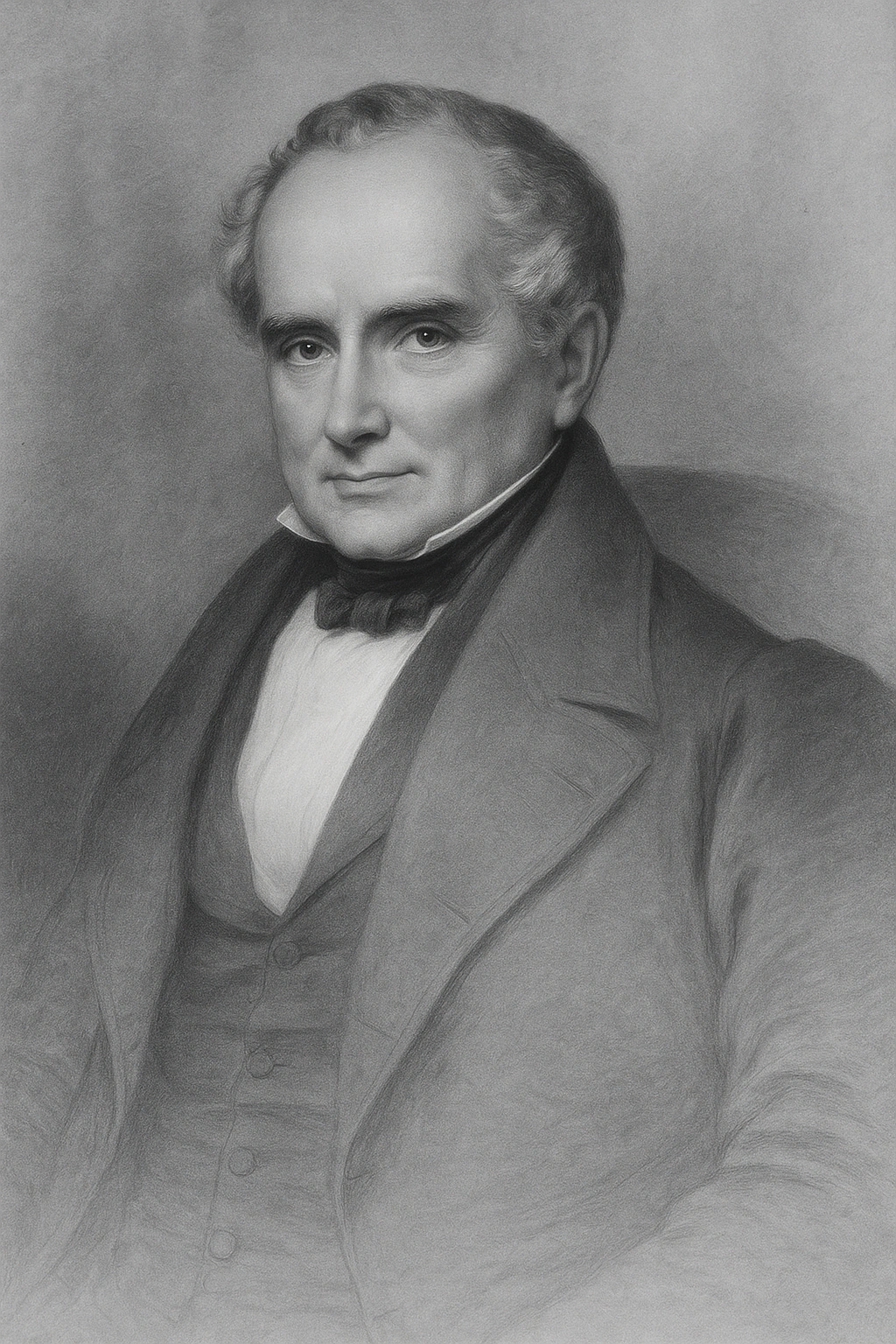
| 12 Quotes | |
| Occup. | Author |
| From | Canada |
| Spouses | Louisa Neville (1816-1840) Sarah Harriet Owen Williams (1856) |
| Born | December 17, 1796 Windsor, Nova Scotia |
| Died | August 27, 1865 Isleworth, England |
| Aged | 68 years |
| Cite | |
Citation Formats
APA Style (7th ed.)
Thomas chandler haliburton biography, facts and quotes. (2026, February 11). FixQuotes. https://fixquotes.com/authors/thomas-chandler-haliburton/
Chicago Style
"Thomas Chandler Haliburton biography, facts and quotes." FixQuotes. February 11, 2026. https://fixquotes.com/authors/thomas-chandler-haliburton/.
MLA Style (9th ed.)
"Thomas Chandler Haliburton biography, facts and quotes." FixQuotes, 11 Feb. 2026, https://fixquotes.com/authors/thomas-chandler-haliburton/. Accessed 6 Mar. 2026.
Early Life and Background
Thomas Chandler Haliburton was born on December 17, 1796, in Windsor, Nova Scotia, a Loyalist-founded town on the Avon River whose routines were shaped by tides, shipbuilding, and the long shadow of the American Revolution. His family stood within the province's professional elite; the expectation was public usefulness, not bohemian authorship. Growing up in a colonial society that was at once British in allegiance and North American in temperament, he absorbed the frictions that would later animate his humor: local shrewdness against metropolitan pretension, and practical survival against imported ideals.Nova Scotia in his youth was a place of small communities and big arguments - about commerce, patronage, schooling, and what kind of "British" province it wanted to be. Haliburton developed early a taste for anecdote, for listening to how people justified themselves at taverns, wharves, and courtrooms. That ear for speech, and an instinct to turn social tension into comic narrative, became his private instrument: a way to manage disappointment in politics and to convert the rough material of provincial life into cultural authority.
Education and Formative Influences
He attended King's College in Windsor, then the colony's principal Anglican institution, graduating young into a world where law, religion, and governance interlocked. The training gave him classical models and a Tory sense of order, but also a sharpened skepticism: the educated man sees both how much can be argued and how little can be proved. His legal apprenticeship and reading in history and satire prepared him to write in a voice that could sound like a plain farmer one moment and a magistrate the next, slipping between registers to expose vanity and self-deception.Career, Major Works, and Turning Points
Called to the Nova Scotia bar in 1819, Haliburton built a career as lawyer, legislator, and judge, serving in the provincial House of Assembly and later on the bench, including as a judge of the Supreme Court of Nova Scotia. His turning point came in the 1830s when sketches first published in newspapers were gathered as The Clockmaker; or, The Sayings and Doings of Samuel Slick of Slickville (1836), followed by sequels that made him one of the first colonial authors to achieve major transatlantic popularity. Through Slick, a Yankee peddler-philosopher observing Nova Scotia with amused calculation, Haliburton translated local speech into a marketable literary persona while also advancing conservative critiques of reform politics and romantic nationalism. Later writings, including satirical and political works and travel-based commentary, extended his themes, and in midlife he relocated to England, entered Parliament as a Conservative MP for Launceston, and lived as a transatlantic public man until his death on August 27, 1865, in Isleworth, Middlesex.Philosophy, Style, and Themes
Haliburton's inner life was shaped by the double consciousness of a colonial gentleman: loyal to British institutions yet compelled to measure them against North American realities. He prized competence over ideology, and his humor often masks a magistrate's impatience with waste, self-dramatization, and the politics of resentment. His aphorism “Punctuality is the soul of business”. is less a maxim for shopkeepers than a clue to temperament - an anxious faith that order and timing can tame the chaos of markets, elections, and human weakness. The same impulse appears in his economic plain-speaking: “No one is rich whose expenditures exceed his means, and no one is poor whose incomings exceed his outgoings”. , a moral arithmetic that treats solvency as character, and character as social destiny.Stylistically, he built comedy out of voice: the canny, performative speech of Samuel Slick, packed with proverbial logic, tall-tale exaggeration, and sudden turns into hard counsel. Haliburton understood that democratic societies produce new kinds of masks - nicknames, reputations, and public roles that cling tighter than truth - and he condensed that insight into a line that reads like a satirist's field note: “Nicknames stick to people, and the most ridiculous are the most adhesive”. Beneath the laughter lies a colder observation: modern public life is adhesive, and ridicule is a form of social control. His work returns repeatedly to credibility - who gets believed, who gets laughed at, and how "common sense" can be both a virtue and a weapon.
Legacy and Influence
Haliburton endures as a foundational figure in Canadian prose, among the earliest writers from British North America to build a wide readership by making local life legible - and entertaining - to the wider Atlantic world. The Clockmaker helped establish a tradition of dialect humor and regional satire later echoed in Canadian and American comic writing, while also provoking lasting debate about colonial identity, class, and the ethics of caricature. His political conservatism and occasional stereotyping have complicated his reputation, yet his technical achievement remains: he proved that a provincial society could generate a distinctive literary voice, and that the pressures of empire, commerce, and reform could be refracted into stories sharp enough to travel.Our collection contains 12 quotes written by Thomas, under the main topics: Witty One-Liners - Motivational - Ethics & Morality - Freedom - Hope.
Frequently Asked Questions
- Who was Haliburton? Thomas Chandler Haliburton, a Nova Scotia-born author and humorist famed for The Clockmaker (1796-1865).
- Who was Thomas Chandler? Thomas Chandler Haliburton, a Canadian author and satirist who created Sam Slick.
- Who is Thomas Chandler Haliburton? A Canadian author and humorist (1796-1865), creator of Sam Slick in The Clockmaker; also a judge and politician.
- How old was Thomas Chandler Haliburton? He became 68 years old
Thomas Chandler Haliburton Famous Works
Source / external links