
Thomas Hughes Biography Quotes 5 Report mistakes
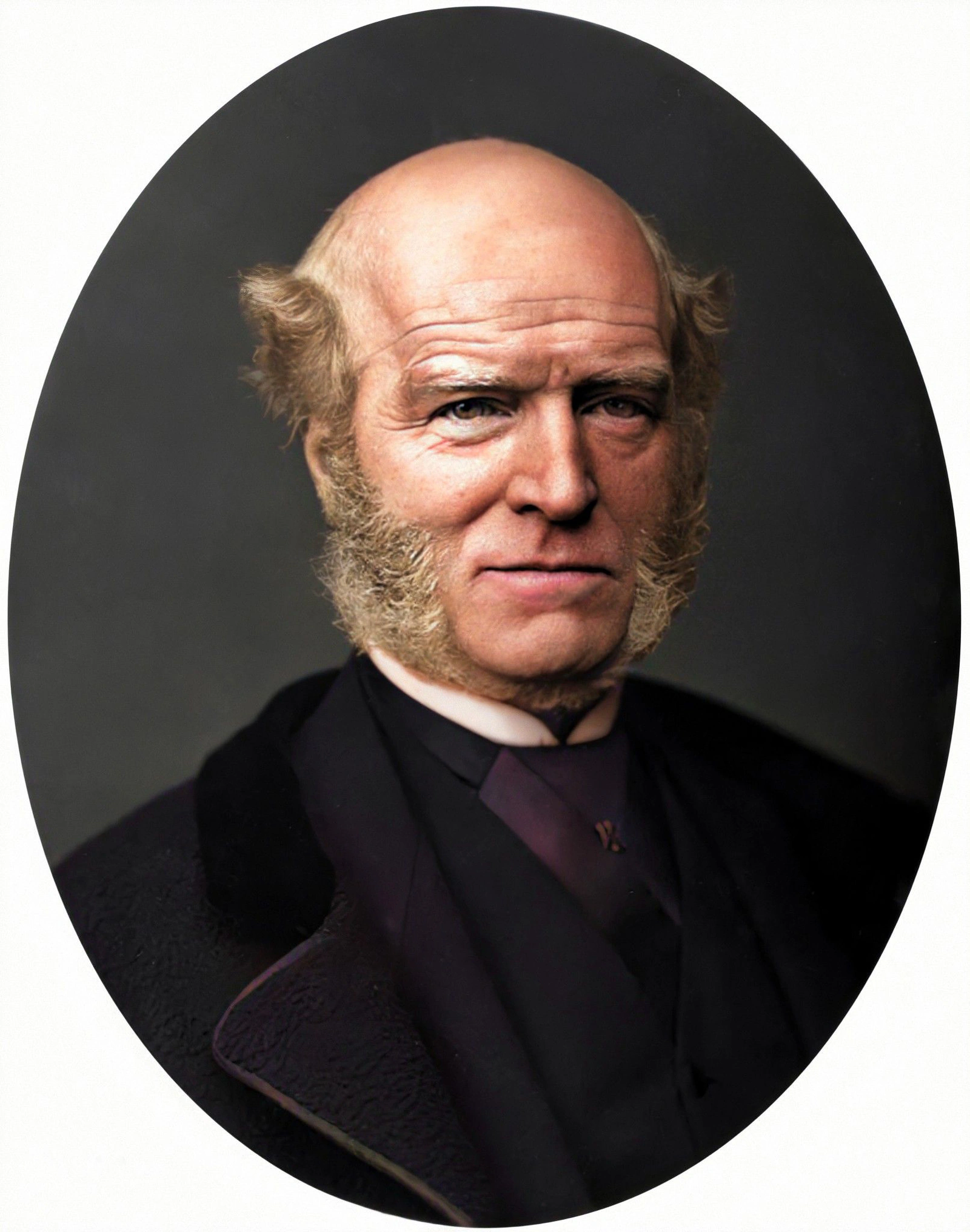
| 5 Quotes | |
| Occup. | Lawyer |
| From | United Kingdom |
| Born | October 20, 1822 Uffington, Berkshire (now Oxfordshire), England |
| Died | March 22, 1896 Brighton, East Sussex, England |
| Aged | 73 years |
| Cite | |
Citation Formats
APA Style (7th ed.)
Thomas hughes biography, facts and quotes. (2026, February 11). FixQuotes. https://fixquotes.com/authors/thomas-hughes/
Chicago Style
"Thomas Hughes biography, facts and quotes." FixQuotes. February 11, 2026. https://fixquotes.com/authors/thomas-hughes/.
MLA Style (9th ed.)
"Thomas Hughes biography, facts and quotes." FixQuotes, 11 Feb. 2026, https://fixquotes.com/authors/thomas-hughes/. Accessed 5 Mar. 2026.
Early Life and Education
Thomas Hughes (1822, 1896) emerged as one of Victorian Britains most recognizable lawyer-authors, remembered for combining legal work, public service, and writing with a program of moral and social reform. He was born in 1822 in the English countryside, and the rural traditions and lore of his native district would later infuse his prose with affectionate detail. As a boy he was sent to Rugby School, where the headmaster Thomas Arnold profoundly shaped his views of education, character, and citizenship. Arnold emphasized moral courage, self-government, and service, ideals that became central to Hughess later thought and to the vision of boyhood he presented to the public. Among his school contemporaries and near contemporaries were figures who helped carry forward Arnolds legacy, including Arthur Penrhyn Stanley, later Dean of Westminster. The circle around Rugby and Arnold provided Hughes with a lifelong compass that blended religious breadth, civic duty, and a belief in the formative power of schools.After Rugby, Hughes continued his education at Oxford. University study confirmed his interest in public questions and honed his skill in argument. He gravitated to law both as a practical career and as an instrument for social betterment. While still a young man he absorbed the stirrings of mid-century reform and the debates that animated the post-Reform Act generation. Reading widely and writing for periodicals led him to the attention of leading editors and publishers of the day.
Legal Career and Public Service
Called to the bar in London, Hughes developed a reputation as a conscientious barrister with a clear prose style and a conciliatory approach to dispute. He appeared on circuit and in the capital, preferring work in which law could mediate industrial and social tensions. His legal practice brought him into the orbit of contemporary reformers as questions over labor, co-operation, and education moved to the center of public life. He argued consistently that law should recognize associations formed by working people and should provide reliable means of arbitration and conciliation. In committees and inquiries he listened closely to the testimony of union leaders and advocates; men such as Robert Applegarth, among others, helped crystallize the case for legal recognition of trade unions that legislators would eventually secure.Hughess competence and probity led to later judicial service as a county court judge, a post in which he applied law with the patience and sympathy that colored both his writing and his politics. He preferred the steady, reform-minded work of daily justice to the pursuit of grand judicial advancement, and he carried into court the same ideal of fairness he had absorbed at Rugby.
Christian Socialism and the Working Mens College
The revolutionary tremors of 1848 and the difficulties of industrial Britain energized a circle of Broad Church reformers who called their program Christian Socialism. Hughes was drawn to this movement and to the charismatic leadership of Frederick Denison Maurice and Charles Kingsley. Alongside John Malcolm Ludlow, they sought practical institutions that could lift working men through education and cooperative enterprise. Their most enduring creation was the Working Mens College in London (founded 1854), which Hughes helped to establish and support. There he taught, organized, raised funds, and encouraged artisans to pursue literature, history, and the arts.The college became a meeting place where social boundaries softened in shared study. It attracted gifted teachers and friends of reform; John Ruskin lectured and taught drawing, and links to the wider world of letters and design were common. Through this work Hughes embodied a conviction that education, delivered respectfully and at high standards, could nurture dignity and independence. The college also served as a proving ground for ideas about cooperation that would spread through friendly societies, consumer co-operatives, and educational ventures across Britain.
Author and Cultural Influence
Hughes reached the widest audience with Tom Browns School Days (1857), published by Alexander Macmillan. The novel, inspired by his experiences at Rugby, sought to portray the moral formation of a boy under the guidance of a great headmaster. It championed fair play, camaraderie, and responsible leadership, and it helped canonize the figure of Arnold as an exemplar of humane education. The book traveled quickly beyond Britain, shaping international images of English public school life and giving popular force to the ethos later labeled muscular Christianity. A sequel, Tom Brown at Oxford (1861), extended the story into young adulthood and examined the temptations and ideals of university life.Hughes also wrote essays and a beloved celebration of local heritage, The Scouring of the White Horse, which showed his gift for blending folklore, landscape, and community memory. Though his fiction overshadowed his nonfiction, his essays and lectures constantly reinforced the same message: institutions matter when they form character, law matters when it protects the weak, and faith matters when it awakens social duty.
Parliamentary Career and Reform
Hughes carried his principles into Parliament, serving as a Liberal member and working alongside contemporaries such as William Ewart Gladstone and Anthony Mundella in the reform-minded politics of the 1860s and 1870s. He supported measures to regularize the legal position of trade unions, to extend educational opportunity, and to encourage industrial conciliation. His committee work reflected his legal training; he was patient with evidence, attentive to witnesses, and willing to compromise to achieve practical gains. During inquiries into labor relations he engaged with witnesses from both employers and organized labor, helping to craft a legal environment more compatible with voluntary associations and peaceful picketing.His parliamentary speeches were not flamboyant, but they were respected for clarity and ethical seriousness. This gave him influence in debates where moral purpose needed to be linked to workable statutes.
Experiments in Community and Later Years
Hughess belief in cooperative community led him beyond Britain. In the 1880s he helped found Rugby, Tennessee, an experimental settlement intended to give younger sons and others of limited means a chance to build self-sufficient lives on cooperative lines. He visited the United States in connection with this work and advocated the project in print and on platforms in Britain. Although Rugby, Tennessee faced disease, financial difficulties, and the hard economics of frontier life, the attempt captured the Victorian imagination and mirrored Hughess lifelong readiness to test ideals in practice.In his later years Hughes balanced writing, judging, and the duties attached to educational and charitable institutions he had long supported. The Working Mens College remained a source of pride and affection, as did his connection to Rugby School and the memory of Thomas Arnold. Friends from the Christian Socialist circle, including Maurice and Kingsley, had by then passed into the pantheon of Victorian reformers, and Hughess own career was increasingly viewed as part of that shared legacy.
Character, Relationships, and Legacy
Hughess contemporaries regarded him as principled, energetic, and approachable. He bridged worlds that often stood apart: the Inns of Court and the workshop, Parliament and the classroom, the pulpit and the platform. The people around him formed a telling constellation: Arnold as mentor; Maurice as theological guide; Kingsley as comrade-in-arms; Ludlow as organizer; publishers like Alexander Macmillan as conduits to readers; and public men such as Gladstone and Mundella as legislative allies. Artists and teachers who passed through the Working Mens College, among them Ruskin, broadened his sense of culture as a democratic good. Trade union witnesses like Robert Applegarth, whose testimony Hughes weighed carefully, anchored his reforms in the experience of working people.Thomas Hughes died in 1896, by then a figure whose name evoked both a classic of schoolboy literature and a lifetime of public service. His influence endured in three overlapping domains: education, where Tom Brown kept alive the ideal of character-building schools; law and labor, where fair recognition of associations and arbitration gained a firmer footing; and civic culture, where the Working Mens College demonstrated how respect, learning, and fellowship could change lives. His was a career animated by the conviction that institutions can be humane and that the measure of success is found in the growth of character as much as in the gaining of power.
Our collection contains 5 quotes written by Thomas, under the main topics: Witty One-Liners - Wisdom - Justice - Friendship - Sports.
Source / external links