
Thomas Ken Biography Quotes 6 Report mistakes
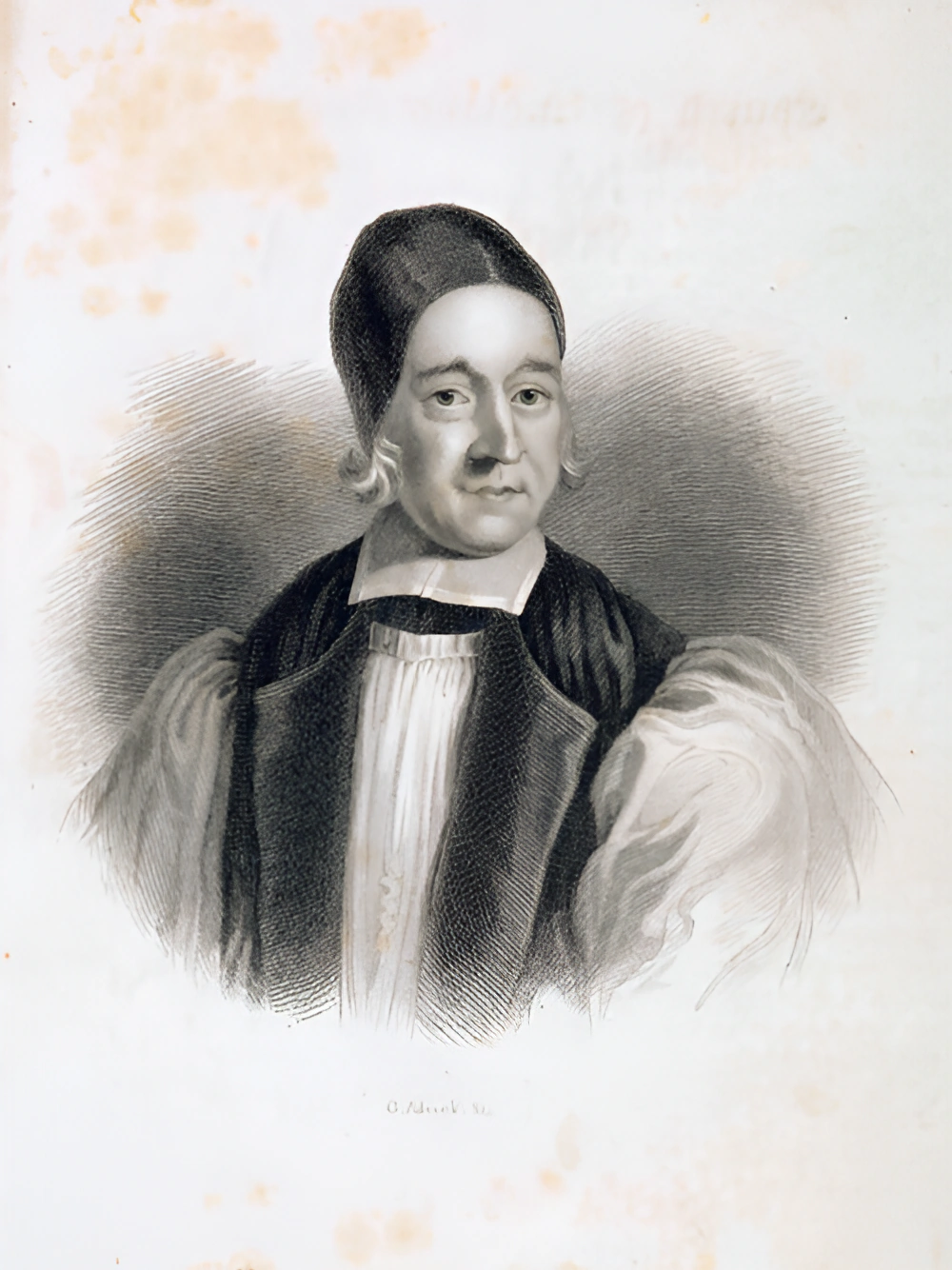
Attr: George Henry Adcock
| 6 Quotes | |
| Occup. | Clergyman |
| From | England |
| Born | 1637 AC |
| Died | 1711 AC |
| Cite | |
Citation Formats
APA Style (7th ed.)
Thomas ken biography, facts and quotes. (2026, February 23). FixQuotes. https://fixquotes.com/authors/thomas-ken/
Chicago Style
"Thomas Ken biography, facts and quotes." FixQuotes. February 23, 2026. https://fixquotes.com/authors/thomas-ken/.
MLA Style (9th ed.)
"Thomas Ken biography, facts and quotes." FixQuotes, 23 Feb. 2026, https://fixquotes.com/authors/thomas-ken/. Accessed 31 Mar. 2026.
Early Life and Background
Thomas Ken was born in 1637, in the shadow of a kingdom sliding toward civil war. He came from a Somerset family (often linked with the village of Berkhampstead, Hertfordshire, through relatives and patronage rather than birthplace), and his earliest years were formed by England's most punishing religious education: the breakdown of old церemoni(es), the shock of regicide, and the unstable alternation of Puritan rigor and restored episcopal confidence. For a boy inclined to devotion, the era made piety feel less like inherited custom than a contested allegiance, something chosen and defended.The Restoration settlement of 1660 returned bishops, liturgy, and the public language of Anglican worship, but it did not return calm. Ken grew into adulthood as conformity, conscience, and survival were repeatedly tested. Clergy learned that the same crown that protected the Church could also demand bargains from it; laypeople learned to read politics through prayers. That sense of the Church as a spiritual home constantly exposed to coercion would become the pressure point of Ken's inner life: tenderness in devotion paired with an almost severe boundary around principle.
Education and Formative Influences
Ken was educated at Winchester College and New College, Oxford, entering the clerical world at a moment when the Church of England was rebuilding its intellectual and pastoral authority. He absorbed the devotional Anglicanism that prized the Book of Common Prayer, the sacraments, and disciplined daily worship, and he moved within networks that valued both learning and holiness. He served as a chaplain and became associated with the household of Princess Mary (the future Mary II) at The Hague, an appointment that exposed him to international Protestant politics while sharpening his sense that a pastor's first loyalty was to the care of souls, not the shifting demands of courts.Career, Major Works, and Turning Points
Ken's public career crystallized in the 1680s. He became Bishop of Bath and Wells in 1685, but his reputation was forged as much by refusal as by office: he opposed the abuses of James II's Catholicizing policies, most famously as one of the Seven Bishops who petitioned against the royal Declaration of Indulgence and were imprisoned in the Tower in 1688, then triumphantly acquitted. After the Glorious Revolution, Ken would not swear allegiance to William and Mary, becoming a leading Nonjuror; he was deprived of his see in 1691 and lived thereafter in relative retirement, supported by friends and patrons. Alongside sermons and pastoral writing, his hymns and devotional manuals carried his voice beyond the Nonjuring circle - especially the morning and evening hymns composed for students at Winchester, whose doxology would later be known worldwide as the "Old 100th" refrain.Philosophy, Style, and Themes
Ken's inner life was marked by a disciplined tenderness: he aimed to make holiness habitual, not dramatic. His writing repeatedly returns to time - the ordinary day, the evening examination, the morning offering - as the true battlefield of conscience. “Redeem thy misspent time that's past, And live this day as if thy last”. The line is not a theatrical memento mori but a practical psychology: regret must be converted into attention, and attention into a rule of life. Ken's pastoral strategy was to tether the believer to repeatable acts of prayer, confession, and gratitude, so that the soul would not be governed by mood, fear, or faction.At the same time, Ken was a High Churchman in the older, pre-party sense: he believed divine truth was received with reverence, not negotiated as opinion. “When you read any great mystery, recorded in holy Writ, you are to prostrate your Reason to Divine Revelation”. That submission was not anti-intellectual; it was a boundary against the age's corrosive cynicism and the court's instrumental use of religion. His best-known stanza, “Praise God, from whom all blessings flow! Praise Him, all creatures here below! Praise Him above, ye heavenly host! Praise Father, Son, and Holy Ghost!” expresses his style at its purest: simple diction, communal voice, and a theology that begins and ends in adoration. In Ken, praise is not ornament; it is moral reorientation, training the heart away from self-justification toward dependence, and thus making courage possible when institutions demand compromise.
Legacy and Influence
Ken died in 1711, still identified with the Nonjuring cause yet remembered more lastingly for the devotional depth that outlived that political fracture. He stands as a characteristic figure of late Stuart England: a bishop shaped by civil war memory, tested by revolution, and finally defined by conscience under pressure. His hymns entered the bloodstream of English-speaking Protestant worship; his doxology became a default ending to countless services, embedding Trinitarian praise in ordinary religious speech. More quietly, his life offered a model of principled dissent without bitterness - an Anglican spirituality in which discipline serves gentleness, and reverence becomes the source of moral independence.Our collection contains 6 quotes written by Thomas, under the main topics: Mortality - Live in the Moment - Faith - God - Prayer.
Other people related to Thomas: Izaak Walton (Writer)