
Thomas Merton Biography Quotes 34 Report mistakes
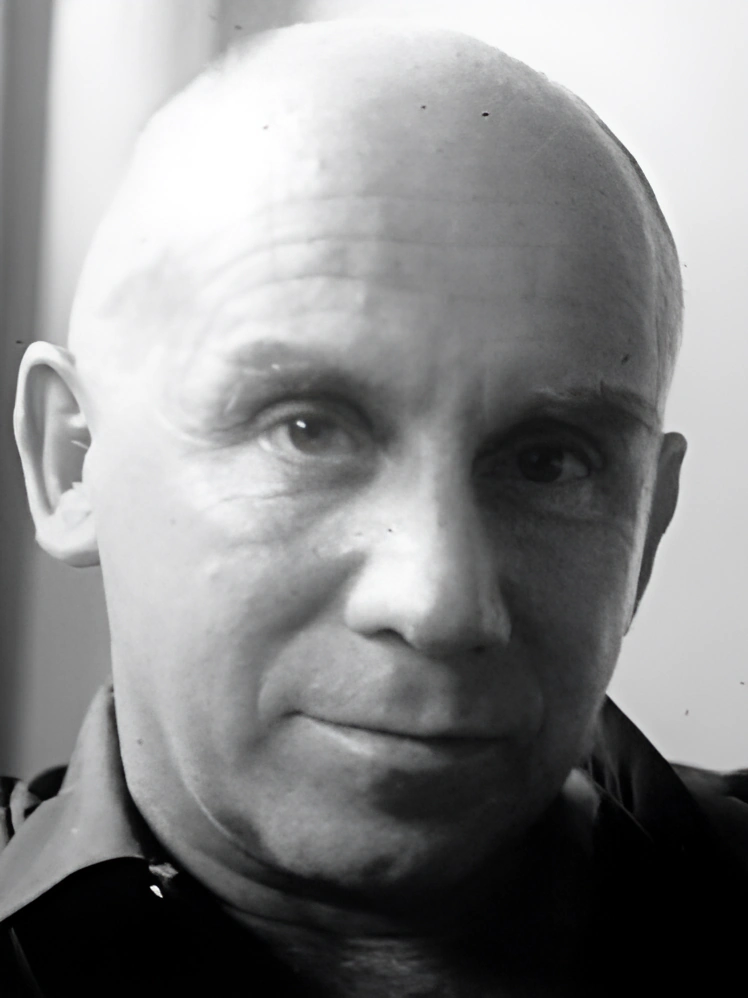
Attr: Bellarmine University
| 34 Quotes | |
| Known as | Father Louis |
| Occup. | Author |
| From | USA |
| Born | January 31, 1915 Prades, France |
| Died | December 10, 1968 Bangkok, Thailand |
| Cause | accidental electrocution |
| Aged | 53 years |
| Cite | |
Citation Formats
APA Style (7th ed.)
Thomas merton biography, facts and quotes. (2026, February 11). FixQuotes. https://fixquotes.com/authors/thomas-merton/
Chicago Style
"Thomas Merton biography, facts and quotes." FixQuotes. February 11, 2026. https://fixquotes.com/authors/thomas-merton/.
MLA Style (9th ed.)
"Thomas Merton biography, facts and quotes." FixQuotes, 11 Feb. 2026, https://fixquotes.com/authors/thomas-merton/. Accessed 22 Mar. 2026.
Early Life and Background
Thomas Merton was born on January 31, 1915, in Prades, in the French Pyrenees, to itinerant artists: Owen Merton, a New Zealand-born painter, and Ruth Jenkins Merton, an American Quaker with strong intellectual ambitions. His earliest memories were shaped by movement and loss - a childhood spent between France, Bermuda, and England, with the First World War and its aftermath as the dim, ambient pressure behind everything. In 1921 his mother died of stomach cancer, a wound that returned in his writing as both grief and a lifelong suspicion that love, if not grounded, could vanish overnight.After Ruths death, Merton and his father lived in France and later England, and the boy was educated in boarding schools that offered discipline without much tenderness. Owen Merton remained a demanding presence, modeling both aesthetic seriousness and a kind of stoic solitude, until his own death from a brain tumor in 1931. Orphaned at sixteen, Merton inherited money and a freedom that quickly became a test: he experimented with drink, sexual license, and the bright cynicism of the interwar student world, then later described this period with unusual candor, as if confession were the first rung of a ladder back to reality.
Education and Formative Influences
Merton studied at Clare College, Cambridge, in 1933, but his heedless life and a scandal involving a young woman led to his departure; he later fathered a child there, an episode he would acknowledge obliquely and regret as emblematic of a self divided. He transferred to Columbia University in New York, graduating in 1938, and found in its libraries and friendships - notably with Robert Lax and the circle around Mark Van Doren - a rigorous alternative to mere sensation. Reading Blake, Dante, Gerard Manley Hopkins, and the Catholic revival writers he encountered in Manhattan, he moved from political flirtations and literary ambition toward metaphysical hunger, entering the Catholic Church in 1938; the citys noise, the Depression-era struggle, and the looming war sharpened his sense that modern life could be both fascinating and spiritually anesthetizing.Career, Major Works, and Turning Points
In December 1941, days after Pearl Harbor, Merton entered the Abbey of Gethsemani, a Trappist monastery near Bardstown, Kentucky, seeking a radical silence that contradicted the mobilized nation around him. Ordained a priest in 1949, he became the monasterys reluctant public voice through "The Seven Storey Mountain" (1948), an autobiography that made monastic conversion legible to postwar America and turned him into an unexpected celebrity. Over the next two decades he wrote tirelessly - journals, poems, social criticism, and contemplative guides such as "New Seeds of Contemplation" (1961), "The Sign of Jonas" (1953), "Conjectures of a Guilty Bystander" (1966), and later "Zen and the Birds of Appetite" (1968) - while his superiors alternately restricted and relied on his public reach. A crucial turning point came in the late 1950s and early 1960s, when the Cold War and nuclear brinkmanship pushed his contemplative life outward into moral witness; another came in 1965, when he received permission to live as a hermit on monastery grounds, intensifying solitude even as his correspondence and influence widened. In 1968 he traveled through Asia, meeting monastics and Buddhist teachers, and died on December 10, 1968, in Bangkok, in an accidental electrocution after giving a conference talk - a sudden end that felt, to many readers, like a life cut off mid-sentence.Philosophy, Style, and Themes
Mertons inner drama is the tension between withdrawal and responsibility: he sought God in silence, yet his conscience kept returning him to the world as a subject for prayer and critique. His finest prose insists that peace is not merely an external program but an interior integration, a refusal to let fear and ego set the terms of perception. “We are not at peace with others because we are not at peace with ourselves, and we are not at peace with ourselves because we are not at peace with God”. That sentence is less a pious slogan than a psychological diagnosis: alienation begins as a split within the self, then metastasizes into politics, race hatred, and the managerial drive to dominate.His style combines lyrical attention with surgical self-suspicion, and his spirituality is marked by distrust of coercion - even religious coercion. “The tighter you squeeze, the less you have”. In Mertons hands, this becomes a rule for prayer, art, and human relationships: grasping at holiness can produce vanity; grasping at people can produce loneliness; grasping at certainty can produce ideological violence. Accordingly, he treats humility as realism rather than abasement: “Pride makes us artificial and humility makes us real”. The theme runs through his journals and essays as an anti-performance ethic - a call to recover true personhood beneath roles, accomplishments, and spiritual ambition, and to let contemplation expose the ego as the most persistent counterfeit.
Legacy and Influence
Merton endures as a bridge figure: between pre-Vatican II monasticism and modern spiritual seeking, between Catholic contemplation and interreligious dialogue, between personal conversion narrative and social conscience. His writings helped make the monastery intelligible to a secularizing America, and his antiwar and antinuclear essays gave religious language a renewed moral edge during the Cold War. He also normalized the idea that a disciplined interior life can coexist with intellectual range - poetry and politics, desert solitude and global conversation - while his candid journals set a template for spiritual autobiography that admits failure without aestheticizing it. For readers in an age of speed and self-branding, Merton remains a demanding companion: proof that the search for God can be both fiercely private and publicly consequential.Our collection contains 34 quotes written by Thomas, under the main topics: Motivational - Ethics & Morality - Wisdom - Art - Love.
Other people related to Thomas: Henri Nouwen (Clergyman), James Laughlin (Poet), Kenneth Rexroth (Poet)
Thomas Merton Famous Works
- 1973 The Asian Journal of Thomas Merton (Non-fiction)
- 1968 Zen and the Birds of Appetite (Collection)
- 1966 Conjectures of a Guilty Bystander (Collection)
- 1961 New Seeds of Contemplation (Book)
- 1955 No Man Is an Island (Collection)
- 1953 The Sign of Jonas (Memoir)
- 1949 Seeds of Contemplation (Book)
- 1948 The Seven Storey Mountain (Autobiography)