
Thomas Paine Biography Quotes 56 Report mistakes
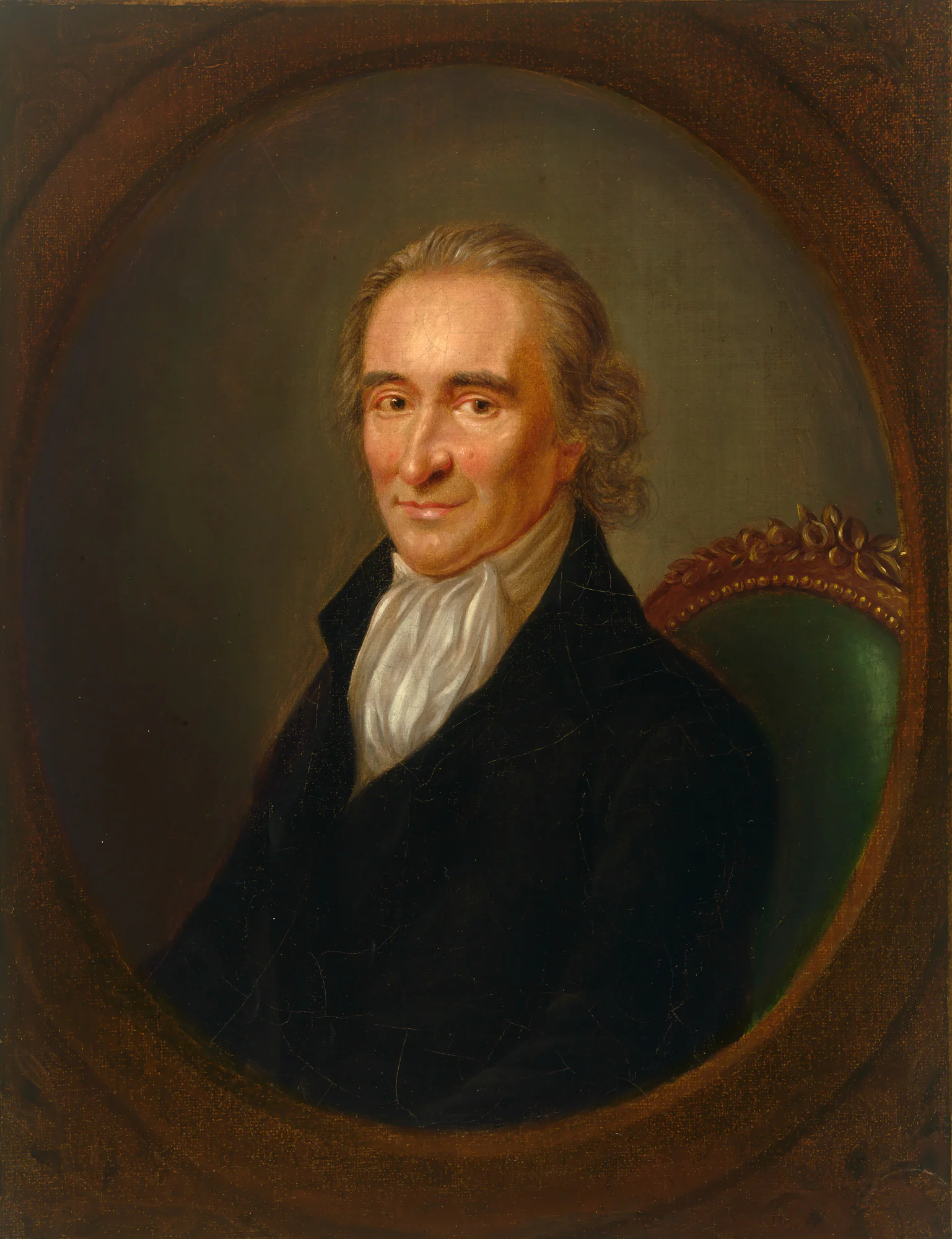
Attr: Laurent Dabos
| 56 Quotes | |
| Occup. | Writer |
| From | England |
| Born | January 29, 1737 Thetford, England |
| Died | June 8, 1809 New York City, New York, United States |
| Cause | Kidney infection |
| Aged | 72 years |
| Cite | |
Citation Formats
APA Style (7th ed.)
Thomas paine biography, facts and quotes. (2026, February 2). FixQuotes. https://fixquotes.com/authors/thomas-paine/
Chicago Style
"Thomas Paine biography, facts and quotes." FixQuotes. February 2, 2026. https://fixquotes.com/authors/thomas-paine/.
MLA Style (9th ed.)
"Thomas Paine biography, facts and quotes." FixQuotes, 2 Feb. 2026, https://fixquotes.com/authors/thomas-paine/. Accessed 5 Mar. 2026.
Early Life and Background
Thomas Paine was born on January 29, 1737, in Thetford, Norfolk, a market town shaped by the rhythms of craft labor and dissenting religion. His father, Joseph Paine, was a Quaker staymaker (corset maker), and his mother, Frances Cocke, was Anglican; the household sat at the seam between quietist conscience and established ritual. That mixed inheritance mattered: Paine grew up hearing both the Quaker emphasis on moral equality and the Anglican language of order, then spent his life interrogating what kind of authority deserved obedience.He entered adulthood in an England of widening commerce, harsh criminal law, and political exclusion, where riots could be answered with troops and elections were governed by patronage. Paine tried to make a living in several trades - including his fathers craft - and drifted through precarious employments. His first marriage, to Mary Lambert, ended with her death in childbirth in 1759, a private catastrophe that hardened his sense that life offered no guarantees and that institutions did not exist to cushion ordinary suffering.
Education and Formative Influences
Paine had a basic grammar-school education but became largely self-taught, reading widely and absorbing the ferment of Enlightenment argument that circulated through coffeehouses, debating societies, and pamphlets. He worked as an excise officer, a job that put him face-to-face with the states fiscal machinery and with the small humiliations of class hierarchy; he helped draft a petition for better pay and conditions, learning to write for a public purpose. In London he met Benjamin Franklin, who recognized his energy and urged him to start over in America; Paine sailed in late 1774, arriving in Philadelphia with little money but a sharpened sense that politics was, at bottom, a contest over who had to fear whom.Career, Major Works, and Turning Points
In America Paine quickly found his medium: the urgent, accessible pamphlet. In January 1776 he published "Common Sense", an explosive case for independence that mocked hereditary monarchy, reframed separation as plain reason, and reached readers far beyond elite circles. During the darkest months of the Revolutionary War he wrote "The American Crisis" (beginning December 1776) to stiffen resolve, later serving in various governmental roles and suffering political fallout after revealing questionable wartime dealings by influential figures. The 1790s pulled him into a wider Atlantic revolution: "Rights of Man" (1791-1792) defended the French Revolution and attacked Edmund Burke, making Paine a target of the British government; he fled to France, was elected to the National Convention, and then was imprisoned during the Terror. After his release he published "The Age of Reason" (1794-1795), a deist critique of revealed religion that secured both devoted admirers and lasting hostility; he returned to the United States in 1802 to find his reputation scarred, living his last years largely isolated until his death on June 8, 1809, in New York.Philosophy, Style, and Themes
Paine wrote as if politics were a moral emergency that demanded clarity over elegance. He distrusted mystification - whether the mystique of crowns, the legal fog of privilege, or the clerical insulation of doctrine - and he aimed for sentences that could be carried from print shop to tavern and repeated without loss. His recurring subject was fear: how rulers cultivate it, and how citizens must outgrow it. “The strength and power of despotism consists wholly in the fear of resistance”. That line is not just theory; it is psychological diagnosis. Paine treated intimidation as the real technology of tyranny, and persuasion as the counter-technology that could reorganize what ordinary people believed was possible.His radicalism was anchored in an expansive moral identity and a severe standard of fairness, including toward opponents. “The World is my country, all mankind are my brethren, and to do good is my religion”. In Paine, cosmopolitan sympathy was not sentimental - it was strategic, a way to prevent revolution from shrinking into faction and revenge. He also insisted that liberty had to be procedural as well as inspirational: “He that would make his own liberty secure, must guard even his enemy from oppression; for if he violates this duty, he establishes a precedent that will reach to himself”. The warning reflects his own experience of revolutionary justice turning punitive and of public opinion turning on former heroes; Paine understood that the crowd can reproduce the states abuses unless principles are built into the new order.
Legacy and Influence
Paine helped invent the modern political writer: a public intellectual who speaks over the heads of gatekeepers to a mass audience, marrying moral philosophy to actionable argument. "Common Sense" became a template for popular mobilization; "Rights of Man" fed nineteenth-century reform movements in Britain and America; "The Age of Reason" helped normalize open religious skepticism in print. His life also became a parable about the costs of candor: celebrated as a revolutionary midwife, then treated as an embarrassment when his deism and his attacks on elite hypocrisy were no longer convenient. Yet his core contribution endures - the idea that ordinary people can be addressed as sovereign reasoners, and that an "army of principles" can outlast armies of soldiers.Our collection contains 56 quotes written by Thomas, under the main topics: Ethics & Morality - Wisdom - Truth - Sarcastic - Leadership.
Other people related to Thomas: Robert G. Ingersoll (Lawyer), Thomas Holcroft (Dramatist), Joel Barlow (Poet), Charles Inglis (Clergyman), Marquis de Condorcet (Philosopher)
Thomas Paine Famous Works
- 1797 Agrarian Justice (Pamphlet)
- 1794 The Age of Reason (Book)
- 1791 The Rights of Man (Book)
- 1776 Common Sense (Pamphlet)
- 1776 The American Crisis (Pamphlet Series)
Source / external links