
Thomas Szasz Biography Quotes 26 Report mistakes
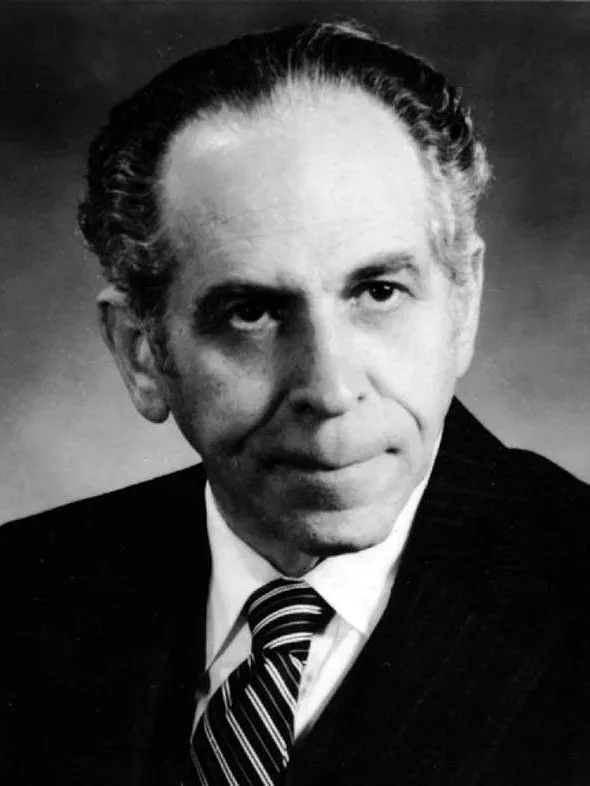
| 26 Quotes | |
| Born as | Thomas Stephen Szasz |
| Occup. | Psychologist |
| From | USA |
| Born | April 15, 1920 Budapest, Hungary |
| Died | September 8, 2012 Manlius, New York, United States |
| Cause | Natural causes |
| Aged | 92 years |
| Cite | |
Citation Formats
APA Style (7th ed.)
Thomas szasz biography, facts and quotes. (2026, February 11). FixQuotes. https://fixquotes.com/authors/thomas-szasz/
Chicago Style
"Thomas Szasz biography, facts and quotes." FixQuotes. February 11, 2026. https://fixquotes.com/authors/thomas-szasz/.
MLA Style (9th ed.)
"Thomas Szasz biography, facts and quotes." FixQuotes, 11 Feb. 2026, https://fixquotes.com/authors/thomas-szasz/. Accessed 22 Mar. 2026.
Early Life and Background
Thomas Stephen Szasz was born on April 15, 1920, to a Jewish family in Budapest, Hungary, in the unsettled aftermath of World War I and the political shocks that followed the collapse of empires. He grew up in a milieu where questions of identity, authority, and belonging were not abstractions but daily realities, sharpened by the rising pressures that European Jews increasingly felt in the interwar years.In 1938, on the eve of the catastrophe that would soon overtake much of Europe, he immigrated to the United States. The timing mattered: he arrived as a refugee-in-waiting, someone who had watched a continent slide from civic order into persecution and learned to read the language of power. That early confrontation with state authority and mass conformity later resurfaced in his suspicion of coercive institutions, especially when they clothed themselves in benevolence.
Education and Formative Influences
Szasz trained as a physician and psychiatrist in the United States, earning an MD and completing psychiatric residency in the mid-20th-century period when psychoanalysis held cultural prestige and hospital psychiatry was becoming increasingly bureaucratic. He also trained at the Chicago Institute for Psychoanalysis and worked within psychoanalytic circles even as he grew more critical of psychiatry's legal and political uses. His intellectual formation fused clinical exposure, philosophical skepticism, and an American civil-libertarian temper that was hardening during the Cold War years, when deviance of many kinds could be medicalized, criminalized, or both.Career, Major Works, and Turning Points
Szasz spent most of his career at SUNY Upstate Medical University in Syracuse, New York, where he became a persistent internal dissenter - a clinician and teacher arguing, often against his own profession's prevailing self-image, that psychiatry was uniquely entangled with the state's power to confine and label. The turning point was the publication of The Myth of Mental Illness (1961), a book that made him internationally famous and permanently controversial by claiming that many "mental illnesses" were not diseases in the same sense as bodily pathology but problems in living, conflicts in communication, and forms of rule-breaking reinterpreted as medical disorders. He followed with works such as Law, Liberty, and Psychiatry (1963), The Manufacture of Madness (1970), and The Therapeutic State (1984), developing a critique of involuntary hospitalization, the insanity defense, and what he saw as psychiatry's drift from a helping profession into an instrument that could manage social discomfort through medical authority.Philosophy, Style, and Themes
Szasz wrote like a moralist with a scalpel: lucid, combative, and allergic to euphemism. He insisted that language is never neutral in psychiatry because the diagnostic word can become a warrant. His aphorism, “In the animal kingdom, the rule is, eat or be eaten; in the human kingdom, define or be defined”. , captures his core psychological insight: people fear not only suffering but being narrated by others. For Szasz, psychiatric labels were often less like discoveries and more like verdicts, tools that could dissolve a person's agency by turning choices into symptoms and dissent into pathology.This emphasis on agency shaped his inner life as well as his polemics. He was drawn to psychotherapy as a voluntary, contractual encounter between adults, but appalled when therapy became coercion with a medical mask. The claim “There is no psychology; there is only biography and autobiography”. was not a denial of the mind so much as a demand for personal accountability and narrative specificity: to understand a person, attend to the story they are living, the bargains they make, and the responsibilities they evade. Even his sardonic theology-of-diagnosis line, “If you talk to God, you are praying. If God talks to you, you have schizophrenia”. , presses the same nerve: psychiatry, he argued, polices meaning by granting some experiences legitimacy and declaring others symptoms, often aligning with cultural and legal power rather than demonstrable disease.
Legacy and Influence
Szasz died on September 8, 2012, but his work remains a durable provocation in debates over civil commitment, forced medication, and the ethics of psychiatric authority. He helped crystallize the modern argument that liberty and treatment can come into conflict - and that "help" backed by the power to detain is a political act, not merely a medical one. Critics faulted him for minimizing the realities of severe psychosis and for drawing too sharp a boundary between disease and disorder; admirers credit him with forcing psychiatry to defend its concepts, sharpen consent practices, and reckon with its role in courts and institutions. Whatever verdict one reaches, his influence endures as a warning about how easily compassionate language can become an administrative weapon, and as an insistence that the person, not the label, is the proper subject of care.Our collection contains 26 quotes written by Thomas, under the main topics: Witty One-Liners - Ethics & Morality - Wisdom - Justice - Sarcastic.
Source / external links