
Thomas Willis Biography Quotes 4 Report mistakes
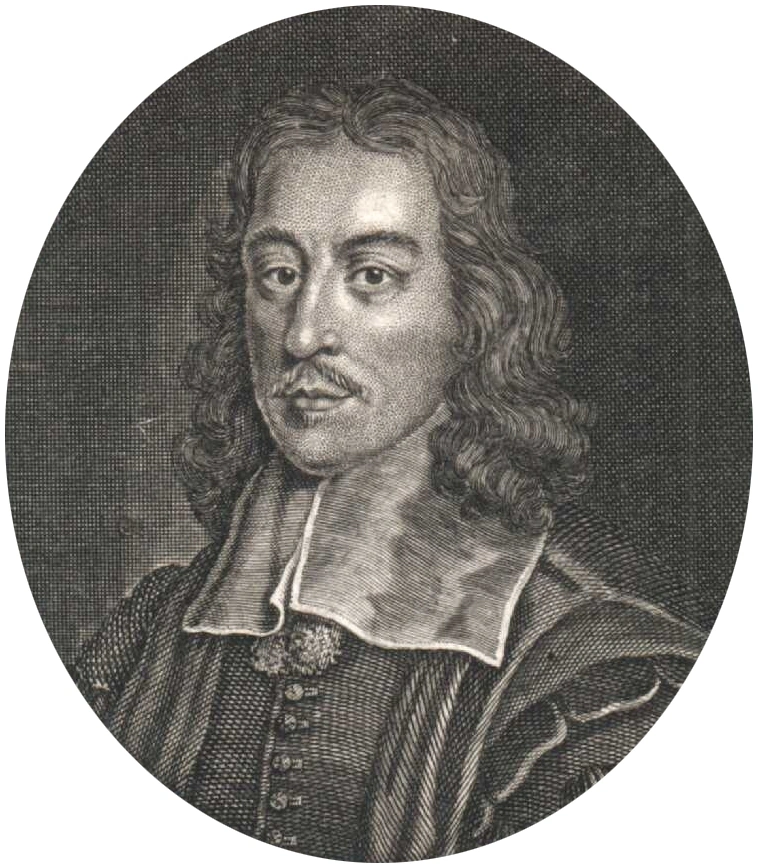
| 4 Quotes | |
| Occup. | Scientist |
| From | England |
| Born | January 27, 1621 Great Bedwyn, Wiltshire |
| Died | November 11, 1673 London, England, UK |
| Aged | 52 years |
| Cite | |
Citation Formats
APA Style (7th ed.)
Thomas willis biography, facts and quotes. (2026, February 11). FixQuotes. https://fixquotes.com/authors/thomas-willis/
Chicago Style
"Thomas Willis biography, facts and quotes." FixQuotes. February 11, 2026. https://fixquotes.com/authors/thomas-willis/.
MLA Style (9th ed.)
"Thomas Willis biography, facts and quotes." FixQuotes, 11 Feb. 2026, https://fixquotes.com/authors/thomas-willis/. Accessed 27 Mar. 2026.
Early Life and Background
Thomas Willis was born on January 27, 1621, in Great Bedwyn, Wiltshire, the son of a steward-farmer family tied to local gentry. England in his youth was a country of parish routines and widening intellectual horizons, where the inherited certainties of church and monarchy began to strain against the new curiosity of experimental natural philosophy.His early adulthood unfolded under national rupture. The Civil Wars (1642-1651) upended careers and consciences, and Willis, a convinced Royalist, lived through the violence and deprivation that made medicine both more necessary and more improvisational. The experience left him practical, unromantic about the body, and attentive to how shock, fear, hunger, and injury could disorganize mind and behavior.
Education and Formative Influences
Willis studied at Oxford, taking his BA (1642) and later medical degrees (MB 1646; MD 1649), as the university became a refuge and a workshop for new learning even amid political turmoil. In Oxford he moved within a circle that would feed into the Royal Society: John Wilkins encouraged an experimental temper; Robert Boyle brought chemical imagination; and the young Christopher Wren supplied anatomical drawing and geometrical clarity. This blend of classical learning, bedside practice, and hands-on experiment formed Willis into a physician who treated the brain and nerves not as metaphors, but as organs with structure, blood supply, and failure modes.Career, Major Works, and Turning Points
Ordained in 1643 but drawn decisively to medicine, Willis built an Oxford practice, gained a reputation for careful observation, and after the Restoration became Sedleian Professor of Natural Philosophy (1660). His most influential work, Cerebri Anatome (1664), set out a new anatomy of the brain and cranial nerves and described the arterial circle at the brain's base later called the circle of Willis; its argument was inseparable from dissection, comparative anatomy, and a mechanistic account of "animal spirits" traveling neural pathways. He followed with Pathologiae Cerebri et Nervosi Generis (1667) on nervous diseases and De Anima Brutorum (1672), a controversial attempt to locate the operations of sensation, memory, and passion within the bodily frame. In 1666 he moved to London, where a large and fashionable practice gave him cases - paralysis, convulsions, delirium - that tested his theories; he died on November 11, 1673, and was buried in Westminster Abbey.Philosophy, Style, and Themes
Willis wrote as a Christian physician in an age learning to argue from things rather than authorities. He did not discard older humoral language, but he retooled it inside a new anatomy of vessels, glands, and nerves, using the era's chemistry and mechanics to explain why symptoms clustered and why they changed with circumstance. The Restoration settlement encouraged public confidence in order and design; Willis answered with maps of the brain that made cognition look governable, even if it remained mysterious.His inner life shows through his recurring fixation on frailty - the way accidents, heredity, and mood reshape intelligence and character. He could observe, with clinical bluntness, that “Sometimes a great wound or concussion of the head, especially which happens by falling headlong from an high place, brings a prejudice and weakness to the animal faculty, dulling the understanding”. In such lines the mind is neither purely spiritual nor merely moral; it is a function that can be bruised. Yet he also insisted that temperament mattered, even to diseases that later medicine would classify differently, as in his claim that “Diabetes is caused by melancholy”. That synthesis of anatomy and affect reveals a physician trying to honor experience at the bedside: grief and fear were not ornaments to diagnosis but forces with physiological weight. His judgments could harden into the period's assumptions about lineage and vigor, when he asserted that “Those who are born of parents broken with old age, or of such as are not yet ripe or are too young, or of drunkards, soft or effeminate men, want a great and liberal ingenuity or wit”. The remark exposes both his desire to root intellect in nature and the social prejudices that rode along with early modern "constitution".
Legacy and Influence
Willis helped found neurology before it had a name by binding brain structure to clinical syndromes, and by making the cerebral circulation a central explanatory system rather than an anatomical curiosity. His Oxford methods - collaborative dissection, careful illustration, and a willingness to treat mental symptoms as bodily events - influenced later clinicians and anatomists across Europe, even as his "animal spirits" gave way to electricity and cells. The enduring circle of Willis remains a daily reference in anatomy and stroke medicine, while his broader legacy is a template for medical thinking in transition: humane at the bedside, ambitious in theory, and emblematic of seventeenth-century England's turn from inherited cosmology toward experimental life science.Our collection contains 4 quotes written by Thomas, under the main topics: Parenting - Health - Family.
Other people related to Thomas: Christopher Wren (Architect), John Wilkins (Clergyman)
Thomas Willis Famous Works
- 1674 Pharmaceutice Rationalis (Book)
- 1672 De Anima Brutorum (Book)
- 1667 Pathologiae Cerebri et Nervosi Generis Specimen (Book)
- 1664 Cerebri Anatome (Book)
Source / external links