
Tim Tebow Biography Quotes 17 Report mistakes
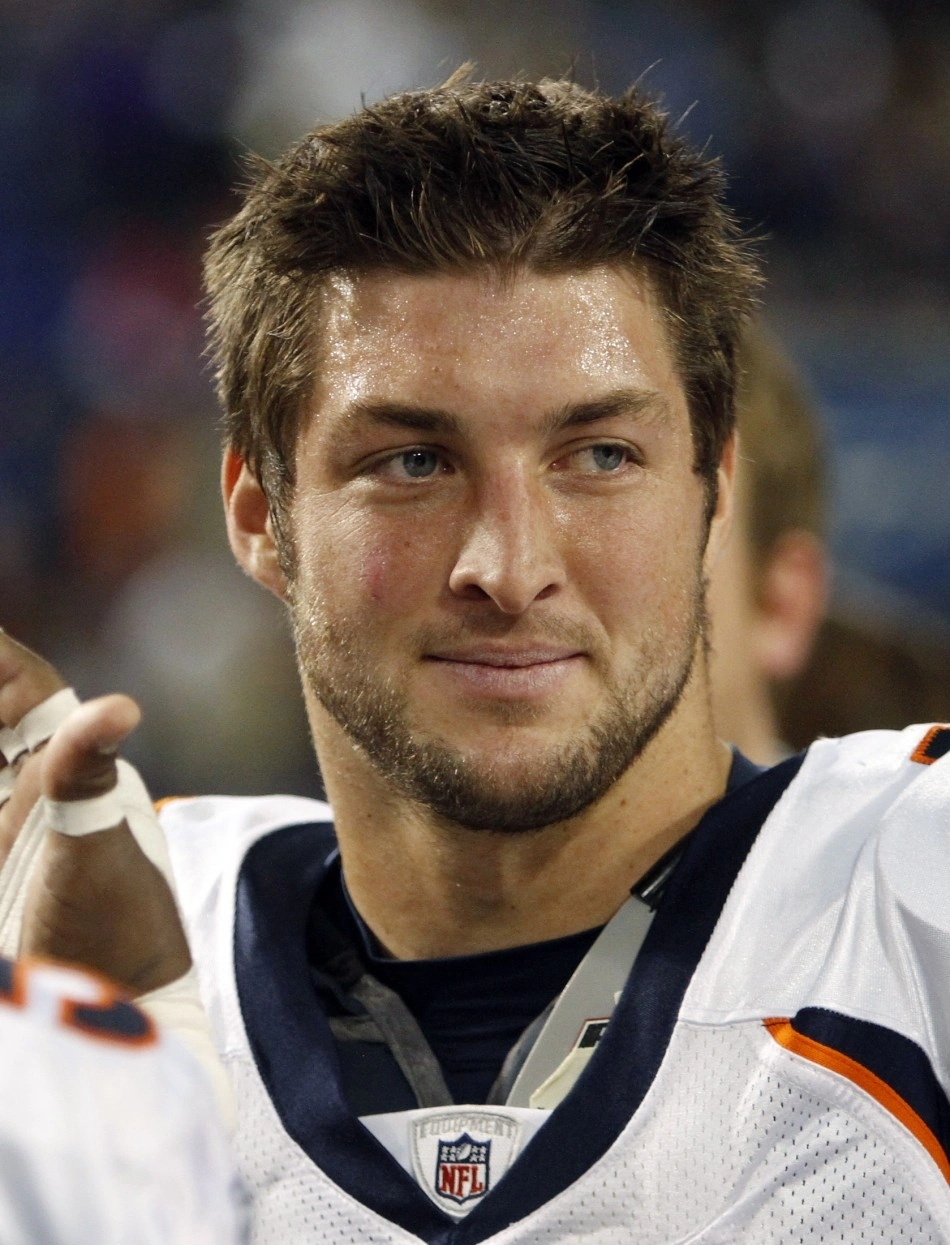
| 17 Quotes | |
| Occup. | Athlete |
| From | USA |
| Born | August 14, 1987 |
| Age | 38 years |
| Cite | |
Citation Formats
APA Style (7th ed.)
Tim tebow biography, facts and quotes. (2026, March 18). FixQuotes. https://fixquotes.com/authors/tim-tebow/
Chicago Style
"Tim Tebow biography, facts and quotes." FixQuotes. March 18, 2026. https://fixquotes.com/authors/tim-tebow/.
MLA Style (9th ed.)
"Tim Tebow biography, facts and quotes." FixQuotes, 18 Mar. 2026, https://fixquotes.com/authors/tim-tebow/. Accessed 2 Apr. 2026.
Early Life and Background
Timothy Richard Tebow was born on August 14, 1987, in Makati, Philippines, to American Baptist missionaries Bob and Pam Tebow, and was raised largely in Jacksonville, Florida, in a household where evangelical Christianity, discipline, and service were inseparable. His origin story entered public mythology early: his mother, urged during pregnancy to consider abortion after medical complications, refused, and the family later treated his survival as providential. That conviction - that life was a gift with obligations attached - shaped the emotional grammar of his public identity. He was the youngest of five children, homeschooled, and brought up in a family culture that prized scripture memorization, hard work, and missionary purpose as much as athletic competition.
Florida law eventually allowed homeschooled students to play for local public-school teams, and Tebow became a star at Nease High School in Ponte Vedra. He played through pain, absorbed contact as if it were a test of witness as much as toughness, and quickly drew statewide notice for his size, running power, and improvisational will. Even before college he seemed to understand performance as testimony: football offered him not just status, but a stage on which conviction, resilience, and spectacle could merge. That blend made him unusually legible in an era hungry for personalities larger than sport.
Education and Formative Influences
Though homeschooled rather than conventionally schooled, Tebow's education was intense and ideologically coherent. His parents' missionary work exposed him early to poverty, medical need, and the language of calling; family trips and ministry projects in the Philippines later informed the creation of the Tim Tebow Foundation. Athletically, he was formed by Florida high-school football's gladiatorial culture and by Urban Meyer's spread-option system at the University of Florida, where he enrolled in 2006. Meyer saw in him not merely a quarterback but a hybrid force - runner, passer, emotional catalyst - while Tebow absorbed the lessons of SEC pressure, film study, and leadership under scrutiny. He inherited a Southern sports landscape in which football, faith, and media amplification could reinforce one another, and he learned to speak fluently in all three languages.
Career, Major Works, and Turning Points
At Florida, Tebow became one of the defining college athletes of his generation. As a freshman he was used in specialty packages on the 2006 national title team; in 2007 he won the Heisman Trophy, the first sophomore to do so, after a season of unprecedented passing-rushing production; and in 2008 he delivered the famous post-loss promise after Mississippi, then led Florida to another national championship. By graduation he held major SEC records and had become both adored and polarizing, especially after the black under-eye Bible references popularized "Tebowing" and made him a symbol in the culture wars surrounding religion and sport. Drafted 25th overall by the Denver Broncos in 2010, he had an erratic but unforgettable NFL stretch: mechanical flaws as a passer, astonishing late comebacks, a playoff upset of Pittsburgh after the 2011 season, then displacement after Denver signed Peyton Manning. Short stays with the Jets, Patriots, and Eagles confirmed that his charisma and competitiveness could not fully overcome league skepticism about his quarterbacking. He moved into broadcasting with ESPN and the SEC Network, authored faith-centered books, and in 2016 pursued professional baseball with the New York Mets organization, reaching Triple-A despite long odds. His post-playing life widened into philanthropy, motivational speaking, and anti-human-trafficking advocacy, preserving his relevance beyond wins and losses.
Philosophy, Style, and Themes
Tebow's inner life has always been unusually public, but its consistency is the key to understanding him. He does not present faith as a private refuge from competition; he treats competition as a proving ground for character, hierarchy, and gratitude. “And so I look at it as a relationship that I have with him that I want to give him the honor and glory anytime I have the opportunity. And then right after I give him the honor and glory, I always try to give my teammates the honor and glory. And that's how it works because Christ comes first in my life, and then my family, and then my teammates”. That ordering explains both his appeal and his friction with secular celebrity culture: he frames achievement as stewardship, not self-invention. Even his emotional volatility on the field - the chest-thumping, kneeling, exhorting - came from a moral drama in which effort had spiritual stakes.
His style as an athlete mirrored that philosophy. He was not elegant in the orthodox quarterback sense; he was forceful, repetitive, and unsparing, playing as if will could reorganize events. “I don't try to focus on anything that doesn't affect me personally and how I go out there every single day. I'm just going to continue to work hard and focus on what I can control”. That mantra reveals a psyche organized around agency, discipline, and resistance to external judgment - useful traits for a player perpetually told what he could not become. Yet humility remained central to his self-conception: “We have to humble ourselves, and the way you do that is by serving other people”. In Tebow's worldview, toughness without service becomes vanity; fame without witness becomes waste. That tension - between ambition and submission, platform and piety - gave his public persona unusual coherence.
Legacy and Influence
Tebow's legacy is larger than his professional statistics and stranger than ordinary sports fame. In college football he remains an emblem of the 2000s SEC ascendance and one of the most consequential dual-threat quarterbacks before that archetype fully normalized in the NFL. In American culture he became a referendum on faith in public life: to admirers, proof that overt Christianity and elite sport could coexist without apology; to critics, an example of how belief can be marketed, mythologized, and overread. Yet his endurance owes less to controversy than to sincerity. Through the Tim Tebow Foundation, Night to Shine proms, hospital outreach, and anti-trafficking work, he translated celebrity into organized service, reinforcing the moral narrative he had always claimed for himself. Few athletes have so thoroughly fused biography, belief, and brand; fewer still have done it while remaining recognizably earnest.
Our collection contains 17 quotes written by Tim, under the main topics: Sports - Kindness - Faith - Servant Leadership - Self-Discipline.
Source / external links