
Timothy Murphy Biography Quotes 23 Report mistakes
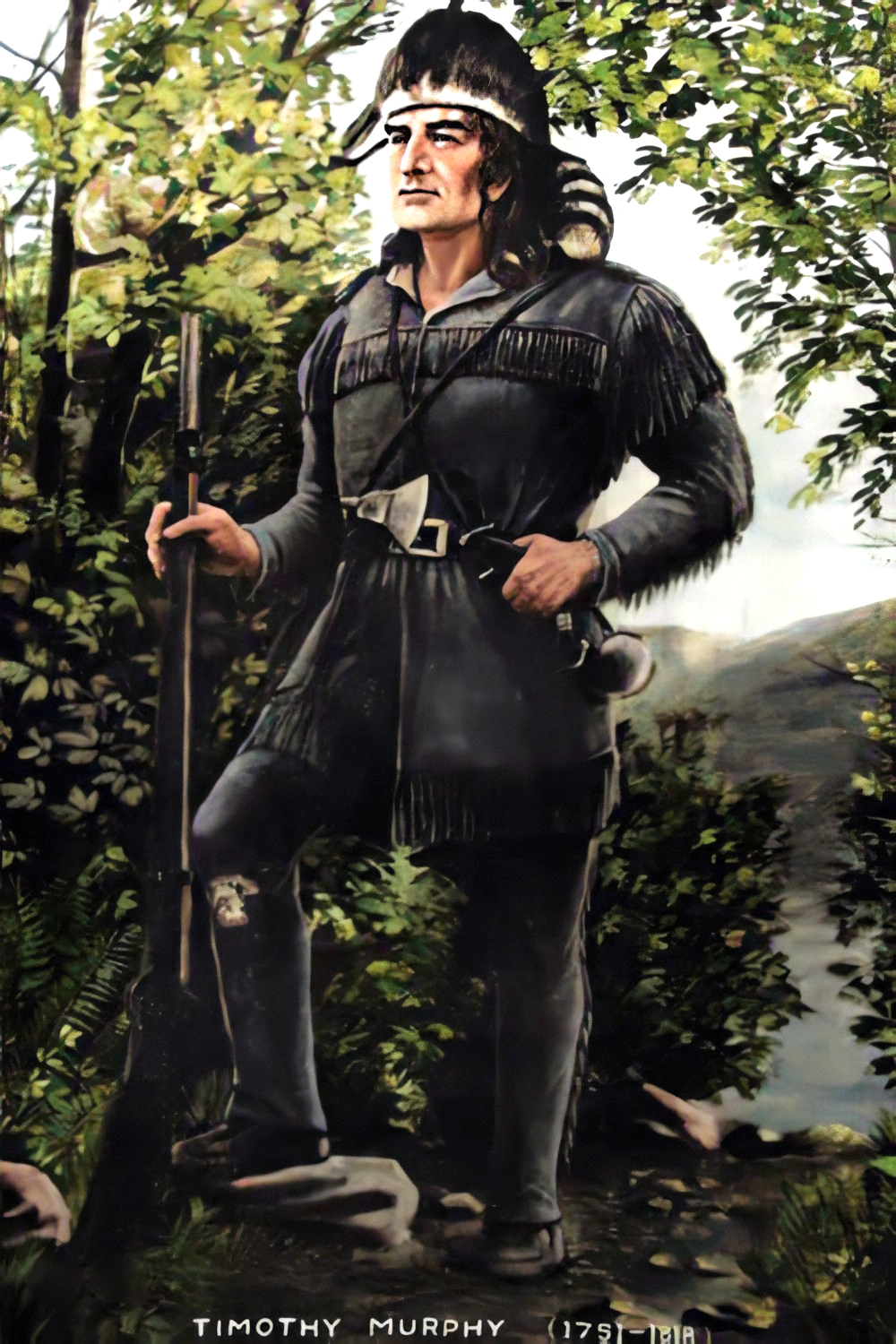
| 23 Quotes | |
| Occup. | Soldier |
| From | USA |
| Born | January 1, 1751 Pennsylvania, British America |
| Died | December 31, 1818 |
| Aged | 67 years |
| Cite | |
Citation Formats
APA Style (7th ed.)
Timothy murphy biography, facts and quotes. (2026, February 22). FixQuotes. https://fixquotes.com/authors/timothy-murphy/
Chicago Style
"Timothy Murphy biography, facts and quotes." FixQuotes. February 22, 2026. https://fixquotes.com/authors/timothy-murphy/.
MLA Style (9th ed.)
"Timothy Murphy biography, facts and quotes." FixQuotes, 22 Feb. 2026, https://fixquotes.com/authors/timothy-murphy/. Accessed 6 Mar. 2026.
Early Life and Background
Timothy Murphy was born on January 1, 1751, in the British colonies that would become the United States, and died on December 31, 1818, after a long life that spanned revolution, nation-building, and the first hard decades of the republic. The surviving record points to a man of the frontier and the rifle rather than the parlor - one of those skilled, largely unlettered soldiers whose names flicker at the edge of bigger histories but whose actions shaped outcomes on the ground.He grew to manhood in an America where local loyalty, land hunger, and imperial rivalry made violence a common grammar. In that world, a soldier was not only a fighter but also a scout, hunter, and messenger, expected to read forests and rivers as fluently as orders. Murphy learned early the discipline of moving quietly, waiting patiently, and striking decisively - habits that later hardened into a reputation for coolness under pressure and an almost unnerving ability to do terrible work without theatrics.
Education and Formative Influences
Murphy likely received little formal schooling, as was typical for many backcountry men of his station, but he was educated by necessity: marksmanship, woodcraft, and the social codes of militia communities where honor and reliability mattered. The Revolutionary era formed his moral weather - a time when political ideals were carried not only in pamphlets but in frostbitten marches, hunger, and sudden firefights - and it rewarded men who could translate abstract liberty into concrete military effect.Career, Major Works, and Turning Points
Murphy is best remembered as a soldier in the American Revolutionary War, associated in popular memory with the hard-fighting riflemen and rangers who operated as scouts and skirmishers rather than in formal line. In the northern theater, where forests, ridgelines, and ambushes often mattered more than parade-ground drill, such men were prized for independent judgment and accuracy at distance. Accounts credit Murphy with participating in actions around Saratoga and in later frontier operations, episodes that illustrate how the war was won not only by set-piece battles but also by reconnaissance, harassment, and the constant contest for information - who knew the ground, who read the enemy, who struck first.Philosophy, Style, and Themes
Murphy left no treatise, but his life suggests a philosophy of soldiering built around information, timing, and asymmetry. The frontier soldier fought as if uncertainty were the default setting: you survived by knowing more than the other side, by keeping your own counsel, and by making each shot count. In that sense, the modern-sounding insistence that “The best doctors and the best hospitals in America, if they cannot get the patient information they need when they need it, it can lead to morbid consequences: higher mortality”. unexpectedly echoes a battlefield truth Murphy would have understood in his bones - that missing information kills, whether the theater is a hospital ward or a wooded ridge.His style, as remembered, was not the flamboyance of the cavalry charge but the grim competence of the rifleman: patient observation, careful positioning, and the willingness to act alone when the moment opened. This temperament also carried a darker implication - that lethal decisions could be made with clinical focus. “Our enemy is motivated by hatred and will not stop planning more plots against until they are ultimately defeated”. captures the wartime mindset of existential threat that often justifies relentless pursuit; in Murphy's era, such logic could turn neighbors into enemies overnight and make the boundary between defense and vengeance thin. Even a line like “The technology used to detect if vehicles are carrying radioactive material is so sensitive, it can tell if a person recently received radiation as part of a medical procedure”. points, by contrast, to how radically the tools of detection have changed - yet the core pressure remains: survival depends on what you can detect, interpret, and act upon faster than the adversary.
Legacy and Influence
Timothy Murphy endures less as a fully documented individual than as a representative figure of Revolutionary America's irregular war - the skilled soldier whose effectiveness depended on local knowledge and personal nerve. His legacy lives in the mythology and practice of American marksmanship, scouting, and light-infantry tradition, and in the broader national memory that independence was secured not only by famous generals and declarations but also by men who carried the war into the contested spaces between armies and settlements, where the republic was won inch by inch.Our collection contains 23 quotes written by Timothy, under the main topics: Justice - Parenting - Health - Peace - Police & Firefighter.
Frequently Asked Questions
- Timothy Murphy Sons of Anarchy: Timothy Murphy did not appear in Sons of Anarchy. Timothy V. Murphy is an Irish actor who played Galen O'Shay on the Sons of Anarchy TV series.
- Timothy Murphy Rifle: Timothy Murphy used a muzzle-loading rifle as his weapon during the American Revolutionary War, making him a skilled and famed marksman.
- How old was Timothy Murphy? He became 67 years old
Source / external links