
Tom Brady Biography Quotes 7 Report mistakes
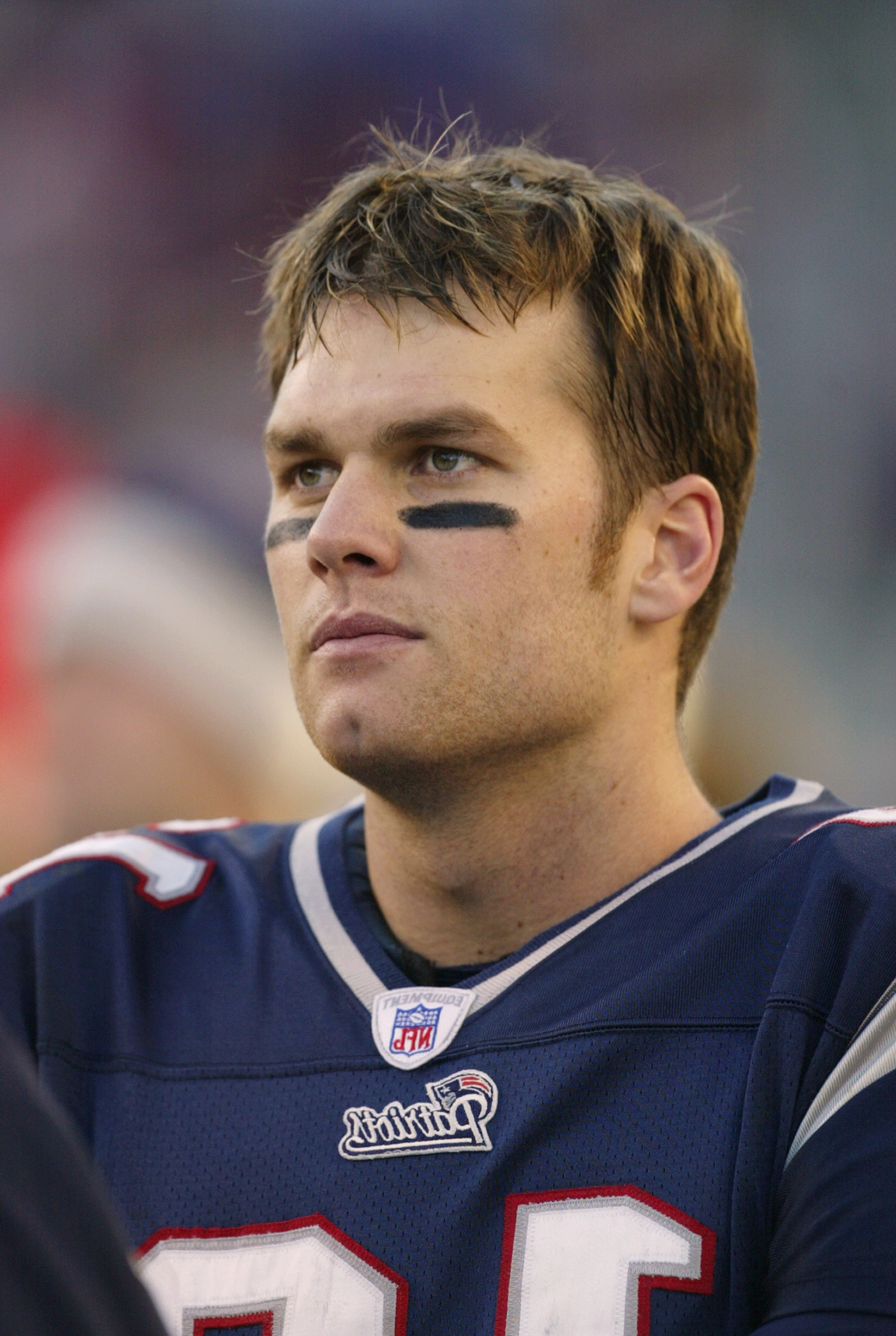
| 7 Quotes | |
| Occup. | Athlete |
| From | USA |
| Born | August 3, 1977 |
| Age | 48 years |
| Cite | |
Citation Formats
APA Style (7th ed.)
Tom brady biography, facts and quotes. (2026, February 11). FixQuotes. https://fixquotes.com/authors/tom-brady/
Chicago Style
"Tom Brady biography, facts and quotes." FixQuotes. February 11, 2026. https://fixquotes.com/authors/tom-brady/.
MLA Style (9th ed.)
"Tom Brady biography, facts and quotes." FixQuotes, 11 Feb. 2026, https://fixquotes.com/authors/tom-brady/. Accessed 27 Mar. 2026.
Early Life and Background
Thomas Edward Patrick Brady Jr. was born on August 3, 1977, in San Mateo, California, the youngest of four children in a close Irish-Catholic family. Raised largely in nearby San Mateo, he absorbed sports as a household language - not just as entertainment but as a shared family ritual. The Bay Area of his childhood was still basking in the afterglow of the 49ers dynasty, and the idea of a poised, late-game quarterback was not abstract mythology but a weekly local fact.That early environment also produced the quieter Brady paradox: he was not immediately the most physically imposing prospect, yet he developed a taste for pressure rather than avoidance of it. The atmosphere of competitive sibling dynamics, a football-saturated region, and a family structure that rewarded steadiness built an inner identity around reliability. Even before fame, his ambition showed less as swagger than as a long fuse - a conviction that preparation would eventually outrun first impressions.
Education and Formative Influences
Brady attended Junipero Serra High School in San Mateo, where he played football, basketball, and baseball, and where his athletic profile formed in the shadow of bigger, flashier recruits. A catcher in baseball and a quarterback in football, he learned to command tempo, manage personalities, and take responsibility for outcomes - roles that reward composure more than raw speed. Recruiting attention came, but not as a coronation; he chose the University of Michigan, entering a storied program where depth charts were unforgiving and where patience would become an instrument of self-making.Career, Major Works, and Turning Points
At Michigan, Brady split time and fought for the starting job, peaking with notable comebacks and a reputation for calm under stress, yet he entered the 2000 NFL Draft as a sixth-round pick (No. 199) by the New England Patriots - a slight that became an enduring psychological fuel. In 2001, an injury to starter Drew Bledsoe opened the door; Brady seized it, guiding New England to a Super Bowl win that announced a new era of quarterbacking defined by precision, situational control, and ruthless clock management. Over two decades, he became the defining face of the Patriots dynasty with coach Bill Belichick, winning multiple Super Bowls, MVPs, and setting career records for passing volume and postseason success. The late-career pivot to the Tampa Bay Buccaneers in 2020 was the decisive second act: he won another Super Bowl, proving his methods were portable beyond Foxborough, and he retired after the 2022 season with a resume that made his longevity itself a kind of competitive artwork.Philosophy, Style, and Themes
Brady's interior story is less about the romance of talent than the discipline of maintenance. He repeatedly framed greatness as an attitude cultivated through constraint, preparation, and emotional regulation, suggesting a self-concept built to resist complacency: “A lot of times I find that people who are blessed with the most talent don't ever develop that attitude, and the ones who aren't blessed in that way are the most competitive and have the biggest heart”. The line reads like autobiography in disguise - the late draft pick turning perceived limitation into a permanent edge, converting doubt into a schedule, and turning routine into a protective armor against the entropy that dissolves most careers.His style on the field made that psychology visible. Brady was not primarily an improvisational scrambler; he was a pre-snap diagnostician and post-snap decision machine, reducing chaos with timing, angles, and trust. The heart of his method was collective resilience rather than hero-ball, a worldview aligned with his belief in roster depth and shared responsibility: “WIth football you can have up to 28 guys you consider starters, and if they can pick up the slack when some aren't playing so well, you don't have to turn those two game losing streaks into six-game losing streaks”. That mentality explains both his leadership - relentless standards paired with clarity - and his durability under scrutiny: he treated downturns as systems problems to be corrected, not as identity crises to be dramatized.
Legacy and Influence
Brady reshaped modern quarterback expectations: longevity as a competitive skill, film study and pre-snap mastery as the main engine of dominance, and leadership as daily behavioral consistency rather than occasional speeches. His career spanned eras of rule changes, offensive inflation, and relentless media exposure, yet he kept winning by adapting - evolving from a defense-backed manager to a high-volume passer without losing situational efficiency. For younger players, his example normalized the idea that greatness can be engineered through habits as much as inherited; for the sport, he became a measuring stick for postseason poise and late-game control. More than a champion, he is a template - proof that the mind, trained over years, can become the most durable muscle in professional football.Our collection contains 7 quotes written by Tom, under the main topics: Sports - Work Ethic - Mental Health - Sister - Teamwork.
Other people related to Tom: Brian Griese (Athlete), Peyton Manning (Athlete), Randy Moss (Athlete), Vinny Testaverde (American)
Source / external links