
Tom Keith Biography Quotes 1 Report mistakes
| 1 Quotes | |
| Born as | Thomas Alan Keith |
| Occup. | Radio host |
| From | USA |
| Born | December 21, 1946 St. Paul, Minnesota, U.S. |
| Died | October 30, 2021 Woodbury, Minnesota, U.S. |
| Aged | 74 years |
| Cite | |
Citation Formats
APA Style (7th ed.)
Tom keith biography, facts and quotes. (2026, February 11). FixQuotes. https://fixquotes.com/authors/tom-keith/
Chicago Style
"Tom Keith biography, facts and quotes." FixQuotes. February 11, 2026. https://fixquotes.com/authors/tom-keith/.
MLA Style (9th ed.)
"Tom Keith biography, facts and quotes." FixQuotes, 11 Feb. 2026, https://fixquotes.com/authors/tom-keith/. Accessed 26 Mar. 2026.
Overview
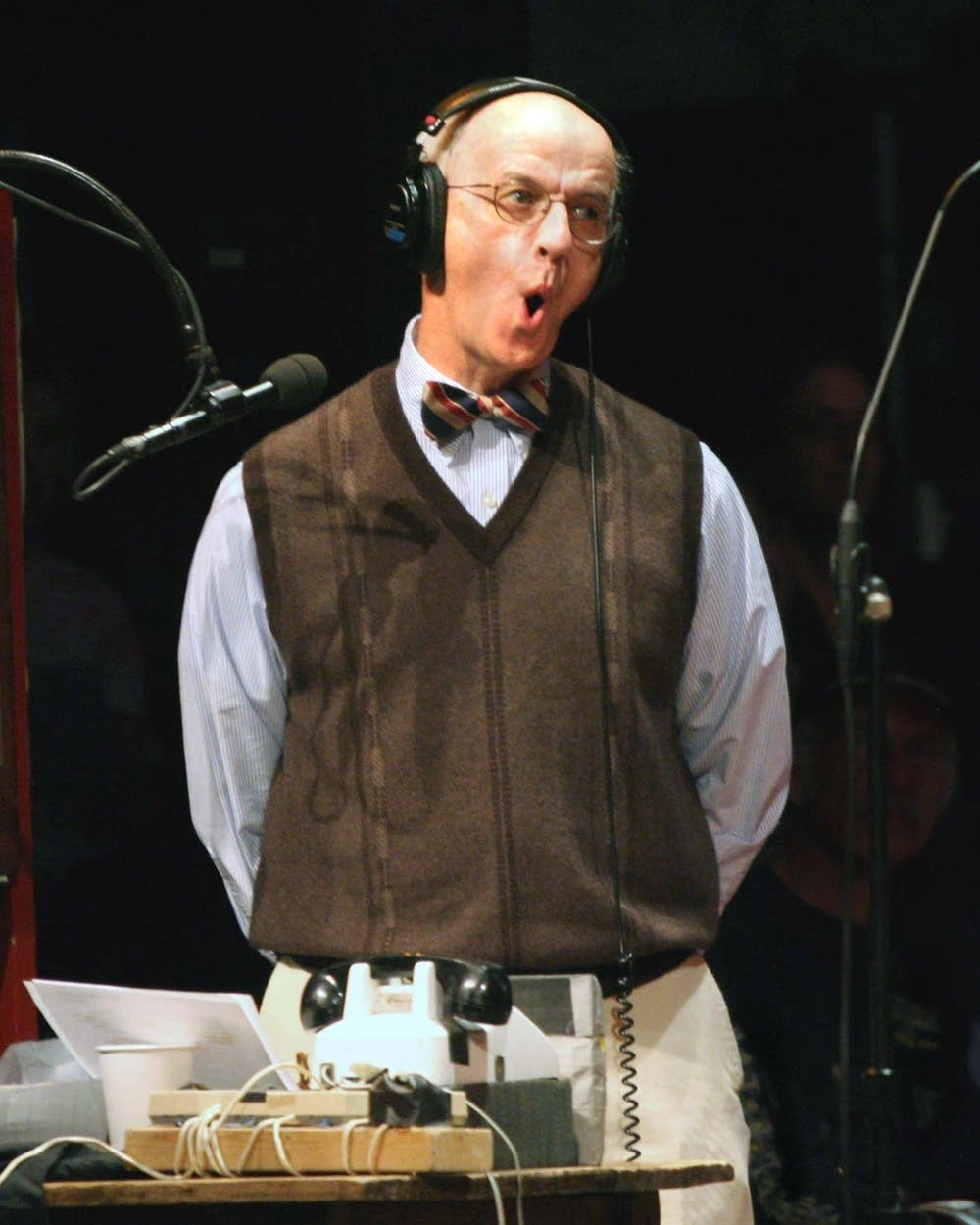
Tom Keith was an American radio performer best known for elevating the art of live sound effects on public radio. Born in 1946 and passing in 2011, he built his career in the Upper Midwest and became a central figure of Minnesota Public Radio and the long-running national variety program A Prairie Home Companion. On stage and on the air, he combined precision timing with a mischievous wit, transforming ordinary props and his own voice into storms, footsteps, creaking doors, animal calls, and a thousand other auditory illusions that helped listeners see with their ears. His collaboration with host Garrison Keillor and with colleagues across the Minnesota radio community made him one of the last and most celebrated practitioners of a craft rooted in the golden age of radio.Early Life and Path to Radio
Publicly available accounts of Keith's earliest years are modest, in keeping with his own low-profile temperament. What can be traced clearly is the steady arc that led him to audio work: an early fascination with how sound could conjure scenes and emotions without a single picture, and a knack for tinkering that translated into an engineer's patience and a performer's spontaneity. By the time he began working with Minnesota Public Radio, he had found the environment where those talents could flourish. In the Twin Cities public radio scene he took on technical roles, learned the rhythms of live broadcasting, and started to appear in the comic and dramatic bits that would become his signature.Minnesota Public Radio and The Morning Show
Keith first became familiar to many listeners as a behind-the-scenes presence who was willing to step in front of the microphone when called upon. That willingness took on a life of its own on The Morning Show, where he worked alongside host Dale Connelly and, earlier, with Garrison Keillor during the program's formative years. Under the on-air persona Jim Ed Poole, Keith delivered deadpan commentary, oddball characters, and quick ad-libbed retorts. Jim Ed Poole, paired with Connelly's wry sensibility, created a morning sound that was unhurried, curious, and gently absurd, a tonic for commuters and kitchen-table listeners. Keith kept the machinery of the show humming while also skewering its pretensions, using sound effects to drop a piano, summon a thunderstorm, or punctuate a joke with the squeak of a door that behaved more like a character than a hinge.The Morning Show's tone owed a great deal to Keith's discipline. Even the most whimsical sketch depended on his split-second accuracy. If a character slipped on ice, Keith had to supply the scrape, the whoosh, and the thud in perfect sequence; if a fictional newsroom broke with a bulletin, he had to layer teletype chatter, murmuring voices, and a ringing phone without stepping on a punchline. The effect was casual; the craft was anything but.
A Prairie Home Companion
Keith's national profile grew through his long association with A Prairie Home Companion, where Garrison Keillor's storytelling and monologues were set inside a soundworld that Keith helped build. He was the rare performer whose instrument was both the stage table piled with gadgets and his own body. He flicked a card deck to mimic birds, snapped celery for bones, spun ratchets for cranky engines, rustled cellophane for campfires, and used his cheeks, lips, and throat to produce winds, whistles, and improbable creature voices. Within sketches like Guy Noir and Lives of the Cowboys, he supported actors Sue Scott and Tim Russell with cues that made scenes feel inhabited: a neon sign buzzing to life, a saloon door creaking reluctantly, boot heels measuring out suspense on a wooden floor.This collaboration was never merely decorative. Keillor's comic timing and narrative arcs relied on Keith's intuition about silence and burst. A breath before a footstep, a beat after a sigh, the faintest echo during a big reveal, these were dramaturgical choices executed in sound. Keith sat at the edge of the action, ears pricked, eyes on the script and the performers, adjusting in real time when a line stretched or a joke landed early. The show's band, led for many years by music director Rich Dworsky, added musical glue, and Keith tucked his work into the seams between lyrics and laugh lines. The result was a fully realized theater of the mind performed for a live audience.
Technique and Craft
Keith's table looked like a hardware store had spilled onto a desk: coconut shells for horses, sandboxes for footsteps, car horns, sleigh bells, bottles, whistles, and coils. But it also resembled an instrument maker's bench, each object tuned to a precise effect. He rehearsed the placement of hands, the angle of a rattle, the distance from the microphone, and the arc of his arm to move a sound from left to right across the stereo image. Microphone choice and proximity were as important to him as prop choice; he knew how to use a ribbon microphone for warmth, a small condenser for crisp attacks, and how to turn his head to avoid popping plosives when his own mouth was the source of the sound.Crucially, he could improvise. A script might call for "rain", but the room's acoustics, the size of the audience, and the tempo of the preceding song could demand a drizzle or a deluge. Keith would switch from a sprinkle of rice on a drumhead to a heavier pour on tin, or add an occasional distant thunder roll with a sheet of metal. If a joke unexpectedly killed, he let it breathe; if it needed help, he nudged it with a microsecond of audio context. He was a foley artist, a percussionist, and a comedic partner all at once.
Working Relationships and Ensemble
Garrison Keillor valued Keith's ear and his steadiness, and their long collaboration was built on trust born of hundreds of live shows. Dale Connelly, for his part, found in Keith a foil whose dry delivery sharpened the satire of The Morning Show. Within the broader Prairie ensemble, actors Tim Russell and Sue Scott bounced off his cues, at times timing an entrance to the squeak of a hinge. Rich Dworsky and the show's musicians likewise understood that a rimshot or a harmonica flourish could step aside so that the hiss of a steam radiator or the tick of a clock could carry a scene. These relationships shaped Keith's career as much as his individual skill; he was a consummate ensemble player who made others better.Public Radio and Audience
Keith's work thrived because public radio listeners understood the pleasure of being in on the trick. He did not hide his table or pretend the illusions were anything other than illusions. Part of the fun was watching him prime a spray bottle, lean toward the microphone, and then hearing a kettle boil to life. In an era increasingly dominated by visual media, his performances reaffirmed that sound alone could be transportive. Letters and emails from listeners often singled him out: they heard his footfalls as clearly as a camera would have framed them, and they appreciated the gentle anachronism of a live effects artist in a digital age.Milestones, Transitions, and Retirement
Over decades, Keith balanced his roles on The Morning Show and A Prairie Home Companion while anchoring himself in the routines of Minnesota Public Radio. As the radio landscape shifted, he adapted, updating gear, refining techniques, and calibrating his effort to what each program needed. When The Morning Show concluded its long run, it marked the end of a daily rhythm that had defined his professional life. Around that period, he also stepped back from regular appearances on Prairie, receiving thoughtful on-air tributes that underscored how central he had been to the show's sound and spirit. The applause that greeted his final bows said as much about the affection of audiences as it did about the respect of colleagues.Personality and Presence
Keith carried himself with the wry understatement of someone who preferred the work to the spotlight. He smiled easily but rarely mugged for attention, letting the object in his hand or the breath in his lungs do the bragging. Colleagues recall his calm before and during broadcasts, an island of order at a table that looked like chaos. He prized preparation, arriving early to check microphones, tidy props, and make sure the same bell did not ring two characters into confusion. Offstage, he was generous with explanations for curious crew members or visiting students. He did not turn shop talk into mystique; he turned it into an invitation to listen more closely.Final Years and Legacy
Tom Keith died in 2011, and the wave of remembrance that followed spoke to his unique place in American radio. Garrison Keillor and Dale Connelly, along with many of the actors and musicians who had shared stages with him, paid tribute to the musicianly precision and humor he brought to their work. Listeners remembered the feel of his rain and the ache in his train whistles, the way a prairie wind seemed to sneak through their speakers when Keillor told a story about a small town and a long drive home.His legacy endures in the choices that producers and performers make when they choose presence over perfection, risk over safety, and the human touch over a pre-recorded clip. While recorded sound libraries can reproduce almost any noise, Keith's example demonstrates that a live cue, born in the same instant as the line it supports, carries a different energy. He kept a classic radio art form alive by making it new every night.
Enduring Influence
Younger broadcasters and audio storytellers cite Keith as proof that the fundamentals still matter: microphone technique, room awareness, teamwork, and respect for the audience's imagination. His career also offers a model for how a specialist can become essential to a show's identity without overshadowing it. In the end, Tom Keith's biography is inseparable from the people and programs that gave him room to do his work: Garrison Keillor's narrative world, Dale Connelly's morning playfulness, the voices of Sue Scott and Tim Russell, the arrangements of Rich Dworsky and the band, and the remarkable community of Minnesota Public Radio. Together they created a space where a man with a table of props and a bottomless ear could help millions of listeners see, simply by hearing.Our collection contains 1 quotes written by Tom, under the main topics: Freedom.
Source / external links