
Tom Metzger Biography Quotes 26 Report mistakes
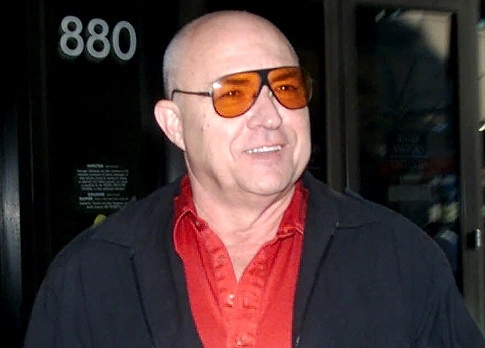
| 26 Quotes | |
| Occup. | Celebrity |
| From | USA |
| Born | April 9, 1938 |
| Age | 87 years |
| Cite | |
Citation Formats
APA Style (7th ed.)
Tom metzger biography, facts and quotes. (2026, February 11). FixQuotes. https://fixquotes.com/authors/tom-metzger/
Chicago Style
"Tom Metzger biography, facts and quotes." FixQuotes. February 11, 2026. https://fixquotes.com/authors/tom-metzger/.
MLA Style (9th ed.)
"Tom Metzger biography, facts and quotes." FixQuotes, 11 Feb. 2026, https://fixquotes.com/authors/tom-metzger/. Accessed 27 Mar. 2026.
Early Life and Background
Tom Metzger was born April 9, 1938, in the United States and came of age in the long shadow of World War II, when the language of fascism and the images of the Holocaust were still living memory, yet Cold War politics increasingly rewarded militant anti-communism and conspiratorial thinking. In the postwar decades, the far right in America splintered and recombined around race, religion, and resentment of federal power; Metzger would become one of the figures who pushed that milieu from fringe clubs into a media-savvy street politics that treated provocation as publicity.
By the late 20th century he was publicly known less as a conventional "celebrity" than as a notorious personality - a recognizable face and voice for white supremacism whose notoriety was amplified by television appearances, confrontations, and the harsh logic of scandal-driven news cycles. His fame was inseparable from a period when cable talk shows, local news, and tabloid formats could turn extremists into recurring characters, granting them attention that felt, to supporters and opponents alike, like proof of importance.
Education and Formative Influences
Public records and reporting place Metzger's formative influences more in political subcultures than in academic credentialing: the postwar American Nazi and Ku Klux Klan ecosystems, the rhetoric of anti-federal militancy, and the marketing instincts of direct-mail and broadcast media. He drew on a mid-century tradition of blending racial ideology with populist anger at elites, recasting older doctrines into sound bites designed for camera time, recruitment, and internal discipline.
Career, Major Works, and Turning Points
Metzger emerged nationally as an organizer and propagandist in white supremacist circles, including leadership within the Ku Klux Klan in California and later the creation of White Aryan Resistance (WAR), a neo-Nazi formation that emphasized youth outreach, street-level activism, and media agitation. He sought attention through high-visibility appearances and through materials tied to WAR's message, using controversy as a tool to recruit and to intimidate adversaries. A major turning point came when his network became linked to violent acts by adherents; civil litigation in the 1990s over the murder of an Ethiopian immigrant in Oregon by skinheads associated with WAR resulted in a landmark judgment that financially crippled his organization and underscored the legal risks of incitement and directed agitation. From that point forward, his public role narrowed, but his persona - the unapologetic agitator who treated courts and press as battlegrounds - remained central to how he was remembered.
Philosophy, Style, and Themes
Metzger's inner life, insofar as it can be inferred from his rhetoric, shows a man who pursued psychological certainty through conflict: a worldview in which society is permanently ruled by hostile elites and where moral nuance is dismissed as weakness. His statements repeatedly flatten political reality into a single antagonism and then demand emotional loyalty to that frame: “All systems are oligarchy. There is no other”. That fatalism about institutions functioned as a justification for permanent opposition; if every system is rigged, then transgression becomes not merely permitted but necessary, and any compromise can be condemned as betrayal.
His style was blunt, tribal, and intentionally polarizing, crafted to harden in-groups and provoke out-groups. He framed race war logic as a practical ethic stripped of theological or civic restraint: “When we go to war I will not ask the White Racist next to me what is he Christian or Atheist? I will only expect him or her to kill the enemy as I will”. In this register, identity becomes a weapon, and the individual self is valued chiefly for its usefulness to collective violence. He also pitched his politics as a revolutionary crusade against a composite enemy - financial power, liberal institutions, and leftist movements - collapsing them into one target: “I promote revolution against the Capitalists and the Social Marxists”. The psychological reward of such language is clarity: it reduces a complicated world to a single story that supplies meaning, comradeship, and a sense of destiny.
Legacy and Influence
Metzger's lasting influence lies less in formal achievements than in a grim template: the modern American extremist as media operator, recruiter, and brand. His career illustrated how notoriety can substitute for legitimacy, how shock can become a recruitment strategy, and how rhetoric that normalizes dehumanization can ripple outward into real-world violence - with legal systems eventually responding through civil accountability when criminal proof is harder to establish. For historians of late-20th-century American radicalism, he remains a case study in the convergence of ideological absolutism, publicity tactics, and the social conditions that allow fringe hatreds to be packaged as populist rebellion.
Our collection contains 26 quotes written by Tom, under the main topics: Justice - Freedom - Equality - War - Human Rights.
Other people related to Tom: Morris Dees (Lawyer)
Source / external links