
Tom Stoppard Biography Quotes 32 Report mistakes
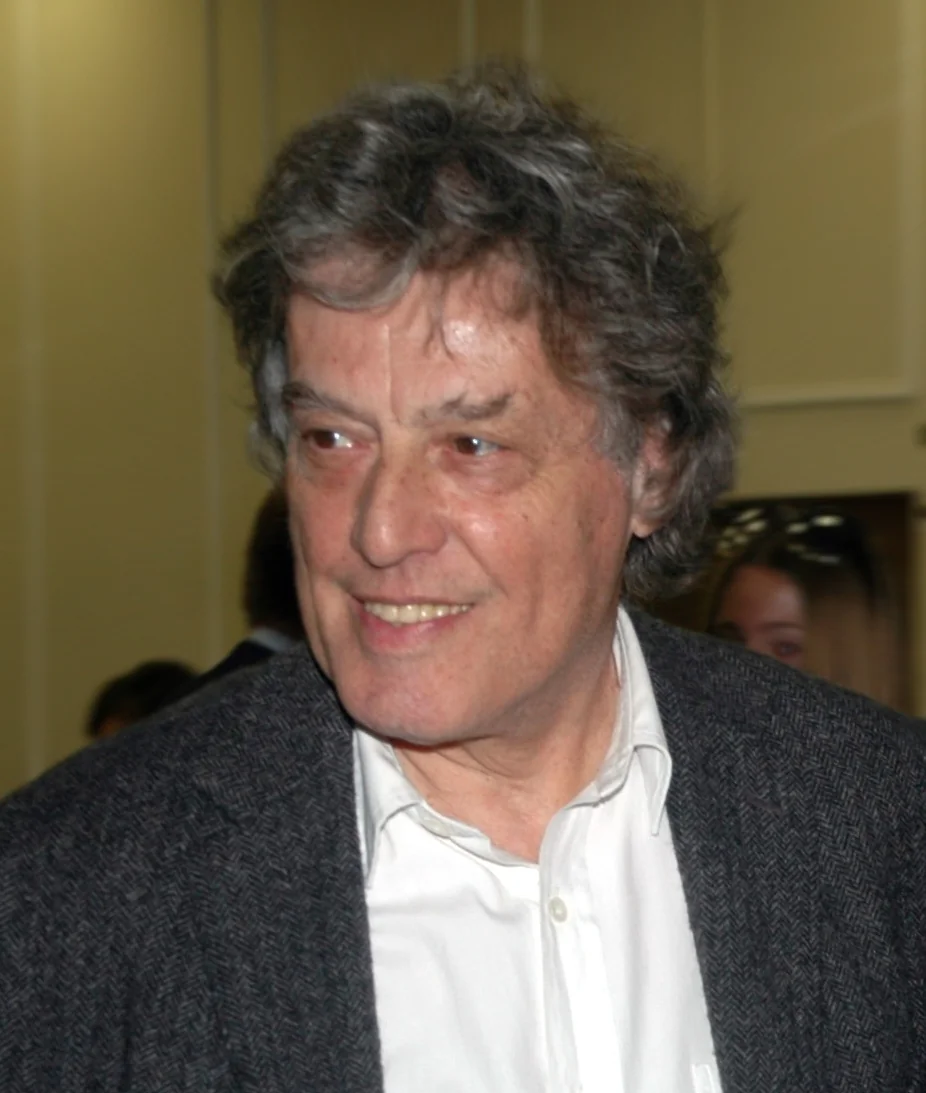
| 32 Quotes | |
| Born as | Tomáš Straüssler |
| Known as | Sir Tom Stoppard |
| Occup. | Dramatist |
| From | England |
| Born | July 3, 1937 Zlín, Czechoslovakia |
| Died | November 29, 2025 Dorset, England |
| Aged | 88 years |
| Cite | |
Citation Formats
APA Style (7th ed.)
Tom stoppard biography, facts and quotes. (2026, February 2). FixQuotes. https://fixquotes.com/authors/tom-stoppard/
Chicago Style
"Tom Stoppard biography, facts and quotes." FixQuotes. February 2, 2026. https://fixquotes.com/authors/tom-stoppard/.
MLA Style (9th ed.)
"Tom Stoppard biography, facts and quotes." FixQuotes, 2 Feb. 2026, https://fixquotes.com/authors/tom-stoppard/. Accessed 26 Mar. 2026.
Early Life and Background
Tom Stoppard was born Tomas Straussler on July 3, 1937, in Zlin, Czechoslovakia, into a Jewish family living in the shadow of a continent sliding toward catastrophe. As Nazi power expanded, the Strausslers fled first to Singapore, part of the wider wartime diaspora that scattered Central European Jews across the British Empire. The flight was not only geographic but psychological: early life taught him that identity could be revised by paperwork, accent, and luck, and that the safest home might be a language you could master.In 1942, with Japan advancing through Southeast Asia, the family moved again, this time to India. Stoppard's father, Eugen Straussler, remained behind in Singapore and was killed during the war, leaving a permanent absence around which the child's later fascination with contingency and loss would orbit. After the war, his mother, Martha, married Major Kenneth Stoppard of the British Army, and the family settled in England; the new surname came with a new passport and a new social map. The boy who arrived as a refugee grew into an Englishman by adoption, carrying the buried knowledge that belonging can be both real and provisional.
Education and Formative Influences
Stoppard was educated at schools in England, including Dolphin School in Nottinghamshire and Pocklington School in Yorkshire, but left formal schooling at 17 to become a journalist. The newsroom became his university: deadlines sharpened his wit, interviews trained his ear for contradiction, and the provincial press taught him how public life is staged. He absorbed the postwar British mix of restraint and class comedy, then stretched it with European modernism, Shakespeare, and the emerging theatre of ideas - Beckett's minimalism, the New Wave's impatience, and the renewed English appetite for cleverness that could carry serious arguments.Career, Major Works, and Turning Points
After reporting for the Western Daily Press and the Bristol Evening World, Stoppard turned decisively to drama in the 1960s, writing for radio, television, and the stage. His breakthrough, "Rosencrantz and Guildenstern Are Dead" (1966-67), made a philosophical vaudeville out of Shakespeare's margins and announced a dramatist who could fuse farce with metaphysics. Successive plays deepened his range: "Jumpers" (1972) and "Travesties" (1974) made logic, aesthetics, and revolutionary politics theatrical; "Night and Day" (1978) and "The Real Thing" (1982) tested journalism, love, and authenticity; "Arcadia" (1993) braided chaos theory, landscape history, and desire into one of the late 20th century's defining plays. As a screenwriter he moved between prestige and play, from "Brazil" (1985, uncredited collaboration) to "Shakespeare in Love" (1998, Oscar-winning script team) and "Anna Karenina" (2012). A major turning point came late: as he learned more about his Jewish family history, he confronted the erased parts of his origin, culminating in the wrenching historical drama "Leopoldstadt" (2020), which returned him, artistically, to the Central Europe he had fled as a child.Philosophy, Style, and Themes
Stoppard's inner life was marked by a double impulse - to hide behind brilliance and to use brilliance to find what cannot be said plainly. His stage is a thinking machine: characters argue as if reasoning could rescue them, yet the arguments expose how reason is also performance. He understood the theatre as a place where identity is worn, swapped, and doubted; “We're actors. We're the opposite of people”. That line captures his recurring suspicion that social roles - lover, patriot, intellectual, journalist - are costumes that talk faster than they feel, and that selfhood is partly an act we learn to perform convincingly.The world in Stoppard is governed by contingency, not providence, and his comedy is the sugar that helps an audience swallow the bitter taste of chance. In "Rosencrantz", coin tosses defy probability; in "Arcadia", equations and entanglements mock the desire for tidy endings; in "Leopoldstadt", history arrives as force rather than narrative closure. He was fascinated by exits that look like endings but behave like transformations: “Every exit is an entry somewhere else”. At the same time he distrusted political innocence, especially the comfort of slogans; “It's not the voting that's democracy; it's the counting”. Taken together, these ideas explain his moral temperament: skeptical of certainty, alert to procedure, moved by private loyalties, and determined that intellect should not anesthetize conscience.
Legacy and Influence
By the time of his death on November 29, 2025, Stoppard had become one of the dominant English dramatists of the postwar era, a writer whose name signaled verbal velocity, formal daring, and the conviction that thought itself can be theatrical. His influence runs through contemporary playwriting that treats ideas as plot and conversation as choreography, and through screenwriting that prizes structure without abandoning surprise. Yet his most durable legacy may be emotional rather than technical: he turned the refugee's uncertainty and the journalist's skepticism into art that makes audiences laugh while feeling the ground shift, reminding them that history, love, and truth are not abstractions but lived pressures - counted, not merely voted on, and always one exit away from another entry.Our collection contains 32 quotes written by Tom, under the main topics: Witty One-Liners - Motivational - Truth - Wisdom - Art.
Other people related to Tom: Patrick Marber (Writer), Felicity Kendal (Actress), Ethan Hawke (Actor), Cynthia Nixon (Actress), Jack Kroll (Editor), Tim Roth (Actor), Mike Nichols (Director), Maggie Gyllenhaal (Actress)
Source / external links