
Tom Wesselmann Biography Quotes 2 Report mistakes
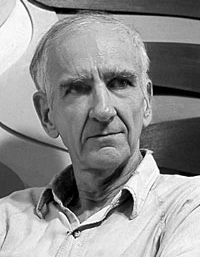
| 2 Quotes | |
| Occup. | Artist |
| From | USA |
| Born | February 23, 1931 Cincinnati, Ohio, U.S. |
| Died | December 17, 2004 |
| Aged | 73 years |
| Cite | |
Citation Formats
APA Style (7th ed.)
Tom wesselmann biography, facts and quotes. (2026, February 11). FixQuotes. https://fixquotes.com/authors/tom-wesselmann/
Chicago Style
"Tom Wesselmann biography, facts and quotes." FixQuotes. February 11, 2026. https://fixquotes.com/authors/tom-wesselmann/.
MLA Style (9th ed.)
"Tom Wesselmann biography, facts and quotes." FixQuotes, 11 Feb. 2026, https://fixquotes.com/authors/tom-wesselmann/. Accessed 28 Mar. 2026.
Early Life and Background
Tom Wesselmann was born February 23, 1931, in Cincinnati, Ohio, into a Midwestern, post-Depression America where advertising, magazines, and the new glamour of mass consumption were becoming the shared visual language. His early temperament was split between a draftsman's patience and a comedian's timing - an alertness to how images and jokes land, and how desire can be staged. That mix would later harden into a Pop vocabulary that looked brazenly public yet was built from private, disciplined looking.Before art claimed him, he moved through ordinary American pathways: school, jobs, and the expectations of stability. He married Claire Selley, built a family, and learned the daily patterns of domestic life that would later become one of his most charged subjects. The 1950s household - phone, fridge, lipstick, breakfast table - was not merely scenery for him but a theater of aspiration and constraint, a place where the body and consumer goods met under the bright light of "good taste".
Education and Formative Influences
Wesselmann studied psychology at the University of Cincinnati before being drafted into the U.S. Army during the Korean War era, an experience that sharpened his sense of systems and roles; after his discharge he turned toward art, studying at the Art Academy of Cincinnati and then moving to New York in 1956 to attend Cooper Union. In New York he absorbed Abstract Expressionism's scale and ambition while also noticing its limits for a mind attracted to plain sight. He admired Matisse's clarity and erotic economy, the graphic punch of billboards, and the cool authority of commercial design. By the late 1950s he was making collages and bold, simplified nudes that let the city feed his eye: storefront color, magazine printing, and the curated seduction of display.Career, Major Works, and Turning Points
Wesselmann emerged at the start of the 1960s as one of American Pop Art's defining voices, though his route differed from Warhol's deadpan repetition or Lichtenstein's comic-strip irony. His breakthrough came with the Great American Nude series (begun 1961), monumental interiors where the nude body, flag motifs, and domestic objects locked into an unapologetically frontal iconography. He expanded the project into still lifes and bedroom scenes, producing works such as Still Life #30 (1963), which incorporated actual objects, and Bedroom Painting #12 (1967), pushing painting toward assemblage and the literal presence of commodities. From the late 1960s into the 1970s he developed his shaped canvases and, later, metal cut-outs, using industrial fabrication to keep edges hard and color clean while preserving the sensuality of contour. By the 1980s and 1990s his stand-alone mouth and lip works, and the refined "Sunset" and nude cut-outs, distilled his themes into near-signs: desire, taste, and looking itself. He died December 17, 2004, in New York.Philosophy, Style, and Themes
Wesselmann's inner life was often misread as simple appetite because his images are so direct. In fact, his art is powered by a persistent anxiety about how to make an image feel alive without turning it into a confession. He wanted the punch of an advertisement without its cynicism, and the erotic voltage of the studio nude without academic distance. “I'd never painted anything before. I was quite content to take other people's work since I didn't care anyway about the subject matter. I approached subject matter as a scoundrel. I had nothing to say about it whatsoever. I only wanted to make these exciting paintings”. The bravado masks a deeper drive: he used indifference to subject as a defense against sentimentality, clearing space for a ferocious attention to color, scale, and the mechanics of arousal in the act of looking.His style fused high and low not as a theory but as a method for controlling viewer response. The interiors are staged like sets; the body is cropped like a magazine photograph; the flag, fruit, ashtray, and telephone become props in an American ritual of consumption. Yet the paintings are not satires so much as clarifications: a way to show how desire circulates through objects and how the domestic sphere can feel both safe and exposed. He kept language at a distance, preferring optical impact to literary allusion: “I didn't want to deal in poetry. I got rid of that after a few months”. That refusal reveals his psychology - a mistrust of verbal explanation and a belief that the truth of modern life arrives as surfaces, rhythms, and abrupt recognitions, not as narrative.
Legacy and Influence
Wesselmann's legacy is the proof that Pop could be sensual, formalist, and psychologically charged at once. He widened the possibilities for figurative painting in an era dominated by abstraction, showing that a flattened image could still be bodily and intimate, and that the language of commodities could be turned into genuine pictorial invention. His Great American Nude and still life works remain touchstones for artists exploring appropriation, the politics of display, and the uneasy overlap between eroticism and advertising. In museums and in the studio practices of later painters and sculptors, his influence persists as a lesson in clarity: reduce the world to its loudest signals, then make those signals sing.Our collection contains 2 quotes written by Tom, under the main topics: Art - Poetry.
Source / external links