
Tony Blair Biography Quotes 23 Report mistakes
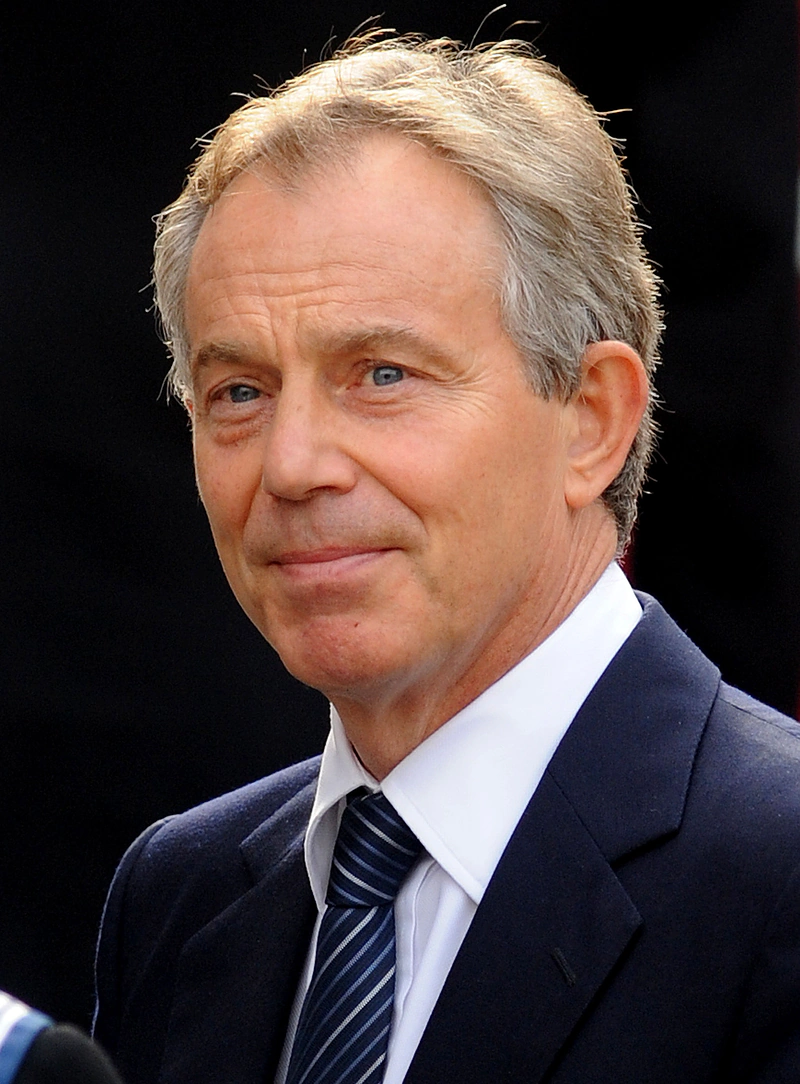
Attr: Tony Blair at IMDb
| 23 Quotes | |
| Born as | Anthony Charles Lynton Blair |
| Known as | Sir Anthony Charles Lynton Blair |
| Occup. | Statesman |
| From | England |
| Born | May 6, 1953 Edinburgh, Scotland, United Kingdom |
| Age | 72 years |
| Cite | |
Citation Formats
APA Style (7th ed.)
Tony blair biography, facts and quotes. (2026, February 11). FixQuotes. https://fixquotes.com/authors/tony-blair/
Chicago Style
"Tony Blair biography, facts and quotes." FixQuotes. February 11, 2026. https://fixquotes.com/authors/tony-blair/.
MLA Style (9th ed.)
"Tony Blair biography, facts and quotes." FixQuotes, 11 Feb. 2026, https://fixquotes.com/authors/tony-blair/. Accessed 6 Mar. 2026.
Early Life and Background
Anthony Charles Lynton Blair was born on May 6, 1953, in Edinburgh, Scotland, into a family whose ambitions straddled law, politics, and the professional middle class. His father, Leo Blair, was a Conservative-leaning barrister and local party activist whose thwarted parliamentary hopes - curtailed after a stroke - formed an early template for Blair: politics as vocation, and success as something earned through control, polish, and stamina. The household moved between Scotland and England, and Blair grew up learning how quickly accent, school, and social codes could define belonging.That early sensitivity to milieu became part of his inner equipment. Friends and later colleagues often noted his ability to read a room - a talent that could look like empathy to admirers and calculation to critics. He carried an actor's awareness of audience alongside a lawyer's taste for argument, and those traits would later fuse into a leadership style built on message discipline, moral certainty, and a willingness to push decisions through resistance.
Education and Formative Influences
Blair attended Fettes College in Edinburgh, then studied law at St John's College, Oxford, where he moved through student politics without becoming a campus ideologue. Oxford in the 1970s offered a panorama of crumbling post-imperial confidence, industrial strife, and the waning consensus state; Blair absorbed the lesson that elections are won in the center and that rhetoric, if married to organization, can shift party identity. After qualifying, he became a barrister at Crown Office Row in London, gaining courtroom habits - forensic preparation, controlled delivery, and adversarial framing - that would later shape his prime-ministerial performances at the dispatch box and in televised addresses.Career, Major Works, and Turning Points
Elected Labour MP for Sedgefield in 1983, Blair rose quickly during a period when Labour wrestled with defeat, factionalism, and the long shadow of Thatcherism. After serving as Shadow Home Secretary, he became party leader in 1994 following John Smith's death and set about refashioning Labour into "New Labour" - symbolized by rewriting Clause IV and embracing market economics tempered by social investment. The 1997 landslide made him the youngest prime minister since 1812; he won again in 2001 and 2005, pairing domestic reforms (public-service targets, devolution, the Good Friday Agreement's consolidation, and minimum-wage politics) with an international posture that hardened after 9/11. Kosovo and Sierra Leone built his humanitarian-intervention reputation; Afghanistan and especially Iraq in 2003 became the defining rupture, damaging trust in government and darkening his achievements with controversy. He resigned in 2007, succeeded by Gordon Brown, later creating the Tony Blair Institute for Global Change and working as Middle East envoy, while his memoir A Journey (2010) argued his case to history.Philosophy, Style, and Themes
Blair's governing philosophy fused electoral pragmatism with moralized purpose. He believed the state should be judged by outcomes - shorter waiting lists, safer streets, rising school standards - and he used centralized performance management to force results from large institutions. This managerial drive sat beside a conviction that politics is, at bottom, choosing and justifying priorities. “It is not an arrogant government that chooses priorities, it's an irresponsible government that fails to choose”. The sentence captures both his strengths and his blind spot: clarity can become a substitute for consent, and the habit of decision can harden into impatience with doubt.His style as a leader was intensely personal, almost prosecutorial: he sought to persuade by weaving narrative, evidence, and values into a single line of argument, then demanded loyalty to that line. He often framed power as an instrument that must be captured and used, not merely admired from opposition. “Power without principle is barren, but principle without power is futile. This is a party of government, and I will lead it as a party of government”. Yet he also understood the loneliness of the final call, the way a leader's obligation collides with popularity. “I think the journey for a politician goes from wanting to please all the people all the time, to a political leader that realises in the end his responsibility is to decide. And when he decides, he divides”. In that admission lies the psychological core of Blairism: a man who wanted to be liked, but wanted even more to be effective - and who accepted division as the price of acting.
Legacy and Influence
Blair's legacy is a study in duality: architect of Labour's longest period in office and a modernizer who reshaped British political language, yet also the prime minister most associated with the Iraq War and the crisis of trust that followed. He helped entrench the idea that center-left parties could embrace markets while pursuing social goals, influencing leaders across Europe and beyond, and he expanded the template for media-driven, leader-centric campaigning. At home, devolved government in Scotland and Wales, the Northern Ireland settlement, and certain social reforms endure; so do arguments about inequality, civil liberties, and the ethics of intervention that his era intensified. In biographies and public memory alike, Blair remains a figure through whom Britain debates what it is: a cautious island power or a morally assertive actor, and whether political effectiveness can survive when the public doubts the story it is told.Our collection contains 23 quotes written by Tony, under the main topics: Witty One-Liners - Justice - Leadership - Peace - Human Rights.
Other people related to Tony: Lord Robertson (Diplomat), Peter Mandelson (Politician), Ron Davies (Politician), Patricia Hewitt (Politician), Robin Cook (Politician), Elizabeth II (Royalty), George J. Mitchell (Politician), Paul Kagame (Statesman), Frank Dobson (Politician), Charles Kennedy (Politician)
Source / external links