
Tony Dungy Biography Quotes 35 Report mistakes
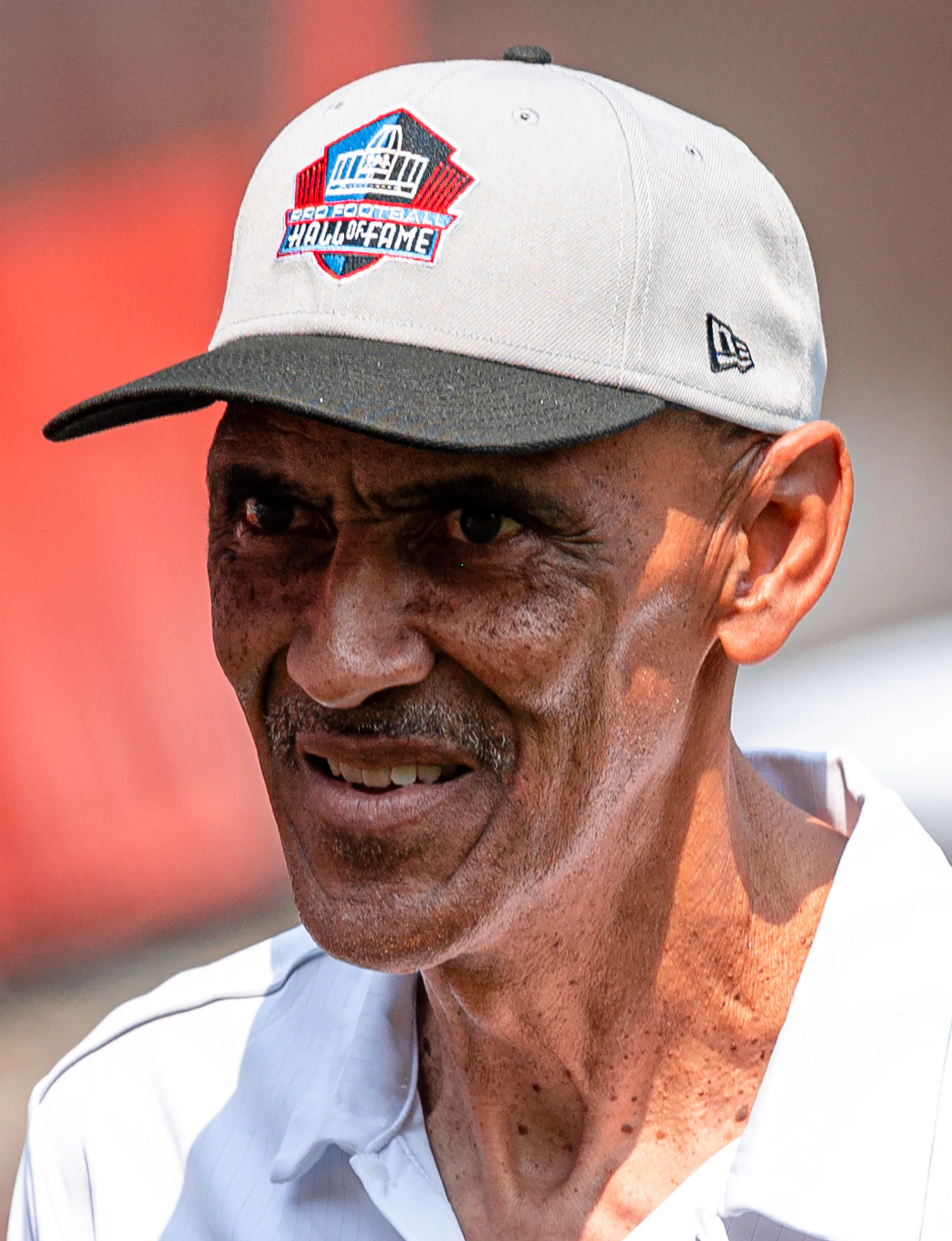
Attr: Erik Drost, CC BY 2.0
| 35 Quotes | |
| Occup. | Coach |
| From | USA |
| Born | October 6, 1955 |
| Age | 70 years |
| Cite | |
Citation Formats
APA Style (7th ed.)
Tony dungy biography, facts and quotes. (2026, February 2). FixQuotes. https://fixquotes.com/authors/tony-dungy/
Chicago Style
"Tony Dungy biography, facts and quotes." FixQuotes. February 2, 2026. https://fixquotes.com/authors/tony-dungy/.
MLA Style (9th ed.)
"Tony Dungy biography, facts and quotes." FixQuotes, 2 Feb. 2026, https://fixquotes.com/authors/tony-dungy/. Accessed 6 Mar. 2026.
Early Life and Background
Tony Dungy was born on October 6, 1955, in Jackson, Michigan, into a disciplined, education-centered household that treated achievement as both duty and possibility. His father, Wilbur Dungy, taught science and later worked in education administration; his mother, Cleomae Dungy, was an English teacher. The mix mattered: one parent trained him to respect systems and evidence, the other to value language, character, and how a person carries himself. The family later settled in Minneapolis, Minnesota, where the civic churn of the 1960s and 1970s - urban change, school integration debates, and the widening visibility of Black professional leadership - formed the unspoken backdrop to his adolescence.At Minneapolis' Park High School, Dungy became a three-sport standout and an unusually poised leader for a young quarterback, but his competitiveness was social as much as individual. “I had 10 to 12 close buddies who I played ball with all the way from elementary to high school. That is where I learned to compete”. Those early peer bonds sharpened a lasting trait: he chased excellence without the performative swagger so common in football culture, preferring steadiness, preparation, and trust in the group.
Education and Formative Influences
Dungy enrolled at the University of Minnesota and started at quarterback, graduating in 1977, a period when Black quarterbacks still faced stereotypes about intelligence and leadership. That climate forced him to master the classroom side of football - reading coverages, controlling tempo, and staying calm under scrutiny - because the margin for error was smaller. When the NFL did not immediately reward him as a franchise quarterback, he adapted, converting to defensive back for the Pittsburgh Steelers in 1977, an early lesson that identity in football is often negotiated, not granted.Career, Major Works, and Turning Points
Dungy's pro playing career (Steelers, 1977-1978; San Francisco 49ers, 1979) was brief, but it placed him inside two elite organizational cultures, especially Pittsburgh under Chuck Noll. Coaching followed quickly: assistant roles with the Steelers and Kansas City Chiefs, then defensive coordinator with the Minnesota Vikings. His first head-coaching break came with the Tampa Bay Buccaneers (1996-2001), where he transformed a losing franchise into a perennial contender by marrying a fast, disciplined defense with low-drama leadership. After a sudden 2001 firing that stunned many around the league, he became head coach of the Indianapolis Colts (2002-2008), guiding Peyton Manning's teams to sustained excellence and a Super Bowl XLI win in February 2007 - making him the first Black head coach to win a Super Bowl. Later chapters included broadcasting, executive advising, and a public role as a mentor-figure in football and beyond, shaped by family tragedy after the death of his son James in 2005.Philosophy, Style, and Themes
Dungy's coaching style was a studied rebuttal to the sport's appetite for intimidation theatrics. He built environments that assumed players could be adults: clear standards, quiet accountability, and an almost pastoral patience in crisis. Tactically, he helped popularize and refine the Tampa 2 system - an outgrowth of Cover 2 principles that demanded speed, discipline, and role clarity - and he traced that preference to apprenticeship rather than genius. “I learned from Chuck Noll in Pittsburgh that speed and explosiveness on defense is the way to build a team. Both are difficult for your opponent to assimilate in practice and then in games it is even harder to match”. The line reveals his mind: he thought in terms of teachability and repetition, choosing strategies that compound under pressure because opponents cannot simulate them easily.Inside that strategic calm was a spiritual framework that steadied him through public scrutiny and private loss. He routinely described vocation as stewardship, not self-expression, insisting that outcomes do not define worth. “The Lord has a plan. We always think the plans are A, B, C and D, and everything is going to be perfect for us and it may not be that way, but it's still his plan”. That conviction shaped his psychology as a leader: he could demand excellence while refusing panic, because he located meaning beyond weekly results. It also explains his persistent emphasis on fatherhood and moral formation - a theme that ran through his speaking, writing, and charity work - and why he treated young men not as assets but as futures. “Did you know that nearly one in three children live apart from their biological dads? Those kids are two to three times more likely to grow up in poverty, to suffer in school, and to have health and behavioral problems”. For Dungy, those statistics were not a digression from football; they were the social stakes underneath it.
Legacy and Influence
Dungy's legacy rests on three intertwined achievements: competitive proof, cultural change, and a model of leadership that widened what authority could look like. His Super Bowl title and sustained winning validated a temperament often misread as softness, while his presence helped normalize Black head coaches as strategic and organizational leaders in the NFL's most visible job. Just as enduring is the "Dungy tree" of assistants and disciples - including figures such as Lovie Smith - who carried his systems and standards across the league. In an era when the coach is often marketed as a tyrant or celebrity, Dungy made seriousness look quiet, and power look like service.Our collection contains 35 quotes written by Tony, under the main topics: Motivational - Friendship - Writing - Leadership - Meaning of Life.
Other people related to Tony: Michael Vick (Athlete)
Source / external links