
Toru Takemitsu Biography Quotes 7 Report mistakes
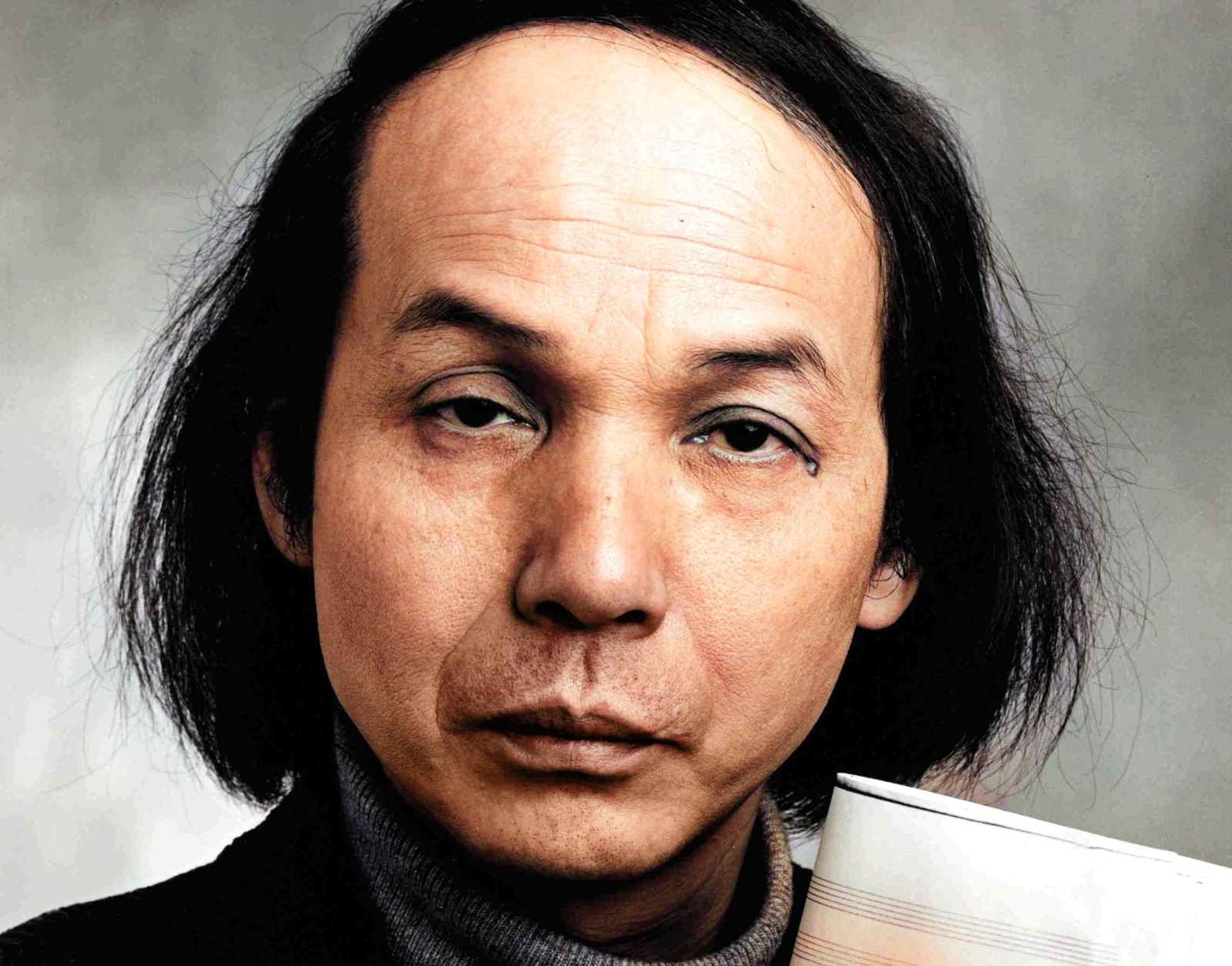
| 7 Quotes | |
| Occup. | Composer |
| From | Japan |
| Born | October 8, 1930 Hongō, Tokyo, Japan |
| Died | February 20, 1996 Minato, Tokyo, Japan |
| Cause | Lung cancer |
| Aged | 65 years |
| Cite | |
Citation Formats
APA Style (7th ed.)
Toru takemitsu biography, facts and quotes. (2026, February 11). FixQuotes. https://fixquotes.com/authors/toru-takemitsu/
Chicago Style
"Toru Takemitsu biography, facts and quotes." FixQuotes. February 11, 2026. https://fixquotes.com/authors/toru-takemitsu/.
MLA Style (9th ed.)
"Toru Takemitsu biography, facts and quotes." FixQuotes, 11 Feb. 2026, https://fixquotes.com/authors/toru-takemitsu/. Accessed 12 Feb. 2026.
Early Life and Background
Toru Takemitsu was born on October 8, 1930, in Tokyo, a child of an anxious, militarized era that would soon collapse into total war. His early years were marked by moves and instability, including time spent in Manchuria during Japan's imperial expansion. The dislocations of the 1930s and early 1940s did not merely form a backdrop - they shaped a sensibility attuned to fracture, memory, and the sudden appearance of beauty amid devastation, qualities that later became central to his sound world.In his teens he was drafted into wartime service and lived through the last, brutal phase of the Pacific War and the disorienting American-led occupation that followed. Those experiences left him wary of coercive national narratives and suspicious of any art that served ideology. He later described a decisive adolescent encounter with Western music on the radio during this period - a private revelation at a time when public life felt regimented - and the shock of that listening became a kind of origin story for a composer who would spend his life translating inner states into timbre and time.
Education and Formative Influences
Takemitsu was largely self-taught, learning through obsessive listening, score study, and contact with Tokyo's postwar avant-garde rather than through a conservative academic track. In the late 1940s and early 1950s he gravitated toward new music and modernist thought, helping found the experimental collective Jikken Kobo (Experimental Workshop) in 1951, where composers, visual artists, poets, and engineers collaborated across media. This milieu - along with intensive absorption of French impressionism (especially Debussy), Messiaen, and later Webern and Cage - taught him to treat sound as material, space as form, and silence as an active partner, even as he slowly, often painfully, re-approached Japanese musical traditions on his own terms.Career, Major Works, and Turning Points
Takemitsu emerged internationally in the late 1950s and early 1960s as Japan rebuilt and re-entered global cultural networks, a moment when the idea of a modern Japanese voice in art was newly contested. Works such as Requiem for strings (1957) announced a composer of elegiac intensity and luminous orchestration; its impact was amplified when Igor Stravinsky encountered it during a visit to Japan and praised it, effectively accelerating Takemitsu's global profile. Over the next decades he wrote landmark concert works - among them November Steps (1967), which placed biwa and shakuhachi in dialogue with orchestra, and later orchestral canvases like A Flock Descends into the Pentagonal Garden (1977) and Dream/Window (1985) - while also composing for film with extraordinary productivity, collaborating with directors such as Hiroshi Teshigahara (including Woman in the Dunes, 1964) and Masaki Kobayashi. A final late flowering brought a series of refined, often nature-tinged pieces and concertos, including the guitar concerto To the Edge of Dream (1983), the chamber-work stream of Rain pieces, and the orchestral elegy Nostalghia (1987), before his death in Tokyo on February 20, 1996.Philosophy, Style, and Themes
Takemitsu's inner life can be read in his lifelong attempt to reconcile sensual sound with moral seriousness. He insisted on music as lived experience rather than symbol: "Music should be able to invoke the natural emotions in all human beings. Music is not notes fixed on apiece of paper". That credo clarifies his preference for breathing phrases, resonant after-sounds, and forms that feel discovered rather than engineered. Even when he adopted modernist techniques, he softened their edges with coloristic harmony and a patient attention to decay, treating timbre as psychology - a way to let vulnerability speak without confession.His style is often described as a meeting of East and West, but he resisted simple fusion; instead, he sought a third space where listening itself becomes the subject. He acknowledged his lineage with disarming candor: "Although I am basically self taught, I consider Debussy my teacher - the most important elements are colour, light and shadow". Debussy offered him not just a palette but a permission to compose with light, to make harmony a weather system and orchestration a form of narrative. At the same time, Takemitsu's relationship to Japanese aesthetics deepened through the concept of ma - the charged interval - and through an ecological sense of sound as part of the world rather than an object imposed upon it: "Composition gives proper meaning to the natural streams of sound that penetrate the world". In his best works, the ear feels guided toward attention, as if the music were teaching a way of being: alert, tender, and unafraid of silence.
Legacy and Influence
Takemitsu left a model of modern composition in which refinement is not decorative but ethical - a discipline of listening forged from war memory, postwar openness, and a cosmopolitan hunger for color. He broadened the global perception of Japanese contemporary music, not by performing cultural identity on demand, but by making it complex: skeptical of nationalism, responsive to nature, and fluent in European modernism without subservience to it. His film scores remain a benchmark for psychological understatement, and his concert works continue to shape composers and performers drawn to timbre-centered writing, spacious form, and the conviction that beauty can be rigorous.Our collection contains 7 quotes written by Toru, under the main topics: Music.
Source / external links