
Tran Duc Luong Biography Quotes 5 Report mistakes
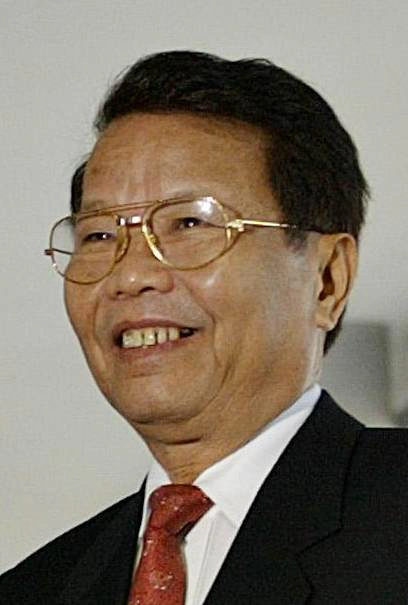
| 5 Quotes | |
| Occup. | President |
| From | Vietnam |
| Born | May 5, 1937 |
| Age | 88 years |
| Cite | |
Citation Formats
APA Style (7th ed.)
Tran duc luong biography, facts and quotes. (2026, February 19). FixQuotes. https://fixquotes.com/authors/tran-duc-luong/
Chicago Style
"Tran Duc Luong biography, facts and quotes." FixQuotes. February 19, 2026. https://fixquotes.com/authors/tran-duc-luong/.
MLA Style (9th ed.)
"Tran Duc Luong biography, facts and quotes." FixQuotes, 19 Feb. 2026, https://fixquotes.com/authors/tran-duc-luong/. Accessed 6 Mar. 2026.
Early Life and Background
Tran Duc Luong was born on May 5, 1937, in Quang Ngai Province in central Vietnam, a region shaped by coastal trade, hard agrarian life, and the long pressures of colonial rule and war. His childhood unfolded across the last years of French Indochina and the turmoil that followed World War II - an era when politics was not an abstraction but something that reached into rice fields, villages, and family networks through conscription, requisitions, and shifting authorities.That early atmosphere of scarcity and mobilization helps explain the temperament later associated with him: methodical, disciplined, and oriented toward state-building rather than charisma. The generation he belonged to came of age as Vietnam divided and then entered decades of conflict; for many technocrats of his cohort, the deepest personal ambition was not individual expression but national survival, reconstruction, and a workable modern administration.
Education and Formative Influences
Luong trained as a geologist, studying in the Soviet Union (in the 1950s and early 1960s) during the high tide of socialist internationalism, when Vietnamese cadres were sent abroad to acquire specialized skills for an eventual peace. Soviet technical education emphasized systems, planning, and the prestige of applied science - the belief that a competent state could reorder nature and society through rational expertise. That formative environment reinforced a style of leadership that prized institutional continuity and the legitimacy of development goals framed as collective necessity.Career, Major Works, and Turning Points
Returning to Vietnam, he built a career in the state apparatus through the natural resources and geology sector, rising from technical and managerial roles into ministerial leadership and then the Communist Party's senior ranks. He served as Deputy Prime Minister and later became President of the Socialist Republic of Vietnam (1997-2006), a period defined by the consolidation of Doi Moi reforms, deepening trade and investment ties, and careful diplomatic balancing after the normalization era. As president - a role combining state representation with internal consensus politics - he embodied the leadership model of the late 1990s: cautious in public affect, persistent in institution-building, and focused on projecting Vietnam as stable and open for development while preserving one-party governance.Philosophy, Style, and Themes
Luong's public philosophy is best read not as personal memoir but as the moral language of a postwar developmental state: legitimacy grounded in peace, sovereignty, and economic uplift, paired with anxiety about unequal globalization. In multilateral settings he repeatedly returned to a universalist register, insisting that “The world's people all share the earnest aspiration to have peace, stability, justice and cooperation”. The sentence is revealing as psychology as much as policy: it frames Vietnam's hard-won security as a universal human desire, translating national experience into an argument for predictable rules and respectful diplomacy.At the same time, his speeches show a technocrat's suspicion that markets alone would reproduce dependency. He warned that “Under the process of ongoing globalization, advantages are, in the main, created for a minority of countries and development centres as well as powerful transnational companies”. The emphasis on structure - "process", "advantages", "centres" - mirrors a planner's mindset and Vietnam's historical memory of extraction. Yet he coupled critique with optimism rooted in historical struggle, asserting, “However, we all share the firm belief in the triumph of humanist and progressive values that mankind has achieved during its long history of struggle and creativeness”. That combination - vigilance about unequal power, faith in progress, and preference for negotiated order - became his signature rhetorical balance, fitting a leader tasked with opening the economy without surrendering ideological narrative.
Legacy and Influence
Tran Duc Luong's legacy rests less on personal spectacle than on the steady normalization of a modern Vietnamese presidency during a decade of rapid change. He helped represent a Vietnam intent on international integration while defending a developmental model centered on state capacity, social stability, and incremental reform. In the longer arc of Vietnamese politics, he exemplifies the scientist-administrator as head of state: a figure whose influence lies in continuity, diplomatic assurance, and the framing of globalization as both opportunity and hazard - a lens that continues to shape how Vietnam describes its place in a world of unequal power and interdependence.Our collection contains 5 quotes written by Tran, under the main topics: Equality - Peace - Human Rights.
Source / external links