
Trent Dilfer Biography Quotes 17 Report mistakes
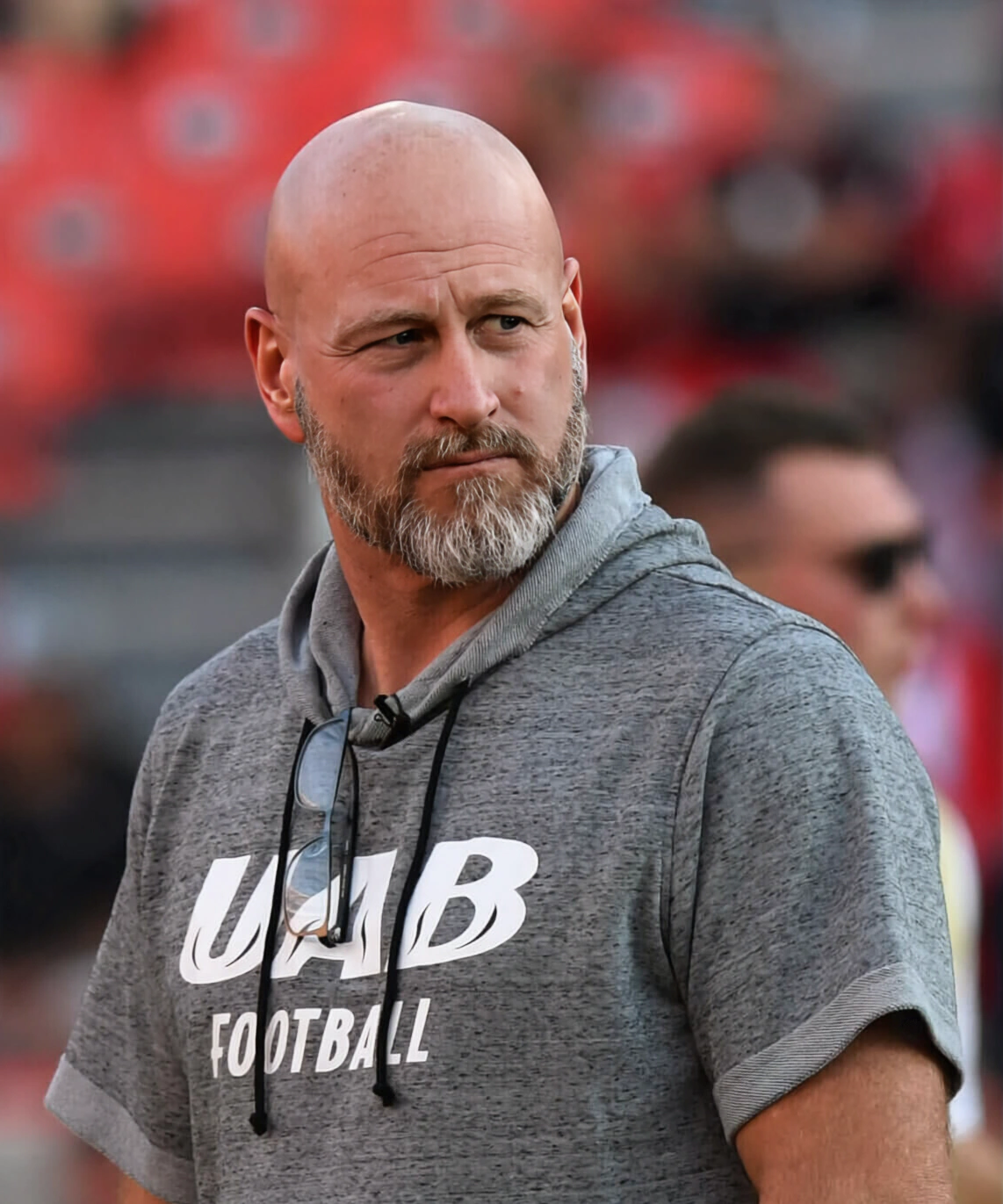
| 17 Quotes | |
| Born as | Trent Farris Dilfer |
| Occup. | Athlete |
| From | USA |
| Born | March 13, 1972 Santa Cruz, California, United States |
| Age | 53 years |
| Cite | |
Citation Formats
APA Style (7th ed.)
Trent dilfer biography, facts and quotes. (2026, February 11). FixQuotes. https://fixquotes.com/authors/trent-dilfer/
Chicago Style
"Trent Dilfer biography, facts and quotes." FixQuotes. February 11, 2026. https://fixquotes.com/authors/trent-dilfer/.
MLA Style (9th ed.)
"Trent Dilfer biography, facts and quotes." FixQuotes, 11 Feb. 2026, https://fixquotes.com/authors/trent-dilfer/. Accessed 5 Mar. 2026.
Early Life and Background
Trent Farris Dilfer was born on March 13, 1972, in the United States, and grew up in a California football culture that treated Friday nights and fall Saturdays as civic ritual. In the post-Montana, West Coast-boom era, the quarterback was both celebrity and conductor, and Dilfer absorbed that expectation early - to lead, to speak, to manage games, to be judged in public.
He emerged as a high school star at Aptos High School near Santa Cruz, where he set national passing marks and became a symbol of the early-1990s shift toward wide-open offense. The attention came before the adulthood to metabolize it, and that tension - between talent and the demand for instant command - shaped his temperament. Dilfer learned to live inside film rooms, to hear criticism as a constant soundtrack, and to treat preparation as the only reliable shelter.
Education and Formative Influences
Dilfer played at Fresno State under Jim Sweeney, a program that served as a quarterback laboratory for a player with pro aspirations. He was not groomed in the safety of a dynasty; he was forged in a setting where weekly problem-solving mattered more than reputation, and where the quarterback had to become an extension of the coaching staff. In 1994 he threw for over 5, 000 yards, finished as the NCAA passing leader, and left college as a high-volume passer at the moment the NFL was beginning to prize timing, reads, and ball security as much as arm strength.
Career, Major Works, and Turning Points
Selected sixth overall in the 1994 NFL Draft by the Tampa Bay Buccaneers, Dilfer entered a franchise still searching for identity and stability; he gave them competence, then volatility, then gradual growth as the team rebuilt. His most famous turning point came not from individual dominance but from fit: after stops in Baltimore, Seattle, and Cleveland, he became the 2000 Baltimore Ravens starting quarterback midseason and piloted a historically great defense-led team through the playoffs to a Super Bowl XXXV title. The ring made him a permanent reference point in the debate over quarterback value and game management, and it also pushed him toward a second career as an analyst and teacher - notably at ESPN - before he moved into coaching, including leading Lipscomb Academy to multiple Tennessee state titles and later taking on a college head coaching role at the University of Alabama at Birmingham.
Philosophy, Style, and Themes
Dilfer is best understood as a quarterback shaped by scarcity: the scarcity of patience in the NFL, the scarcity of error tolerance, the scarcity of context when the public reduces leadership to a stat line. That worldview made him blunt about the league's transactional reality: “I don't deal in the world of fair. The NFL is the no fair league and I experienced that as much as anybody”. For Dilfer, the proper response was not grievance but clarity - the cultivation of reasons, systems, and repeatable processes that keep a player calm when circumstances do not.
His most enduring theme is leadership as environment-making rather than mood-mirroring, a principle he later applied in media work and in building team culture for teenage players. “He is a thermostat leader, not a thermometer...He does not react to the environment he's in. He changes every environment he's in”. The line fits Dilfer's career arc: he rarely controlled the whole game, but he learned to control the huddle, the cadence of preparation, and the emotional temperature after mistakes. It also connects to his emphasis on analysis and explanation as comfort - “When you have answers, when everything has a reason, when it makes sense to an analytical person, you're going to be more successful. You're going to be more comfortable”. In practice, that meant a quarterbacking style defined by checks, protections, and risk management - and later, a teaching style that translates chaos into language players can execute.
Legacy and Influence
Dilfer's legacy is less about being a prototype star than about being a case study in how football actually works: roster strength, injuries, defense, and decision-making can elevate or bury a quarterback, and a championship can belong to a whole organism, not a single arm. He remains a cultural shorthand - the Super Bowl-winning "game manager" - but his longer influence comes through quarterback education and leadership modeling, where his insistence on preparation, accountability, and emotional regulation has shaped young players who will never appear in his stat line yet carry forward his central lesson: you can be judged harshly and still choose to become steadier, smarter, and more useful to the group.
Our collection contains 17 quotes written by Trent, under the main topics: Puns & Wordplay - Nature - Leadership - Victory - Sports.
Other people related to Trent: Jamal Lewis (Athlete)
Frequently Asked Questions
- Trent Dilfer Super Bowl stats: In Super Bowl XXXV, Dilfer completed 12 of 25 passes for 153 yards, 1 touchdown, and 0 interceptions, leading the Ravens to a 34–7 victory.
- Trent Dilfer college: Trent Dilfer played college football at Fresno State University, where he was an All-American quarterback.
- Trent Dilfer Buccaneers: The Tampa Bay Buccaneers drafted Dilfer sixth overall in the 1994 NFL Draft, and he was their starting quarterback for most of the mid-to-late 1990s.
- Trent Dilfer stats: In his NFL career, Dilfer threw for over 20,000 passing yards, with more than 1,500 completions, over 100 touchdown passes, and a passer rating in the low 70s.
- Trent Dilfer UAB: Trent Dilfer became the head football coach at the University of Alabama at Birmingham (UAB) starting with the 2023 season.
- Trent Dilfer Ravens: Dilfer played for the Baltimore Ravens in the 2000 season, serving as the starting quarterback during their Super Bowl XXXV championship run.
- Trent Dilfer dates joined: He was drafted by the Tampa Bay Buccaneers in 1994, joined the Baltimore Ravens in 2000, the Seattle Seahawks in 2001, the Cleveland Browns in 2005, and the San Francisco 49ers in 2007.
- Trent Dilfer Super Bowl: Trent Dilfer won Super Bowl XXXV as the starting quarterback for the Baltimore Ravens, defeating the New York Giants 34–7 on January 28, 2001.
- How old is Trent Dilfer? He is 53 years old
Source / external links