
Trevor Huddleston Biography Quotes 2 Report mistakes
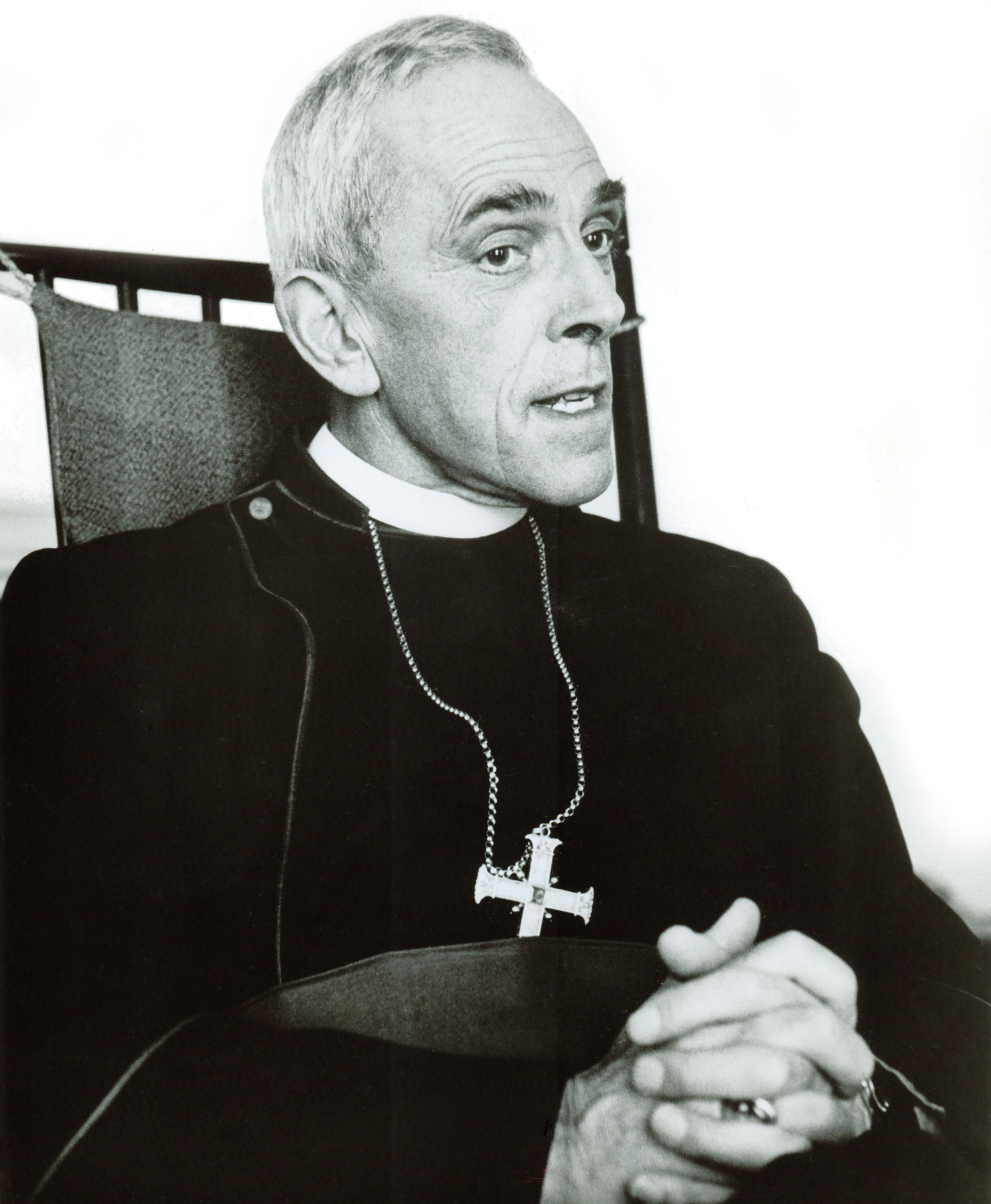
| 2 Quotes | |
| Born as | Ernest Urban Trevor Huddleston |
| Occup. | Activist |
| From | United Kingdom |
| Born | June 15, 1913 Bedford, England |
| Died | 1998 |
| Aged | 112 years |
| Cite | |
Citation Formats
APA Style (7th ed.)
Trevor huddleston biography, facts and quotes. (2026, February 11). FixQuotes. https://fixquotes.com/authors/trevor-huddleston/
Chicago Style
"Trevor Huddleston biography, facts and quotes." FixQuotes. February 11, 2026. https://fixquotes.com/authors/trevor-huddleston/.
MLA Style (9th ed.)
"Trevor Huddleston biography, facts and quotes." FixQuotes, 11 Feb. 2026, https://fixquotes.com/authors/trevor-huddleston/. Accessed 23 Mar. 2026.
Early Life and Background
Ernest Urban Trevor Huddleston was born on June 15, 1913, in the United Kingdom, into a society still shadowed by the First World War and the brittle hierarchies of the British Empire. Anglican Christianity, public duty, and the moral vocabulary of sacrifice were part of the air his generation breathed. Those forces mattered later: his activism would not be a career add-on but an extension of vocation, shaped by an England that could preach universal ideals while profiting from racial ordering abroad.From early adulthood he gravitated toward priestly life rather than professional ambition, and the choice put him on a path where the spiritual and the political could not be neatly separated. When he later confronted apartheid in South Africa, he did so with the instincts of a pastor - attentive to individual suffering - and with an imperial Britons uneasy inheritance: a man of the metropole deciding whether faith would baptize power or challenge it.
Education and Formative Influences
Huddleston trained for Anglican ministry and joined the Community of the Resurrection, the Anglican religious order based at Mirfield, West Yorkshire, known for disciplined common life and social conscience. The order's Anglo-Catholic piety, attention to the dignity of the poor, and tradition of engagement with labor and civic questions helped form a priest who could move from liturgy to the street without embarrassment. The interwar years and the Second World War also sharpened moral contrasts - between proclaimed civilization and practiced cruelty - leaving him primed to recognize racial ideology not as a distant oddity but as a central modern temptation.Career, Major Works, and Turning Points
He became internationally known through his ministry in Sophiatown, Johannesburg, in the 1950s, when the apartheid state intensified forced removals and pass laws. Serving at Christ the King, he built schools and youth work, defended families facing police harassment, and gave visible pastoral solidarity to Black South Africans whose neighborhoods were being targeted for demolition. The turning point came with Sophiatown's destruction and the removals to Meadowlands and Soweto: Huddleston publicly condemned the policy and drew global attention to what was happening on the ground. His book Naught for Your Comfort (1956) translated local terror into a moral indictment that Western readers could not easily ignore, and his relationships with artists and young leaders - including a lasting friendship with Hugh Masekela - tied his religious authority to a broader cultural resistance. Later he served as Anglican Bishop of Masasi in Tanzania and, back in Britain, became a leading figure in the Anti-Apartheid Movement, eventually its president, using his clerical stature to keep sanctions, boycotts, and public pressure on the agenda.Philosophy, Style, and Themes
Huddleston's inner life was anchored in a Christ-centered humanism that treated racism not merely as bad policy but as a spiritual lie - a refusal to see the divine image in another person. His most characteristic posture was presence: he insisted on being with people when the state tried to make them disappear, whether through removals, imprisonment, or the slow violence of poverty. That pastoral style - listening, visiting, naming the specific harms - gave his activism credibility; it was harder to dismiss him as abstractly ideological when he could describe individual children, parents, teachers, and choirs caught in the machinery of segregation. The same discipline that shaped his prayer shaped his public witness: patient, relentless, and intensely personal.The core of his ethics appears in the way he framed responsibility as perception rather than sentiment. “My responsibility is always and everywhere the same: to see in my brother more even than the personality and manhood that are his. My task is always and everywhere the same: to see Christ himself”. This was not rhetorical flourish; it explained why he confronted police and administrators with the calm insistence of someone defending sacrament, not preference. His solidarity also carried a liturgical, almost hymnlike universalism, a belief that nations were accountable before God for how they treated the vulnerable. In that spirit he could invoke blessing as political hope: “God bless Africa, Guard her people, Guide her leaders, And give her peace”. The themes running through his life - dignity, truth-telling, nonviolent pressure, and the inseparability of worship from justice - were held together by that steady insistence on seeing, naming, and refusing to cooperate with dehumanization.
Legacy and Influence
Huddleston died in 1998, remembered as a British priest whose life refuted the idea that empire-era Christianity had to serve empire. His influence persists in the moral grammar of anti-apartheid memory: that international solidarity is most powerful when rooted in concrete relationships, and that religious authority can be used to amplify the oppressed rather than sanctify order. Naught for Your Comfort remains a primary witness to Sophiatown's destruction, while his long leadership in British anti-apartheid circles helped sustain pressure until South Africa's democratic transition - a legacy built less on slogans than on the disciplined, uncomfortable work of standing where injustice expected silence.Our collection contains 2 quotes written by Trevor, under the main topics: God - Prayer.
Source / external links