
Truman Capote Biography Quotes 27 Report mistakes
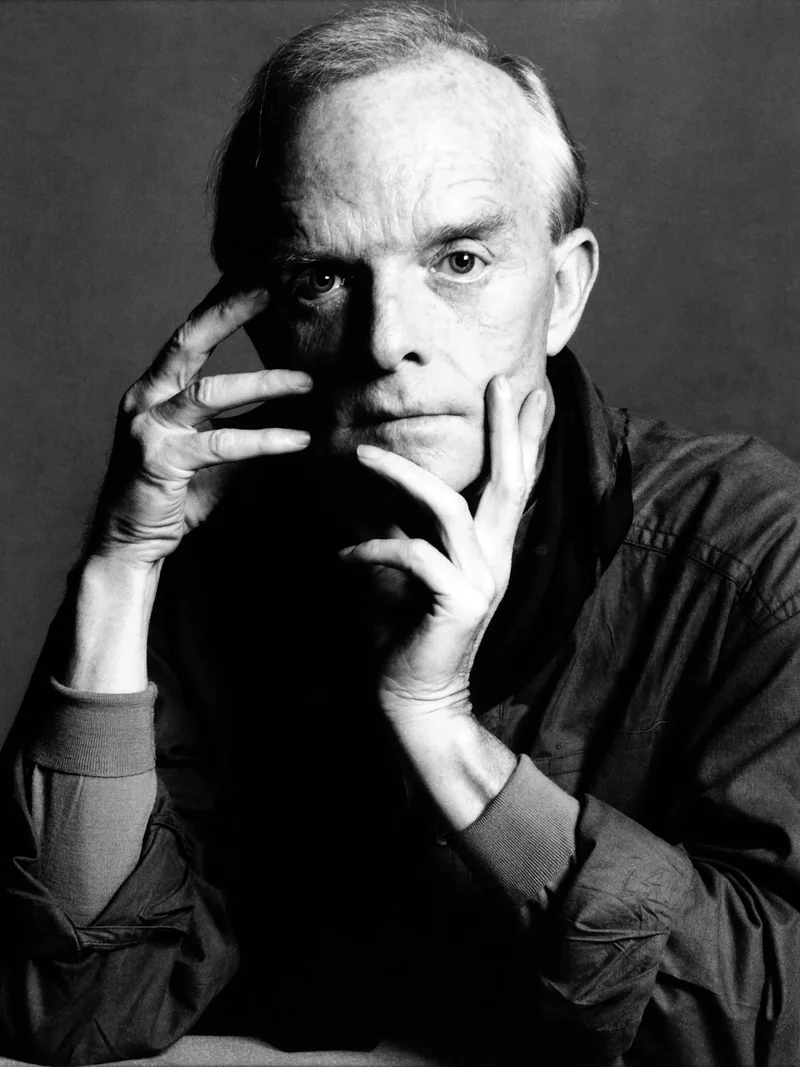
| 27 Quotes | |
| Born as | Truman Streckfus Persons |
| Occup. | Novelist |
| From | USA |
| Born | September 30, 1924 New Orleans, Louisiana, USA |
| Died | August 25, 1984 Los Angeles, California, USA |
| Cause | Liver disease |
| Aged | 59 years |
| Cite | |
Citation Formats
APA Style (7th ed.)
Truman capote biography, facts and quotes. (2026, February 11). FixQuotes. https://fixquotes.com/authors/truman-capote/
Chicago Style
"Truman Capote biography, facts and quotes." FixQuotes. February 11, 2026. https://fixquotes.com/authors/truman-capote/.
MLA Style (9th ed.)
"Truman Capote biography, facts and quotes." FixQuotes, 11 Feb. 2026, https://fixquotes.com/authors/truman-capote/. Accessed 5 Mar. 2026.
Early Life and Background
Truman Capote was born Truman Streckfus Persons on September 30, 1924, in New Orleans, Louisiana, into a family marked by charm, instability, and separation. His mother, Lillie Mae Faulk, was ambitious and restless; his father, Archulus Persons, drifted through schemes and absences. The marriage collapsed early, and the child learned to read rooms before he could reliably trust them - a social radar that later made him both exquisite company and a merciless observer.Much of his childhood was spent in Monroeville, Alabama, sent to relatives while his mother pursued a new life. The small-town South of the Depression era gave him a gallery of voices, gossip, and private brutality; it also gave him loneliness that hardened into style. He later admitted, “My major regret in life is that my childhood was unnecessarily lonely”. That solitude was not only pain but apprenticeship: he turned inward, began writing young, and made imagination a survival skill.
Education and Formative Influences
Capote moved to New York City as an adolescent after his mother married Joseph Capote, whose surname he adopted. He attended Trinity School and later the Dwight School, but his real education came from the city itself - Broadway light, Park Avenue manners, and the editorial world he entered as a teenager. He took a job at The New Yorker in the early 1940s, absorbing the magazine's devotion to tone and precision while also bristling at its social hierarchies. The postwar moment favored fresh voices, and Capote, openly queer in an era of coded lives, learned to cultivate both discretion and theatricality as parallel forms of self-defense.Career, Major Works, and Turning Points
A breakout came with early fiction and the novel Other Voices, Other Rooms (1948), whose Gothic intensity and publicized author portrait made him instantly famous. He followed with The Grass Harp (1951) and the travel-tinged, mood-driven local study The Muses Are Heard (1956), before achieving broad cultural saturation with Breakfast at Tiffany's (1958), a novella that distilled postwar Manhattan into longing, performance, and class desire. His defining turn, however, was In Cold Blood (1966), built from years of reporting on the 1959 murders of the Clutter family in Holcomb, Kansas, and the lives of Perry Smith and Dick Hickock. The book made him rich and canonized, but it also tethered him to death, complicity, and the exhausting labor of turning experience into art. Later, the long-promised Answered Prayers fractured into excerpts, scandal, and estrangement; alcohol and pills accelerated a public decline that ended with his death in Los Angeles on August 25, 1984.Philosophy, Style, and Themes
Capote's aesthetic was obsessive control masquerading as effortless charm. He believed revision was not polish but surgery - “I believe more in the scissors than I do in the pencil”. That credo describes his sentences, but also his social life: he edited friendships, curated scenes, and cut away anyone who no longer served the story he was telling about himself. The bright, mannered voice he offered the world often covered an anxious inner tribunal, where failure and shame became fuel. For Capote, the gift of talent arrived with punishment, and the punishment was private.His lasting innovation was to treat reportage as a form of psychological portraiture without surrendering novelistic architecture. “I got this idea of doing a really serious big work-it would be precisely like a novel, with a single difference: Every word of it would be true from beginning to end”. In Cold Blood tests that vow: the book's cool omniscience raises moral questions about intimacy with subjects and the seductions of narrative closure. Throughout his work, he returns to outsiders who perform themselves into belonging, from Holly Golightly's bright evasions to the Kansas killers' fatal yearning for recognition. Even his wit has teeth - “A conversation is a dialogue, not a monologue. That's why there are so few good conversations: due to scarcity, two intelligent talkers seldom meet”. - revealing a writer who prized exchange but feared exposure, who used talk as both instrument and armor.
Legacy and Influence
Capote endures as a double figure: a stylist with a jeweler's ear for cadence, and a cultural emblem of fame's bargain. His "nonfiction novel" reshaped literary journalism, influencing writers from Norman Mailer to Joan Didion and later generations of narrative reporters who chase scene, voice, and interiority with documentary rigor. Breakfast at Tiffany's still defines a certain Manhattan myth, while In Cold Blood remains a benchmark and a warning about the cost of turning real suffering into art. His unfinished projects and public unraveling have become part of the legend, but the core achievement persists: he made American prose sound simultaneously intimate and exacting, and he showed how the stories people tell to survive can also be the stories that undo them.Our collection contains 27 quotes written by Truman, under the main topics: Witty One-Liners - Wisdom - Friendship - Love - Sarcastic.
Other people related to Truman: Harper Lee (Novelist), George Axelrod (Writer), Haruki Murakami (Writer), George Plimpton (Journalist)
Frequently Asked Questions
- Truman Capote nationality: American.
- Truman Capote height: Truman Capote was approximately 5 feet 3 inches tall.
- Truman Capote voice: His voice was high-pitched and distinctive, often described as part of his flamboyant persona.
- Truman Capote daughter: Truman Capote did not have any children.
- Truman Capote education: Truman Capote attended Trinity School and St. Joseph Military Academy, but he did not earn a college degree.
- Why did Truman Capote talk like that: His high-pitched voice and distinctive mannerisms were part of his unique personality.
- Truman Capote wife: Truman Capote never married.
- Truman Capote cause of death: Liver disease complicated by phlebitis and multiple drug intoxication.
- How old was Truman Capote? He became 59 years old
Truman Capote Famous Works
- 1980 Music for Chameleons (Collection of Short Fiction)
- 1966 In Cold Blood (Non-fiction Novel)
- 1958 Breakfast at Tiffany's (Novella)
- 1956 A Christmas Memory (Short Story)
- 1951 The Grass Harp (Novel)
- 1948 Other Voices, Other Rooms (Novel)
Source / external links