
Tug McGraw Biography Quotes 4 Report mistakes
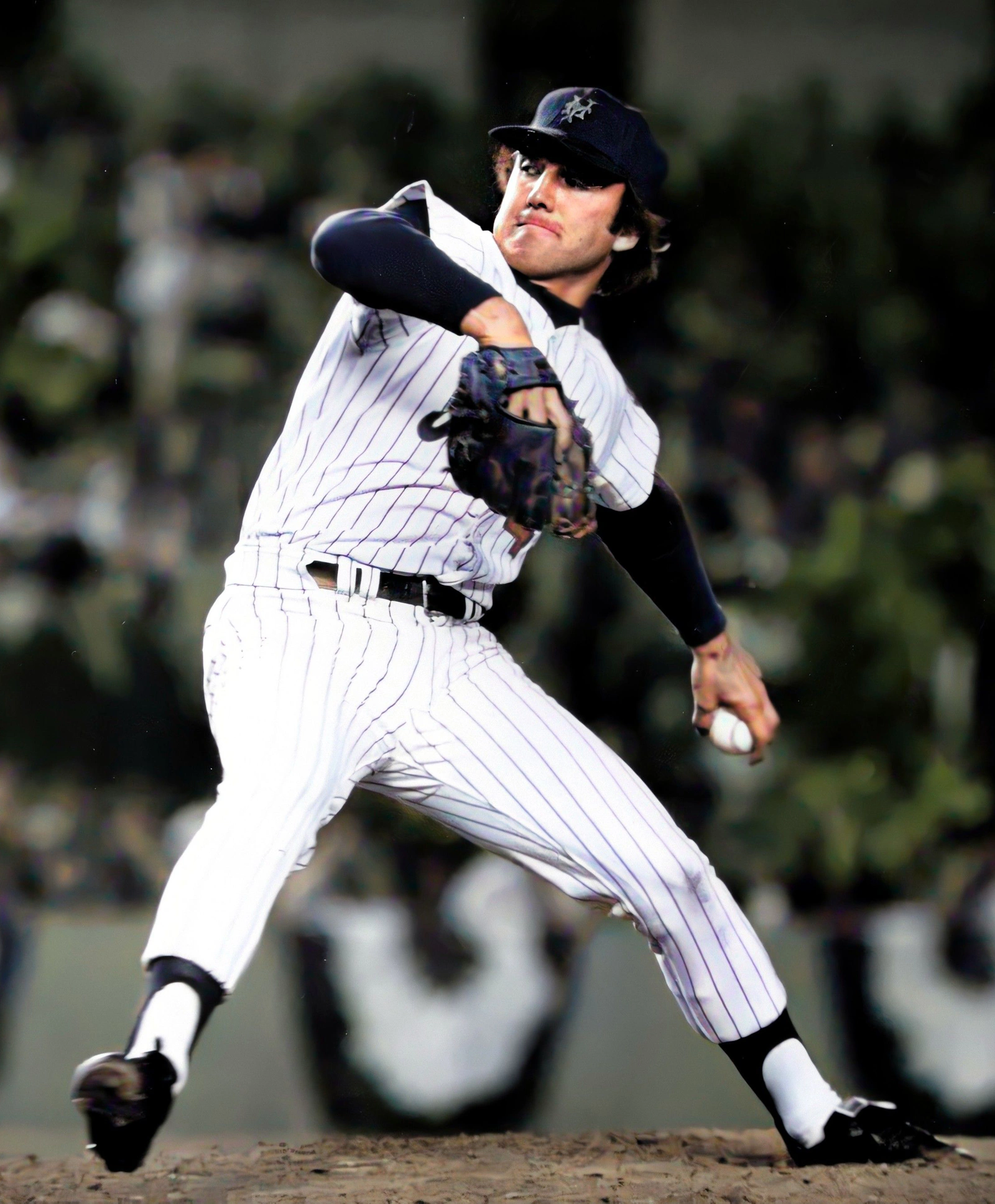
| 4 Quotes | |
| Born as | Frank Edwin McGraw Jr. |
| Occup. | Athlete |
| From | USA |
| Spouse | Jacquelyn Ray |
| Born | August 30, 1944 Savannah, Georgia, USA |
| Died | January 5, 2004 Nashville, Tennessee, USA |
| Cause | Brain Cancer |
| Aged | 59 years |
| Cite | |
Citation Formats
APA Style (7th ed.)
Tug mcgraw biography, facts and quotes. (2026, February 11). FixQuotes. https://fixquotes.com/authors/tug-mcgraw/
Chicago Style
"Tug McGraw biography, facts and quotes." FixQuotes. February 11, 2026. https://fixquotes.com/authors/tug-mcgraw/.
MLA Style (9th ed.)
"Tug McGraw biography, facts and quotes." FixQuotes, 11 Feb. 2026, https://fixquotes.com/authors/tug-mcgraw/. Accessed 27 Mar. 2026.
Early Life and Background
Frank Edwin McGraw Jr. was born August 30, 1944, in Martinez, California, and grew up in a working-class military family that moved often enough to make reinvention a habit. His father served in the US Army, and the constant relocations pushed the boy toward the portable certainties of sport - a glove, a ball, and the private wager that effort could beat circumstance. He was nicknamed "Tug" early, a compact word that fit a stocky, competitive kid who preferred pulling a game his way to waiting for permission.By the time he reached adolescence in Southern California, the postwar boom and the televised mythology of baseball had turned major leaguers into national characters. McGraw absorbed that idea of the ballplayer as entertainer as much as competitor. He also learned the other lesson of the era: toughness was performed, and failure was to be laughed off before it could harden into shame. That blend of bravado and self-protection would become his public mask and, in pressure innings, his working method.
Education and Formative Influences
McGraw attended high school in the Los Angeles area and excelled in baseball and football, but it was the mound that offered the quickest route out. Signed by the New York Mets as a teenager, he entered professional baseball at a time when the minor leagues were still an apprenticeship in buses, bad lighting, and repetition. Coaches tried to simplify him into mechanics; he remained stubbornly psychological, learning that relief pitching was as much about interrupting an opponent's rhythm as about locating a fastball. In the early 1960s, the Mets themselves were baseball's great experiment in endurance, and that culture - losing publicly, then returning - trained him for the emotional volatility of late innings.Career, Major Works, and Turning Points
McGraw debuted with the Mets in 1965 and became one of the franchise's first enduring personalities, a left-handed reliever whose swagger could distract from occasional wildness. His defining early chapter arrived in 1969, when the "Miracle Mets" transformed from lovable losers into champions; McGraw, deployed into chaos, helped close out the World Series and made his phrase "Ya Gotta Believe" a civic slogan. After several productive seasons and an increasingly fragile arm, he was traded to the Philadelphia Phillies in 1974, where he reinvented himself again - older, craftier, and still theatrically confident. He anchored the bullpen of a rising Phillies club, saved the 1980 World Series, and remained a high-leverage fixture into the early 1980s, finishing with 180 saves. Off the field he was a charismatic regular on talk shows and in clubhouses, later confronting the costs of the era's medical culture when he developed a brain tumor and died January 5, 2004, in Philadelphia.Philosophy, Style, and Themes
McGraw pitched like a man performing a high-wire act for an audience that needed permission to relax. He mixed a lively fastball with a good curve and a willingness to pitch inside, but his true weapon was tempo - entering, resetting the emotional room, and making the hitter feel late. He treated pressure as something to be mocked into submission, and his best nights looked like improvisation even when built on rehearsal. That approach made sense for a reliever in the 1970s, when usage was heavy, specialized bullpen roles were still evolving, and public confidence often mattered as much as spin rate.His humor was not decoration; it was self-management. “I have no trouble with the twelve inches between my elbow and my palm. It's the seven inches between my ears that's bent”. In one line he admitted what closers rarely confessed - that panic, doubt, and distraction were the real opponents - and he also preempted criticism by laughing first. Even his most outrageous one-liners carried a philosophy of survival through irreverence: “Ninety percent I'll spend on good times, women and Irish Whiskey. The other ten percent I'll probably waste”. The joke performed freedom, but it also hinted at a man wary of respectability, choosing to be seen as reckless rather than fragile. And when he teased celebrity itself - “Kids should practice autographing baseballs. This is a skill that's often overlooked in Little League”. - he revealed a sharp awareness that baseball stardom was theater with obligations, and he intended to control the script.
Legacy and Influence
McGraw's legacy rests on more than saves and championships; he helped define the modern relief ace as both specialist and psychological force. "Ya Gotta Believe" outlived the 1969 Mets as a model of communal optimism, and his 1980 work in Philadelphia made him a second city's folk hero. He also left a complicated human afterstory: he was the father of musician Tim McGraw, and late-in-life reconciliation added depth to a public image built on jokes. In an era before mental skills coaching was mainstream, Tug McGraw made the mind part of the job description - then hid that truth inside laughter, bravado, and an unteachable willingness to take the ball when everyone else wanted to exhale.Our collection contains 4 quotes written by Tug, under the main topics: Witty One-Liners.
Other people related to Tug: Yogi Berra (Athlete), Steve Carlton (Athlete), Gil Hodges (Athlete)
Source / external links